What Can You Make Gaskets Out Of: Materials and Methods for DIY Gasket Repairs
Explore common gasket materials, how to choose them for temperature, chemistry, and pressure, and practical DIY tips from Gasketed for appliances, cars, and home projects.


What can you make gaskets out of? In DIY projects, you’ll typically start with silicone, Buna-N (nitrile), or EPDM for household tasks, and step up to fluorocarbon (FKM/Viton), PTFE, or graphite for higher temperatures or harsher chemicals. The best pick hinges on temperature, chemical exposure, and sealing pressure.
Why Material Choice Matters
Choosing the right gasket material is foundational for a reliable seal. The question what can you make gaskets out of often drives the initial decision, but temperature, chemical exposure, and pressure determine the final pick. According to Gasketed, the wrong material can lead to persistent leaks, deformation, and premature replacement. For most DIY projects around the home, silicone, nitrile (Buna-N), EPDM, and fluorocarbon variants cover common tasks. Start by listing operating conditions: typical temperatures, fluids involved, and sealing surface. Then narrow options to a few candidates that meet those criteria. A practical rule is to match chemical compatibility and compressibility to the task. If you’re unsure, prefer inert materials such as PTFE or graphite for challenging environments, and reserve softer elastomers for less demanding duties. This approach keeps your seal robust and easy to service over time.
Common Gasket Materials and Their Strengths
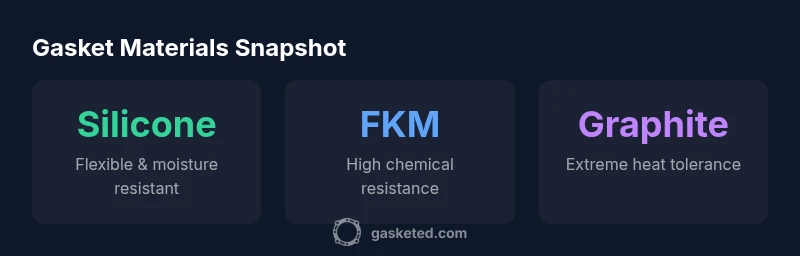
- Silicone: Very flexible; good for household appliances and food-contact uses; tolerates moisture and a range of temperatures.
- Nitrile (Buna-N): Strong oil resistance; widely used in plumbing and automotive seals; not ideal for very high heat.
- EPDM: Excellent water and weather resistance; common in outdoor/ plumbing seals; moderate chemical tolerance.
- Fluorocarbon (FKM/Viton): High chemical resistance and heat tolerance; best for aggressive fluids but more costly.
- PTFE: Exceptional chemical resistance and low friction; suitable for extreme chemicals and clean environments.
- Graphite: Great for high-temperature seals; used in exhausts and high-heat joints; requires proper compression.
- Cork and rubber blends: Budget-friendly options for low-pressure seals in simple DIY projects.
- Neoprene/EPDM blends: Versatile for mild oils and water exposure with good resilience.
How Temperature and Chemicals Drive Material Choice
Temperature and chemical exposure are the two most influential factors when selecting gasket material. High-temperature service often favors fluoropolymers, PTFE, or graphite, while aggressive chemicals push you toward PTFE or fluorinated elastomers. For water-based systems, EPDM or silicone typically perform well; for oil-rich environments, nitrile-based blends usually excel. Always verify chemical compatibility with the fluids in contact and consider long-term exposure rather than initial sealing ability. A well-matched material minimizes creep, relaxation, and leakage over the service life of the gasket.
Elastomers vs. Thermoplastics: A Quick Comparison
Elastomers (rubber-like materials) provide excellent resilience and sealing under compression, ideal for dynamic seals with some flexibility. Thermoplastics and fluoropolymers, including PTFE and FKM, excel in chemical resistance and temperature stability but can be stiffer and more expensive. In mixed-service applications, a multilayer or composite gasket using a flexible elastomer core backed by PTFE or graphite can deliver a practical balance of sealability, chemical resistance, and longevity. When in doubt, prioritize the most critical property: heat tolerance or chemical compatibility.
Matching Materials to Applications: A Decision Framework
- Determine operating temperature range and pressure; 2) Identify exposure to oils, solvents, water, or gases; 3) Assess surface finish and rigidity of the flanges or housing; 4) Choose a material with compatible compression and creep characteristics; 5) Consider food-safe or potable-water requirements if applicable; 6) Prototype and test under representative conditions. This framework helps DIYers avoid over- or under-specifying gaskets, saving time and money in the long run.
Installation and Surface Prep Essentials
Surface preparation matters almost as much as the gasket material. Clean both flange faces thoroughly, removing old gasket residue, oil, and dirt. A smooth, uniform surface ensures even compression and reduces leaks. Use appropriate gasket thickness for your seal, and avoid stretching or twisting during installation. If using a sealant or adhesive, verify compatibility with the gasket material and the fluid. Apply only as much sealant as necessary to avoid creating a new leak path. Finally, torque bolts or nuts to spec, working crosswise to ensure even sealing pressure.
Maintenance, Longevity, and Replacement Strategy
Gasket performance degrades with time due to compression set, chemical attack, and thermal cycling. Inspect seals during routine maintenance; look for signs of seepage, hardening, or fraying edges. Replace gaskets showing wear or when disassembling equipment, even if leaks aren’t obvious. For DIY projects, keeping a small stash of common gasket sizes and materials can reduce downtime. Document service conditions to improve future material choices and gasket life, a habit emphasized by the Gasketed team.
DIY Scenarios: Real-World Examples
- A dishwasher or faucet seal may use silicone or Buna-N due to moisture exposure and moderate temperatures.
- An automotive valve-cover gasket benefits from a fluorocarbon or silicone blend for heat and oil resistance.
- A plumbing flange seal often performs well with EPDM due to water exposure and weather considerations.
- A high-heat exhaust gasket typically requires graphite or PTFE-backed materials for lasting seals. In each case, validate the chosen material with a compatibility check and, if feasible, run a short test cycle before full operation.
Common gasket materials and their typical uses, temperature, and chemical resistance
| Material Type | Typical Uses | Temperature Range | Chemical Resistance |
|---|---|---|---|
| Silicone | Household appliances, food-grade seals | Low to moderate | Good water resistance; generally broad compatibility |
| Nitrile (Buna-N) | Automotive, plumbing gaskets | Moderate | Strong oil resistance; limited high-heat |
| EPDM | Water systems, outdoor seals | Moderate | Excellent weather/water resistance |
| FKM/Viton | Harsh chemicals, high temps | High | Excellent chemical resistance |
| PTFE | Corrosive chemicals, high-purity systems | Very high | Excellent chemical resistance |
Common Questions
What is the most versatile gasket material for DIY projects?
Silicone and nitrile cover a wide range of DIY tasks due to their flexibility and broad chemical tolerance. If you’re unsure, start with these and test under your expected conditions.
Silicone or nitrile are your best starting points for most DIY gaskets; test under your conditions to be sure.
Can I reuse an old gasket?
Reusing a gasket is generally not recommended. Compression set and surface deformation can cause leaks. Always inspect and replace with a new gasket when disassembling equipment.
Usually, it’s best to replace a gasket rather than reuse it.
How do I know which material is compatible with a chemical?
Consult chemical compatibility charts from reputable sources and check the gasket manufacturer’s guidance. If in doubt, choose a material with broad compatibility, like PTFE or Viton, and validate with a small test.
Check compatibility charts and test a small sample if possible.
Are there safety concerns with gasket materials?
Some materials may off-gas at high temperatures or interact with certain foods. Use food-grade materials for potable-water or food-contact seals and follow manufacturer safety data.
Some gaskets can off-gas; use food-grade materials where needed and follow safety guidelines.
What should I use for a high-temperature gasket?
For high-temperature service, PTFE, graphite, or FKM-backed gaskets are often preferred. Ensure proper compression and exclusions to avoid creep.
Use PTFE, graphite, or FKM-backed gaskets for high temperatures and check compression.
Can gasket material affect food safety?
Yes. If the gasket contacts food or drink, select food-grade materials and verify certifications. Cleanliness and compatibility are essential.
If the seal touches food, pick food-grade materials and verify safety.
“Selecting a gasket material is a balance of temperature tolerance, chemical compatibility, and sealing performance. There is no one-size-fits-all solution—choose with care and test in real conditions.”
Key Takeaways
- Match material to temperature and chemical exposure for longevity
- Silicone, Buna-N, and EPDM cover most DIY tasks
- For aggressive chemicals or high heat, consider FKM, PTFE, or graphite
- Prototype and test; replace gaskets during disassembly
- Prepare surfaces properly to ensure a reliable seal