Gasket Maker on Thermostat Housing: Can You Use It? A DIY Guide
Explore whether gasket maker can be used on a thermostat housing, plus step-by-step guidance, safety tips, and best practices for a reliable DIY seal. Follow surface prep, curing guidance, and know when to replace components.


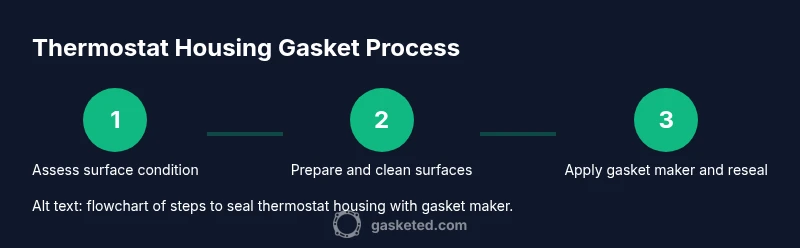
Yes, you can use gasket maker on a thermostat housing, but only under careful conditions: select a high-temp, vehicle-grade silicone gasket maker, apply a thin bead, and avoid sealing cracks—replace the gasket if the housing is damaged. This approach is best for small nicks or uneven mating surfaces, not for major leaks or warped parts. Always follow manufacturer instructions.
Can you use gasket maker on thermostat housing? How it works
Gasket makers are silicone-based sealants designed to fill gaps between mating surfaces when a traditional solid gasket isn’t feasible. On a thermostat housing, the idea is to create a hydrophobic, heat-resistant seal where minor imperfections exist or where a replacement gasket isn’t immediately available. This can be a temporary workaround in a pinch, but it is not a cure for serious damage. According to Gasketed, the best outcomes come from using products specifically rated for high-temperature coolant environments and from applying them precisely to clean, dry surfaces. The thermostat housing sits at the intersection of the cooling system and the engine’s temperature regulation, so any sealant must tolerate coolant exposure, vibration, and heat without becoming brittle or squeezing into passages. When used correctly, gasket maker can help seal a marginal joint; when used incorrectly, it can contaminate passages or mask a fundamental part failure. In short, it’s a tool in the toolbox, not a universal fix. Always verify product compatibility with your vehicle’s make and model and follow the manufacturer’s application guidelines.
Notes on terminology and material compatibility
- Gasket maker typically refers to a silicone-based sealant formulated for high temperature and coolant exposure. It differs from generic RTV silicone or epoxy in its intended sealing performance and cure profile.
- For thermostat housings, you want a product rated for automotive cooling systems and high-temperature exposure. Some products are designed for head gaskets or exhaust components and may not be ideal for a thermostat housing.
- Avoid products that cure hard like epoxy or products that claim fuel-system compatibility when used on cooling systems. These are not optimized for the low-viscosity coolant environment and can degrade over time.
Quick comparison: gasket maker vs replacement gasket
- Gasket maker: immediate seal, good for minor surface imperfections, faster turnaround, but can fail if the housing is damaged or warped.
- Replacement gasket: designed to fit precisely, lasts longer under normal operation, but requires disassembly and correct torque specs.
- If you’re unsure about the housing’s condition, test for smooth sealing surfaces and consider a professional inspection before deciding.
Practical takeaway
If you decide to try gasket maker on a thermostat housing, limit the use to the cleanest, dry, lightly imperfect surfaces. Do not rely on it to fix cracks, warped passages, or damaged threads. Prepare for a potential full gasket or housing replacement if the seal cannot be achieved with proper surface prep and product selection.
A note on quality and reliability
Quality matters: low-quality sealants may fail early when exposed to repeated heat cycles or coolant exposure. Always choose a product with automotive-grade certifications and a high-temperature rating. In practice, this means selecting a gasket maker proven to work in similar engine cooling configurations and following cure times precisely. If you’re unsure, err on the side of replacing the gasket or housing rather than risking a leak.
How to assess your specific scenario
- Look for obvious cracks, pitting, or warping on the housing.
- Check the mating surface for flatness; a glossy ring around the joint can indicate a poor seal area.
- If coolant leaks appear after a test run, recheck torque specs, gasket coverage, and whether the housing was fully seated. In many cases, a gasket maker won’t compensate for a warped surface or a damaged gasket channel.
Summary for DIYers
Gasket maker can be a temporary sealant on a thermostat housing for small imperfections, but it’s not a substitute for a proper gasket or a damaged part replacement. Prioritize surface cleanliness, proper product selection, and adherence to the design specs of your cooling system. If in doubt, seek guidance from a professional or consult the vehicle’s service manual for recommended seals.
Best-practice checklist
- Use a high-temperature automotive gasket maker approved for coolant systems.
- Ensure all surfaces are clean, dry, and free of old gasket material.
- Apply a thin bead and avoid over-application that could clog passages.
- Reassemble with correct torque and allow curing per product instructions.
- Monitor for leaks after startup and be prepared to replace the gasket/housing if leaks persist.
Tools & Materials
- Gasket maker (high-temp silicone, automotive-grade)(Select a product rated for coolant exposure and engine temperatures.)
- Replacement thermostat housing gasket(Have a new gasket on hand in case the original is damaged during removal.)
- Torque wrench(Use to torque housing bolts to vehicle specification.)
- Socket set(For removing and re-fitting housing bolts.)
- Screwdrivers (Phillips and flat-head)(Needed for sensor connectors and clamps near the housing.)
- Razor scraper or plastic putty knife(Carefully remove old gasket without scratching mating surfaces.)
- Isopropyl alcohol (70% or higher)(Cleans and degreases surfaces before sealing.)
- Lint-free cloths or paper towels(For drying and wiping surfaces during prep.)
- Nitrile gloves(Protect skin from chemicals and coolant contaminants.)
- Gasket cleaner or degreaser(Tough degreasing action helps remove built-up oil and coolant residues.)
Steps
Estimated time: 60-90 minutes
- 1
Cool engine and disconnect the battery
Ensure the engine is cool before working. Disconnect the negative battery terminal to reduce the risk of electrical shorts while you access the housing. This step protects you from accidental sparks when loosening bolts near electrical connectors.
Tip: Label or place bolts in a magnetic tray to avoid misplacement. - 2
Gather tools and materials
Collect all required tools and the gasket kit before starting. Having everything on hand minimizes interruptions and helps maintain a clean, organized workspace. Review the vehicle manual for any model-specific cautions.
Tip: Double-check product compatibility with your vehicle model. - 3
Relieve pressure and drain coolant if required
If you must separate the housing from coolant passages, follow the manual to relieve system pressure and drain coolant safely into an approved container. Keep the coolant at a safe level to avoid spills and contamination of other components.
Tip: Have absorbent rags ready for any unexpected drips. - 4
Remove thermostat housing bolts and detach housing
Carefully remove the mounting bolts and separate the housing from the engine block. Keep track of washers and any sensor connectors to avoid reassembly issues. Do not force components if they resist; misalignment can damage threads.
Tip: Use a small lift or magnet to hold tiny fasteners to prevent loss. - 5
Clean mating surfaces thoroughly
Scrape away old gasket material gently with a plastic tool, then wipe both surfaces with isopropyl alcohol until no residue remains. Dry surfaces completely before applying gasket maker to maximize adhesion and seal quality.
Tip: Avoid metal scrubbers that can gouge the surface. - 6
Apply gasket maker and install new gasket
Apply a thin, continuous bead of gasket maker around the gasket surface, avoiding gaps or excessive thickness. Place the new gasket and ensure seating is even before reattaching the housing.
Tip: Do not apply gasket maker to the bolt threads or water ports. - 7
Torque bolts to spec and reassemble
Tighten bolts in a crisscross pattern to the manufacturer’s torque specification. Recheck all connections and clamps for security to avoid leaks. This step ensures a uniform seal.
Tip: Use a torque wrench to avoid over-tightening or under-tightening. - 8
Refill coolant and bleed the cooling system
Replenish coolant to proper levels and bleed air from the system as described in the owner’s manual. Start the engine and watch for leaks around the joint while the system reaches operating temperature.
Tip: Check for heat at the heater core and ensure the thermostat opens normally.
Common Questions
Is gasket maker a permanent fix for thermostat housing leaks?
It can seal minor imperfections temporarily, but it’s not a substitute for a faulty gasket or damaged housing. Plan a proper replacement if leaks persist.
Gasket maker can help temporarily, but a leaking housing usually needs a gasket replacement or part repair.
Can I apply gasket maker over an old gasket?
Avoid layering sealants over old gaskets. Remove the old gasket, clean surfaces, and apply gasket maker only on clean, dry faces for the best seal.
Don’t stack sealants on top of old gaskets; clean first for a proper seal.
What types of gasket maker are best for thermostats?
Choose a high-temperature, automotive-grade silicone gasket maker designed for coolant systems. Avoid products not rated for coolant exposure.
Use a high-temp automotive silicone made for coolant, not regular household sealants.
Do I need to remove the thermostat to seal the housing?
Often you can seal the housing without removing the thermostat, but inspecting the thermostat during the process is wise. Follow the service manual for model-specific guidance.
Usually you can work around the thermostat, but check your manual for instructions.
How long should the gasket maker cure before running the engine?
Follow the product’s cure time; curing times vary by product. Do not run the engine until the seal is fully cured per the instructions.
Let the seal cure as directed by the product—don’t rush.
What if coolant leaks after reassembly?
Shut off the engine and re-check seating, gasket coverage, and torque. If leaks persist, replace the gasket or housing.
If you leak after reassembly, stop and recheck the seal and parts.
Watch Video
Key Takeaways
- Assess housing condition before sealing.
- Choose high-temp automotive gasket maker for coolant exposure.
- Maintain clean, dry mating surfaces for best results.
- Torque bolts to spec and monitor for leaks after startup.
- Replace damaged housings or gaskets rather than relying on sealants as a fix.