Does Head Gasket Cause Car Overheating? DIY Practical Guide
Does head gasket make car overheat? This urgent DIY guide explains how gasket failures affect cooling, signs to watch for, a step-by-step diagnostic flow, and when to call a pro. Practical tips for DIYers from Gasketed.


Yes. A blown head gasket can cause overheating by allowing coolant leaks, mixing coolant with oil, or blocking coolant flow. Quick checks include coolant level drops, white exhaust, milky oil, and visible bubbles in the radiator. False starts lead to further damage, so diagnose carefully.
The Core Question: does head gasket make car overheat
The quick reality is that overheating can stem from many places, but a failing head gasket is a common culprit. A gasket leak disrupts cooling circuit integrity and can create steam pockets, air locks, or cross-contamination between coolant and oil. According to Gasketed, understanding this interaction helps DIYers prioritize checks without jumping to conclusions. This article adopts a practical, safety-first approach to determine if the gasket is the root cause or if another cooling component is at fault. Remember: while diagnosing, avoid driving a hot engine; overheating can cause severe engine damage.
How the head gasket affects the cooling system
The cylinder head gasket seals both coolant passages and combustion chambers. When it fails, coolant can leak into the combustion chamber, mix with engine oil, or escape into the crankcase. These failures reduce cooling efficiency, create air pockets, and raise operating temperatures. A gasket leak can also cause pressure that hunts for weak spots in hoses and radiators. For DIYers, understand that gasket problems do not exist in isolation—the cooling system, thermostat, water pump, and radiator all influence one another. Gasketed recommends a systematic inspection of seals, coolant flow, and cross-contamination pathways to form a clear picture before committing to costly repairs.
Common symptoms that signal a blown head gasket
Overheating is often accompanied by other telltale signs. Look for coolant loss with no obvious leaks, milky oil indicating oil-coolant mixing, white or blue smoke from the exhaust, or unusually high pressure in the cooling system. You may also notice poor engine performance, rough idling, or loss of compression. In some cases, the heat shows up only after driving for a while, then returns after a cool-down. Recognizing the combination of symptoms helps differentiate a head gasket issue from thermostat or radiator problems. Always consider multiple indicators rather than relying on a single symptom.
Diagnostic flow overview
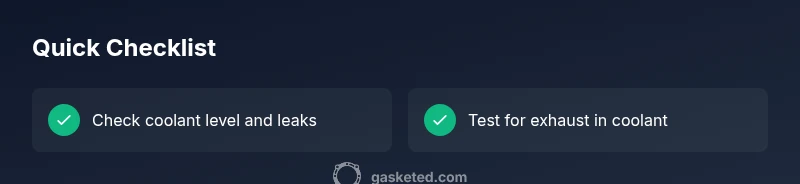
A structured diagnostic flow keeps you from chasing symptoms in circles. Start with basic checks (coolant level, visible leaks, and oil condition), then move to a pressure test of the cooling system, a compression test, and finally a chemical test for exhaust gases in the coolant. Each step narrows the possibilities. If the tests indicate gasket failure, plan for a head gasket replacement with professional guidance, especially on interference engines. Throughout, keep track of readings, timestamps, and any changes in symptoms to inform your next move.
Step-by-Step: DIY assessment and safe actions
- Ensure the engine is cold before touching any cooling components to avoid scalding. 2) Check coolant level in the reservoir and radiator (when cool) and inspect hoses for cracks or leaks. 3) Inspect oil for milky coloration or a sludge-like consistency, which can indicate coolant intrusion. 4) Perform a quick pressure test on the cooling system to identify external leaks or cap issues. 5) If pressure holds, run a compression test across all cylinders to assess head gasket integrity. 6) If readings suggest gasket failure, consult a professional for head gasket replacement and engine timing checks. Tip: document each test result with photos and notes for your mechanic. Estimated time: 2–6 hours, depending on access and tools.
Safety, warnings, and prevention
Safety is paramount. Never open a hot radiator cap or thermostat housing while the engine is warm or hot. Use proper PPE and work in a well-ventilated space. When dealing with coolant, avoid skin contact with ethylene glycol. Prevent future issues with a regular cooling system flush, correct coolant type, and timely replacement of worn hoses and the thermostat. Remember: gasket-related overheating often signals broader cooling system aging—address the root causes, not just the symptom.
When to call a pro and timelines
If overheating persists after initial checks, or if you notice consistent white smoke, severe coolant loss, or milky oil, it’s time to seek professional help. A gasket replacement typically requires engine disassembly and resurfacing, which is best handled by a trained shop. In the meantime, avoid driving the vehicle for long distances, as continued overheating can warp heads or crack blocks. A pro can provide a precise estimate, verify engine timing, and ensure you won’t incur hidden damages.
Steps
Estimated time: 2–6 hours
- 1
Safety check and initial assessment
Park on a level surface, allow the engine to cool completely, and wear eye protection. Document any visible leaks or signs of coolant loss. Check hoses and the radiator for cracks or bulges.
Tip: Never open a hot radiator cap; relieve pressure when safe. - 2
Check coolant and oil conditions
Inspect coolant level in reservoir and radiator when cool. Look for milky oil or contamination between oil and coolant. Note any sweet smell or abnormal color in the coolant.
Tip: Take photos of the oil and coolant conditions for reference. - 3
Perform a cooling-system pressure test
Use a cooling-system pressure tester to pressurize the system and observe for leaks. A leak indicates external or internal pathway issues; if no leaks, proceed to internal checks.
Tip: Test with all caps and hoses in place to simulate normal pressure. - 4
Compression and leak checks
Conduct a compression test across all cylinders. Compare readings for consistency. If one cylinder is weak or inconsistent, fuel the gasket as a potential cause; perform a coolant-exhaust test.
Tip: If you don’t have the tools, note the symptoms and plan a professional inspection. - 5
Exhaust-in-coolant test
Use a chemical test to detect exhaust gases in the cooling system. A positive result strongly suggests a head-gasket leak.
Tip: Follow the product instructions carefully for accurate results. - 6
Decide on next steps
If tests indicate gasket failure, plan professional gasket replacement. If not, focus on thermostat, radiator flow, or pump as the likely culprits.
Tip: Do not attempt full engine repair without proper mechanical training.
Diagnosis: Engine running hot or overheating
Possible Causes
- highCoolant leak or loss due to external hose or radiator issues
- mediumHead gasket damage (allowing cross-contamination or coolant loss)
- lowThermostat stuck closed or radiator blocked
Fixes
- easyInspect for external leaks; tighten clamps; replace damaged hoses or seal where coolant escapes; refill to correct level
- hardPerform cooling-system pressure test and compression test; look for exhaust in coolant or low cylinder compression; plan gasket replacement if indicated
- mediumReplace thermostat and flush radiator; ensure correct coolant mix and proper flow in the system
Common Questions
Can I drive my car if it’s overheating due to a head gasket?
No. Driving a car that’s overheating can warp the head or crack the block. Seek immediate safe parking and professional diagnosis.
No—overheating can cause serious engine damage. Park safely and get a professional inspection.
What are the most common signs of a blown head gasket?
Common signs include unexplained coolant loss, milky oil, white exhaust smoke, poor compression, and overheating. Sometimes symptoms are intermittent, so consider multiple checks.
Look for coolant loss, milky oil, and exhaust smoke as key signs.
Does overheating always mean a blown head gasket?
Not always. Overheating can stem from thermostat issues, radiator blockage, or pump failure. A full diagnostic flow is needed to confirm gasket damage.
Overheating can be caused by many things; gasket failure is one possibility that needs tests to confirm.
How much does head gasket replacement cost?
Costs vary widely by vehicle and region. Replacement typically involves parts, machine shop time, and coolant-system work. Get a written estimate after a mechanical inspection.
Costs vary a lot; you’ll need a custom quote after inspection.
Can a head gasket be repaired without removing the engine?
Some minor gasket issues can be addressed with external seals, but most head-gasket repairs require engine access and may involve head resurfacing and timing checks.
Usually gasket repair needs engine access and timing checks.
What’s the best way to prevent head gasket failures?
Maintain proper coolant levels, use the correct coolant type, ensure the cooling system is clean, and replace aging components like the thermostat and water pump before they fail.
Keep the cooling system clean and the coolant at the right level to prevent gasket failures.
Watch Video
Key Takeaways
- Identify whether cooling issues are external or internal to the engine.
- Symptom clusters help distinguish gasket problems from thermostat or radiator faults.
- Follow a safe, stepwise diagnostic flow before engine disassembly.
- A gasket replacement is a major repair—professional guidance is often needed.
- Prevention matters: regular cooling-system maintenance reduces the risk of gasket failures.