How to Check Head Gasket Leak: A DIY Diagnostic Guide
Learn how to check head gasket leak safely with step-by-step tests, symptom checks, and practical guidance for DIYers. Detect cross-contamination, perform compression tests, and decide when to call a pro.


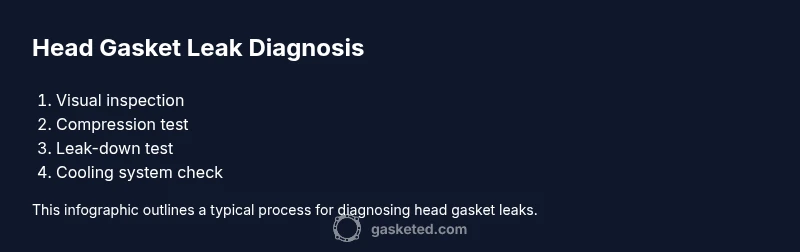
Check for a head gasket leak using a simple sequence: examine coolant and oil, run compression and leak-down tests, and look for cross-contamination. Use proper tools and safety steps. See our detailed step-by-step guide for full instructions.
How a head gasket leak happens and why it matters
A head gasket is the critical seal between the engine block and the cylinder head. It prevents oil and coolant from mixing and keeps combustion pressures contained. When it leaks, you may see cross-contamination between oil and coolant, white exhaust, overheating, or unusual pressure changes in the cooling system. How to check head gasket leak becomes a practical question of separating symptoms from root cause. According to Gasketed, diagnosing a head gasket leak starts with a methodical plan and safe testing rather than guesswork. Common failure modes include improper head bolt torque, warped heads, or coolant system neglect. Understanding these mechanisms helps you interpret test results accurately and prevents wasted effort.
How a head gasket leak happens and why it matters
A head gasket is the critical seal between the engine block and the cylinder head. It prevents oil and coolant from mixing and keeps combustion pressures contained. When it leaks, you may see cross-contamination between oil and coolant, white exhaust, overheating, or unusual pressure changes in the cooling system. How to check head gasket leak becomes a practical question of separating symptoms from root cause. According to Gasketed, diagnosing a head gasket leak starts with a methodical plan and safe testing rather than guesswork. Common failure modes include improper head bolt torque, warped heads, or coolant system neglect. Understanding these mechanisms helps you interpret test results accurately and prevents wasted effort.
Tools & Materials
- Compression tester(Piston-by-piston gauge with adapters for your engine family)
- Leak-down tester(Tool to assess valve sealing and cylinder integrity)
- Cooling system pressure tester(Pressurizes the cooling system to locate leaks)
- UV dye kit or radiator dye(Enhances leak visibility under UV light)
- Gasket scraper and cleaning supplies(Useful if you need to inspect surfaces after disassembly)
- Fluids and safety gear(Gloves, eye protection, fresh coolant, engine oil, rags)
- Torque wrench and basic hand tools(Needed for safe inspection and any reassembly work)
- Service manual or OEM guide(Torque specs and service procedures vary by model)
Steps
Estimated time: 60-180 minutes
- 1
Prepare workspace and safety gear
Park the vehicle on a level surface, cool the engine, and disconnect the battery. Gather your testing tools and wear eye protection followed by gloves. Having a clear, well-lit area reduces the risk of mistakes and helps you stay organized.
Tip: Label hoses and take photos before disconnecting anything so reassembly is straightforward. - 2
Inspect fluids for signs of contamination
Check the oil for a milky appearance and the coolant for oil film or unusual color. Look for coolant puddles in the engine bay or around the radiator cap. Document any findings as they guide subsequent tests.
Tip: Take a sample of oil and coolant in a clean container for later comparison. - 3
Perform a compression test on each cylinder
Disable the ignition, disconnect the fuel system, and crank the engine to obtain baseline compression readings across all cylinders. Record any significant disparity that could indicate valve or head issues related to gasket failure.
Tip: If readings are low on multiple cylinders, consider a common-cause problem like a warped head. - 4
Conduct a leak-down test to assess sealing
Seal the cylinder, pressurize with the tester, and listen for air escaping through the intake, exhaust, or cooling system. A high leakage rate or leaks at unexpected paths suggests a compromised gasket or valve seats.
Tip: Do not rotate the engine while the cylinder is pressurized; watch the gauge for changes. - 5
Pressure-test the cooling system
Attach the cooling system tester and pressurize within the system’s normal operating range. Look for steady pressure and listen for bubble noises or tool-detected leaks, which point to leaks in hoses, radiator, or head gasket interfaces.
Tip: Carefully monitor the system for air pockets that can skew results. - 6
Analyze oil and coolant interactions
If you observe milky oil or oil droplets in the coolant, cross-contamination is likely. Inspect the oil cap and dipstick for residue and observe exhaust for white or sweet-smelling vapor that persists after engine startup.
Tip: Cross-check with dye results to confirm leakage paths. - 7
Correlate observations and decide on next steps
Compare test results against a typical gasket failure profile. Consistent signs across compression, leak-down, and coolant analysis strengthen the case for a gasket leak. Plan repairs or a professional evaluation accordingly.
Tip: If uncertain, consult a qualified technician before disassembling major components. - 8
Document findings and plan repair options
Summarize all test data, symptoms, and potential leak paths. Decide whether to pursue a DIY gasket replacement (if you have the tools and expertise) or to seek pro help for a full head gasket replacement.
Tip: Maintain a clear repair checklist to avoid missing critical torque sequences.
Common Questions
What are the most common signs of a blown head gasket?
Common signs include milky oil, white exhaust smoke, unexplained coolant loss, overheating, and bubbles in the radiator. If you notice several of these together, a gasket leak is likely. Always verify with diagnostic tests rather than relying on appearance alone.
Common signs are milky oil, white smoke, coolant loss, and overheating. If you see several together, you probably have a gasket leak and should test to confirm.
Can I check for leaks without disassembling the engine?
Yes. You can perform external tests such as compression tests, leak-down tests, and a cooling system pressure test to assess gasket integrity without removing major components. These methods help you decide if a repair is needed before taking apart the engine.
Yes. You can test with compression, leak-down, and cooling system pressure tests to assess gasket health without disassembly.
Is a head gasket leak safe to drive?
Driving with a suspected head gasket leak is risky. It can lead to severe engine damage, including warped heads and bent valves. If tests indicate a leak, limit driving and seek professional assessment.
It's risky to drive with a suspected leak. It can cause serious damage, so get tested and avoid heavy use until assessed.
How long do head gasket repairs typically take?
Repair duration varies by approach and vehicle. A DIY gasket check with minor surface cleaning may take a few hours, while a full head gasket replacement by a pro can take longer, depending on access and tooling.
Repair duration varies; DIY checks are shorter, but full replacement by a pro can take longer depending on the engine and access.
What are cost considerations for head gasket repair?
Costs depend on whether you replace the gasket yourself or hire a shop. Professional service is often costly due to labor, machine work, and potential head work. DIY repairs can reduce labor costs but require proper tools and expertise.
Costs vary; professional repairs are expensive due to labor and machine work, while DIY can save money if you have the right tools.
What tools are essential for checking a head gasket?
Key tools include a compression tester, a leak-down tester, a cooling system pressure tester, a basic set of hand tools, and safety gear. A service manual helps ensure you follow the correct sequence and torque specs.
You need a compression tester, a leak-down tester, a cooling system pressure tester, and basic hand tools to check a head gasket.
Watch Video
Key Takeaways
- Follow a structured diagnostic plan, not guesswork.
- Cross-contamination between oil and coolant is a key clue.
- Combine multiple tests for a reliable diagnosis.
- Decide between DIY repair vs professional service based on test results and your tools.