What Are Signs of a Head Gasket Leak? A DIY Guide
Spotting head gasket leak signs early can save engines. Learn practical DIY checks, tests, safety tips, and when to call a pro to prevent serious damage.


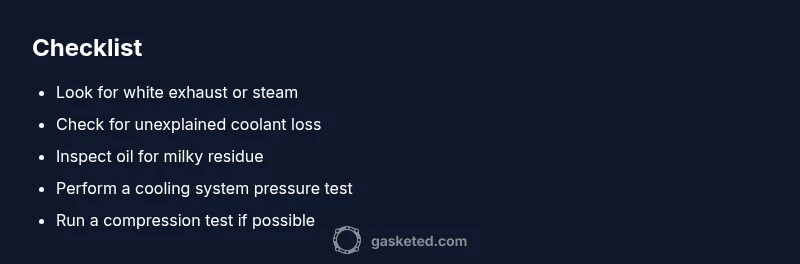
Signs of a head gasket leak can show up as white exhaust, unexplained coolant loss, milky oil, and sudden overheating. If you notice these indicators together, stop driving and perform quick checks like verifying coolant levels and oil color. Early diagnosis and timely repairs save engine life, reduce pollution, and prevent expensive damage. A quick check includes milky oil, coolant foam, and a dipstick with unusual residue.
What are signs of a head gasket leak
If you’re wondering what are signs of a head gasket leak, you're not alone. Gaskets seal the cylinder head to the engine block and control coolant and oil flow. When this seal fails, you can see a mix of symptoms that affect cooling, exhaust, oil, and overall engine performance. According to Gasketed, the most reliable early indicators are a combination of coolant loss without an external leak, white smoke from the exhaust, milky oil on the dipstick or under the oil cap, and sudden or persistent overheating. Even small leaks can escalate quickly under load, so treat multiple signs as a warning flag rather than a single oddity. In practice, look for patterns rather than isolated events: coolant appearing in the oil, oil in the coolant, or a drop in cooling efficiency while the engine runs smoothly at idle. If you notice these signs, plan a careful inspection and tests rather than guessing at the cause. The goal is to confirm whether coolant, oil, or combustion gases are crossing the gasket and then decide on the next steps. Early diagnosis helps you avoid costly damage. what are signs of a head gasket leak
Physical symptoms to look for in your engine
Beyond the obvious indicators, several engine-level cues can point toward a head gasket leak. A consistent, unexplained drop in coolant level over days or weeks, especially when you aren’t seeing a visible leak, is a red flag. Milky residue on the oil dipstick or under the oil cap strongly suggests coolant mixing with oil, a hallmark of gasket issues. White smoke from the exhaust, a sweet or burnt-coolant odor, and overheating under load can accompany coolant intrusion into combustion or oil passages. Inspect the radiator cap area for foam or milky residues that don’t wipe away. External signs like dampness around the gasket seal, damp cylinder head surfaces, or puddles underneath the engine can corroborate internal problems. Remember that several conditions—failing water pump, clogged radiator, or cracked hoses—can mimic head gasket symptoms. The key is the cluster of signs: coolant in oil, unusual exhaust, and overheating together point toward a gasket problem rather than a single unrelated fault. This multi-sign approach makes diagnostics more reliable and minimizes wasted repairs.
Common tests you can perform at home safely
Starting with safe, non-destructive checks is wise before you disassemble anything. Begin by monitoring coolant levels over several days and comparing against service records. Look for milky, frothy oil on the dipstick, as it indicates coolant crossing into the oil. A cooling system pressure test is a practical next step: with the engine cold, attach a pressure tester to the radiator neck and watch for any drops in pressure. If pressure bleeds away, the leak could be in the gasket or another cooling path. A compression test on each cylinder using a gauge helps identify loss of compression consistent with gasket failure, while a leak-down test can confirm whether the seal is compromised or if other components are the source. If the test results point to a gasket leak, plan for a professional diagnosis and gasket replacement. If you’re not comfortable with pressure tests or the vehicle is hot, stop and seek professional help. safely perform tests as described.
Interpreting symptoms: coolant in oil vs exhaust in coolant
Interpreting signs of a head gasket leak requires distinguishing where fluids are migrating. If coolant contaminates the engine oil, you may see a milky appearance on the dipstick or under the oil fill cap, which suggests coolant entering the oil gallery. In contrast, coolant in the exhaust or white smoke can indicate coolant entering the combustion chamber. Other combinations—like persistent overheating with low coolant—can reinforce the likelihood of a gasket issue. Separating these clues helps you narrow down the root cause: gasket failure versus a cooling system component failure (radiator, water pump, or thermostat). Use a combination of visual inspection, oil and coolant tests, and a compression/ leak-down test to confirm. If the signs are ambiguous or you don’t have the tools, consult a qualified mechanic. Remember, early action reduces the risk of warped heads or a cracked block, which are far more costly to repair.
Diagnostic flow at a glance
A clear diagnostic flow helps prevent misdiagnosis. Start with safety and a quick visual check for coolant loss or oil contamination. If suspect, perform a cooling system pressure test to see if the system holds pressure. Next, run a compression test across all cylinders; uniform results point away from a gasket leak, while low or uneven numbers suggest a gasket or head issue. If compression tests are inconclusive, an advanced leak-down test can reveal whether gases are escaping into the cooling system or oil. Confirm with a chemical test in the cooling system for exhaust gases. If a gasket leak is confirmed, plan for gasket replacement and inspect the cylinder head for warping. If you’re unsure of any step, contact a professional to avoid a costly misstep.
Step-by-step diagnostic flow you can follow
- Stop driving and cool the engine in a safe area. 2) Check oil and coolant visually for contamination. 3) Perform a cooling system pressure test with the engine cold. 4) Conduct a cylinder compression test; note any low or inconsistent readings. 5) If needed, perform a leak-down test to locate the leak source. 6) If signs point to a gasket leak, arrange professional assessment and gasket replacement. 7) Document all symptoms, test results, and timing to share with your mechanic. 8) If the symptoms persist after service, recheck for head warp or other component failures. estimatedTime: 60-90 minutes for initial checks, longer for full diagnostic.
How to check for head gasket leaks safely
Safety is the priority. Always work on a cool engine and use eye protection. Do not open a hot radiator cap or pressure-filled systems; allow heat to dissipate and relieve pressure according to the manufacturer’s guidance. When performing tests, keep hands, hair, and clothing away from moving parts and hot surfaces. Use properly rated tools and wear gloves when handling coolant and oil. If you’re unsure about your results or lack the right tools, stop and seek professional help. Never drive a vehicle long-distance with suspected gasket leaks; driving can cause severe engine damage. Finally, keep a detailed log of symptoms and test results to help a technician diagnose more efficiently.
Costs, time, and what to expect from repairs
Repairing a head gasket is a major service that varies with vehicle design, shop rates, and whether the head must be resurfaced or if the engine has additional damage. In many cases, the process requires removing the cylinder head, inspecting for warping or cracks, resurfacing if needed, and replacing the gasket along with related components like seals, timing belts, and cooling system parts. Expect downtime that depends on the shop’s schedule and the car’s accessibility, and be prepared for a broader inspection if signs point to a warped head or cracked block. While price details aren’t set here, understand that older or high-performance engines may incur higher costs due to additional parts and labor. Ask your mechanic for a written estimate that covers parts, labor, potential resurfacing, and a warranty on the gasket job.
Prevention and maintenance to extend gasket life
Prevention starts with good cooling system maintenance and regular checks. Keep coolant at proper levels and use the correct type for your vehicle. Replace old hoses and the radiator cap as needed, and flush the cooling system on schedule. Address overheating promptly—ignoring it increases the likelihood of head gasket failure. Maintain continuous monitoring for oil and coolant quality, and fix small leaks before they worsen. Use high-quality gasket sealants only when recommended by the vehicle manufacturer, and store service records to help track patterns that could signal pending issues. Finally, perform periodic compression tests if your vehicle has a history of head gasket problems, so you catch problems before they escalate.
Steps
Estimated time: 2-4 hours
- 1
Stop and cool engine safely
Park in a safe area, turn off the engine, and let it cool completely before touching any components. This reduces burn risk and pressure in the cooling system.
Tip: Use gloves; never open hot caps or radiators. - 2
Do initial visual checks
Check for milky oil on the dipstick, coolant foam, white exhaust smoke, and any dampness around the gasket area. These visual cues help you decide if further testing is warranted.
Tip: Take photos of signs before you clean or wipe them away. - 3
Perform cooling system pressure test
Attach a cooling system pressure tester to the radiator neck and monitor for pressure loss. A steady drop indicates a leak somewhere in the cooling circuit or the head gasket.
Tip: Follow the tester's instructions and never force the system beyond its rated pressure. - 4
Run a compression test on all cylinders
Using a compression gauge, compare readings across cylinders. Consistently low or uneven results point to a gasket or head issue rather than a single valve or piston fault.
Tip: Wipe the gauge and re-test if readings are borderline. - 5
Consider a leak-down test for confirmation
A leak-down test can confirm whether the leak is into the cylinder or into the cooling/oil system. This helps distinguish gasket leaks from other problems.
Tip: This test is most effective when performed with the engine at TDC on the compression stroke. - 6
Decide on repair path
If tests indicate a gasket leak, plan for head gasket replacement and inspect head integrity. If not conclusive, defer major work and consult a professional.
Tip: Document all signs, test results, and the order in which symptoms appeared.
Diagnosis: Engine overheating with coolant loss and possible milky oil
Possible Causes
- highHead gasket leak allowing coolant to enter combustion chamber or oil, causing pressure changes
- mediumOverheating due to low coolant or radiator issue
- lowCracked cylinder head or warped block causing gasket failure
Fixes
- easyPerform cooling system pressure test and compression test to confirm gasket leak
- hardIf confirmed, replace head gasket and inspect cylinder head for warping; resurface if needed
- easyAddress radiator, water pump, or hose issues that could mimic gasket failure
Common Questions
What are the most common signs of a head gasket leak?
White exhaust, unexplained coolant loss, milky oil, and overheating are the most frequent indicators. A combination of these signs increases the likelihood of a gasket issue.
Common signs include white exhaust, coolant loss, and milky oil, especially when they occur together.
Can a head gasket leak be safely driven?
No. Driving with a suspected gasket leak can cause severe engine damage, including warped heads or cracks. Have the car inspected as soon as possible.
No—driving with a suspected gasket leak can cause serious damage; get it inspected promptly.
How do you diagnose a head gasket leak at home?
Start with coolant and oil checks, then perform a cooling system pressure test and a compression test. These steps can indicate whether a gasket leak is likely and guide the next move.
Check oil and coolant, then try a cooling system pressure test and a compression test.
What is the risk of delaying repair?
Delays can lead to warped heads, cracked blocks, and more extensive engine damage. Early repair minimizes repair scope and cost.
Delaying can cause more extensive damage like warped heads or cracks.
Should I replace the head gasket or the entire engine?
Usually, replacing the head gasket is enough if the head is sound. Engine replacement is rare and only considered in severe cases.
Most of the time, only the gasket is replaced; full engine replacement is rare.
How long does head gasket replacement take?
Timing varies by vehicle and shop, but the job is typically a multi-hour process that may require a day or more.
It can take a day or longer, depending on the car and shop workload.
Watch Video
Key Takeaways
- Identify the top signs early to prevent engine damage
- Use a multi-sign approach for reliable diagnosis
- Do safe at-home checks before professional tests
- Gasket replacement is a major repair with professional time
- Plan for follow-up inspection after service