How to Tell If Head Gasket Is Leaking: A DIY Guide
Urgent DIY guide to spotting head gasket leaks, diagnosing safely, and deciding when to call a pro. Learn signs, tests, and practical steps from Gasketed.


Head gasket leaks usually show coolant mixing with oil, white exhaust, or overheating. Start with a quick visual check of dipsticks, under-hood coolant loss, and pressure tests. This quick guide walks you through a practical, at-home diagnostic you can start today. Note that other cooling problems can mimic leaks, so follow the step-by-step approach to confirm.
What a head gasket does and why leaks happen
A head gasket sits between the engine block and the cylinder head. Its job is to seal combustion chambers, coolant passages, and oil channels, keeping these fluids from mixing. When the gasket fails, combustion gases or coolant can slip into places they don’t belong, and oil can become contaminated. Heat and age are common culprits, but improper installation and overheating can accelerate failure. According to Gasketed, a careful inspection and systematic testing help DIYers differentiate gasket leaks from other cooling-system issues. Early signs are subtle, so noticing them promptly matters for cost and timing.
Common signs of a leaking head gasket
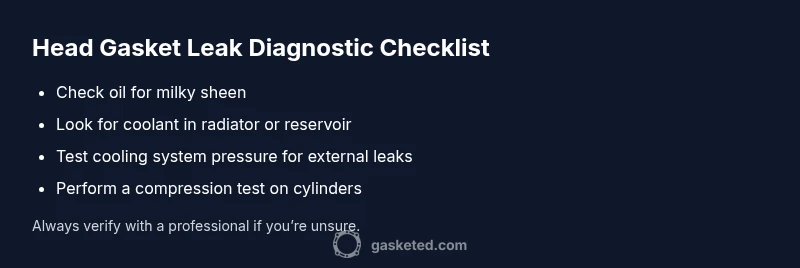
Leaks can manifest in several ways. Look for milky-looking oil on the dipstick or oil fill cap, which suggests coolant mixing with oil. Coolant loss without obvious leaks, white exhaust smoke from the tailpipe, and frequent overheating are also red flags. You might notice bubbles in the radiator or coolant reservoir as combustion gases escape into the cooling system. Keep an eye on pressure readings and oil color over time, since changes can indicate gasket problems. These signs don’t prove a leak alone, but they strongly point to one when observed together.
How to inspect safely at home: initial checks
Begin with the basics: ensure the engine is cold before opening the cap, and inspect both the oil and coolant visually for contaminants. Remove the oil cap and look for a creamy, milky film; check the coolant for oil-like sheen or unusual colors. Calibrate your expectations—other faults can mimic gasket leaks. Document any visible signs and keep track of fluid levels over a few days. A clean initial snapshot helps when you perform more precise tests later.
The role of coolant and oil tests in diagnosis
Two practical at-home tests help separate gasket leaks from other issues: the coolant system pressure test and a basic compression test. A pressure test can reveal external leaks in hoses and the radiator, while compression tests across cylinders show whether combustion sealing is compromised. If you observe coolant in the oil or abnormal exhaust, these results reinforce a gasket-related concern. For a more definitive assessment, you may use a chemical test that detects combustion gases in the cooling system.
Diagnostic flow: symptom → diagnosis → solution
Start with symptom identification (overheating, oil-coolant mixing, white exhaust). If tests indicate a leak, the likely diagnosis is a failed head gasket. If tests are inconclusive, broaden the search to cooling-system faults or warped components. Realize that some engines with minor leaks can be stabilized temporarily, but a proper repair is often required for long-term reliability. Always weigh safety and cost considerations before proceeding to more invasive repairs.
Testing options: coolant tests, compression tests, and chemical tests
A multi-pronged approach yields the best confidence. Use a cooling-system pressure test to find external leaks, perform a cylinder compression test to gauge sealing, and consider a chemical test that detects gases from the combustion chamber in the cooling system. Each test has its own limitations, so interpret results collectively rather than in isolation. If you’re unsure, consult a professional early in the process to avoid unnecessary disassembly or harm.
What to do if you confirm a head gasket leak
If a leak is confirmed, you face a repair decision. In most cars, head gasket replacement involves removing the cylinder head, resurfacing, and reassembling with new gaskets and fasteners. Replacement costs and time vary by vehicle, region, and shop, so plan for a comprehensive job. In many cases, if the engine has higher mileage or additional damage, you may need more extensive repairs. Keeping records of tests and receipts helps with warranty discussions and future maintenance planning.
Safety considerations and common mistakes to avoid
Safety is paramount. Never service cooling components while the system is hot, and avoid removing pressure caps when the engine is hot. Wear eye protection and gloves, and ensure the vehicle is securely parked. Common mistakes include skipping the cooling-system checks, misinterpreting milky oil, and delaying professional assessment when signs are persistent. A methodical approach minimizes risk and improves the odds of a successful repair.
Prevention: how to reduce risk of future leaks
Preventive maintenance reduces gasket-load. Regularly replace aging hoses and clamps, monitor coolant quality and levels, pressure-test cooling systems after severe overheating, and address any overheating symptoms promptly. Keeping the cooling system clean and functioning reduces thermal stress that contributes to gasket failures. A proactive approach saves time, money, and frustration later.
Steps
Estimated time: 1-2 hours
- 1
Power down and prepare safely
Park on a level surface, let the engine cool completely, disconnect the negative battery, and wear protective gear. This minimizes shock and burns when you begin checks.
Tip: Never work on a hot engine or remove components that are hot or under pressure. - 2
Check fluid levels and signs
Inspect the oil dipstick and filler cap for a milky film, and look at the coolant reservoir for unusual color or oil droplets. Record readings and any dates you observe changes.
Tip: Take clear photos of the fluids before removing any parts for later reference. - 3
Perform a cooling-system pressure test
Attach a pressure tester to the radiator cap neck and bring the system up to the recommended pressure with the engine off. Watch for drops in pressure indicating a leak.
Tip: If you see rapid pressure loss, note where it occurs (radiator, hoses, water pump). - 4
Do a compression test
Screw in a compression gauge per your vehicle’s service manual and crank the engine to read compression on each cylinder. Compare readings for uniformity; a significant mismatch points to a sealing issue.
Tip: Be sure to crank with the throttle closed and the spark plugs removed for a stable reading. - 5
Consider a leak-down test or chemical test
A leak-down test can isolate mis-seal areas, while a chemical test in the cooling system detects exhaust gases. Both tests add confidence beyond basic checks.
Tip: Follow the test equipment instructions closely to avoid false results. - 6
Interpret results and decide on next steps
If tests indicate a gasket leak, plan for repair. If inconclusive, reassess cooling-system components and consider professional help. Document findings for future reference.
Tip: Accurate documentation helps with warranties and future diagnostics. - 7
Prepare for repair or replacement
Head gasket work is substantial: removal of the cylinder head, resurfacing, replacement of gaskets, and reassembly with proper torque specs. Ensure you have the right tools and a clean workspace.
Tip: Double-check torque specs and timing marks to avoid engine damage. - 8
Re-test after repair
After repairs, recheck all fluids, perform a post-repair pressure test, and monitor for new leaks or overheating. Confirm the issue is resolved before resuming normal driving.
Tip: Take it slow on the first drive and watch temperature and oil levels closely. - 9
Document and monitor long-term health
Keep regular maintenance logs, track coolant and oil condition, and run periodic checks to catch any issues early. Early detection helps prevent repeat gasket failures.
Tip: Set reminders for annual cooling-system inspections.
Diagnosis: Engine overheating with suspected coolant loss and milky oil
Possible Causes
- highHead gasket leak causing coolant and oil mixing or combustion gases in the cooling system
- mediumCooling-system issue such as a faulty radiator cap or hose leak
- lowThermostat or water pump problems leading to improper cooling
Fixes
- easyPerform a cooling-system pressure test to locate external leaks
- mediumConduct a combustion gas test (sniffer) to confirm head gasket involvement
- hardIf confirmed, plan for head gasket replacement and related repairs (head, valve seats, surface)
Common Questions
What are the most common signs of a blown head gasket?
Common signs include milky oil, coolant mixing with oil, white exhaust smoke, persistent overheating, and loss of coolant without external leaks. These cues, especially in combination, strongly suggest a gasket issue.
Common signs are milky oil, coolant mixing, white smoke, and overheating.
Can a head gasket leak be fixed without removing the engine?
In most cases, head gasket repair requires removing the cylinder head. Some minor issues can be addressed with less invasive cooling-system repairs, but a proper gasket repair typically needs engine access.
Most gasket repairs need the head removed for replacement.
Is milky oil always proof of a head gasket leak?
Milky oil is a strong indicator of coolant mixing, which can be caused by a head gasket leak but other issues may mimic the sign. A series of tests is needed to confirm.
Milky oil suggests coolant mixing, but tests confirm the cause.
Will a head gasket leak cause overheating?
Yes, a leak can cause overheating by reducing the cooling efficiency or by allowing combustion gases into the cooling system. However, overheating can also stem from other cooling faults.
Overheating can be caused by leaks or other cooling faults.
How long does it take to replace a head gasket?
Repair duration varies by vehicle, labor availability, and engine complexity. It commonly takes several hours to a full day in a shop.
It usually takes several hours to a whole day depending on the car.
Should I drive the car if a gasket leak is suspected?
If you suspect a head gasket leak, avoid driving long distances. Driving could worsen damage and lead to costly repairs. Seek professional inspection first.
Don’t drive far; get the car checked before you continue.
Watch Video
Key Takeaways
- Identify signs early before overheating worsens
- Use a structured diagnostic flow to confirm a gasket leak
- Plan repairs carefully; head gasket replacement is extensive
- Document tests and keep maintenance records for future care