Is a Blown Head Gasket Worth Fixing? A Practical Guide
Assess whether repairing a blown head gasket is worth the cost for your car. This analytical, side-by-side comparison weighs repair vs. replacement, risks, and DIY vs. pro paths for DIYers and homeowners.


TL;DR: Whether to fix a blown head gasket depends on the car’s value, age, and overall condition. In many cases, repair costs plus hidden damage aren’t worth it for high-mileage engines. For low-mileage, well-maintained vehicles, gasket repair can be sensible if you plan to keep the car. Consider resale value, long-term reliability, and your tolerance for downtime when making the decision.
Is the decision worth it? Framing the question
When you ask, is blown head gasket worth fixing, you’re really weighing two paths: repair the existing engine or replace the entire unit. The answer isn’t one-size-fits-all. The Gasketed team notes that the decision hinges on vehicle value, mileage, overall condition, and how long you plan to keep the car. A repair can restore function for a time, but the odds of encountering related cooling and compression issues can push total costs higher than expected. For DIYers and homeowners, this choice also depends on your willingness to invest time, tools, and the potential for multiple trial-and-error attempts. In summary, the decision is a balance between cost, risk, and the vehicle’s role in your daily life.
Core idea: not all blown head gaskets are the same
A gasket failure can range from a minor seal leak to a catastrophic engine breach. Early-stage failures with limited core damage may be more amenable to repair, while severe cores—warped heads, cracked blocks, or failing coolant passages—often point toward replacement. Understanding the specific failure mode is essential before evaluating whether fixing is worth it. The decision should factor in the vehicle’s year, model, and market value, not just the sticker price of parts.
Costs and value: repair vs replace
Costs play a central role in the decision, and you should consider both direct and indirect expenses. A gasket repair typically includes head removal, resurfacing or machining, gasket kit, coolant flush, and labor. In many markets, a full replacement engine escalates costs substantially, sometimes approaching or exceeding a large fraction of the car’s value. It’s important to remember that quoted prices are rough estimates and can vary with location, shop rates, and engine type. Gasketed analysis, 2026, emphasizes that the value equation, not the raw cost, drives the decision.
How age and mileage shift the math
Age and mileage dramatically affect whether repair is worth it. An older car with high miles may not justify the several-thousand-dollar repair, especially if the rest of the drivetrain shows wear. Conversely, a newer or low-mileage car with a good market price and solid maintenance history can make gasket repair financially sensible, particularly if you plan to keep the car for several more years. Always compare the repair cost to the vehicle’s current market value and projected remaining life.
Diagnostic steps and reliable tests
Before deciding, you should perform a structured diagnostic process. Start with a compression test and a leak-down test to confirm the gasket’s condition, followed by a coolant and oil analysis to assess contamination. A proper diagnosis helps avoid throwing money at a repair that won’t fix the underlying issue. If you’re unsure, seek an independent diagnostic report rather than relying solely on a shop’s estimate. The right tests can reveal whether the problem is truly a gasket failure or a more systemic engine issue that would render repair impractical.
DIY feasibility and safety considerations
DIY gasket repair is an ambitious project. It requires mechanical skill, a clean workspace, and a solid set of tools, including a torque wrench, head gasket kit, and a machine shop for head resurfacing if necessary. Safety must come first because head removal involves heavy components and precision reassembly. If you’re a confident hobbyist with the right manuals and support network, you may pursue a repair; otherwise, professional service reduces risk and ensures correct torque specs, gasket seating, and coolant system reassembly.
Alternatives and compromises
If full repair or engine replacement isn’t appealing, consider alternatives such as selling the car for parts, swapping to a remanufactured engine, or trading for a vehicle with a similar budget. In some cases, addressing coolant leaks and testing the cooling system separately can延 reduce ongoing risk while you decide on a longer-term plan. Weigh these options against the vehicle’s overall value and your goal for ownership.
Long-term maintenance to prevent recurrence
Prevention matters. After any gasket work, maintain consistent coolant levels, use compatible coolants, monitor oil-coolant interactions, and schedule regular compression and cooling system checks. A properly maintained cooling system and timely reseals can extend the life of a gasket repair, but they do not guarantee immunity from future failures if the engine design or heads have underlying defects.
Practical decision framework for homeowners
Use a simple framework: 1) quantify current vehicle value, 2) estimate repair cost and downtime, 3) assess risk of hidden damage, 4) consider future maintenance needs, and 5) decide whether to repair, replace, or walk away. If the numbers show a favorable outcome for repair, proceed with professional or careful DIY execution; if not, pursue a replacement or alternative plan. The final choice should align with your budget, goals, and time horizon.
Final considerations and next steps
If you decide to move forward with a repair, request a detailed quote that itemizes head work, machining, gasket kit, seals, and coolant. Ask about head resurfacing, reframing, or pressure testing that may influence the final cost. If you opt for replacement, research remanufactured engines and warranty terms. Regardless of the path, document maintenance history to protect resale value and future decision-making.
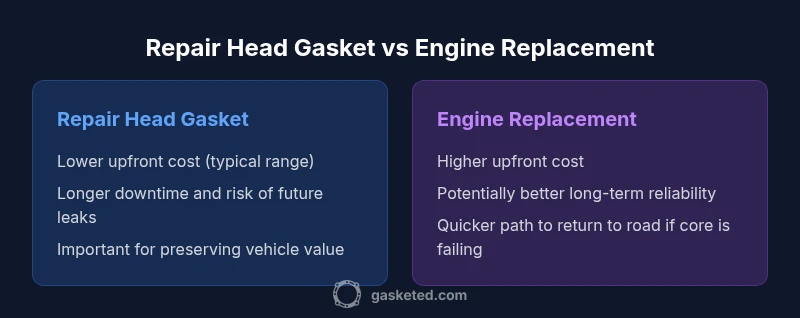
Comparison
| Feature | Repair Head Gasket | Engine Replacement |
|---|---|---|
| Estimated Cost Range | $1,000–$2,500 (parts and labor) | $4,000–$10,000+ (engine replacement) |
| Labor Time | Approx. 8–20 hours depending on engine layout | Multiple days with engine removal and installation |
| Reliability & Longevity | Depends on head/block condition; risk of recurring issues | Typically longer-term reliability if the replacement engine is solid |
| Best For | Vehicle with moderate repair value and plan to keep short-to-mid term | High-mileage or budget-constrained vehicles needing extended life |
Pros
- Can restore full engine function if the core is healthy
- Lower upfront cost than a full engine replacement in many cases
- Preserves vehicle value for owners who want to keep the car
What's Bad
- High risk of hidden damage raising final costs
- No guarantee of long-term reliability if underlying issues exist
- Downtime and labor can be lengthy
- Potential need for additional cooling system repairs
Repair is worth it in select cases; replacement is safer for high-mileage or severely damaged engines
If the vehicle has solid value and limited core damage, gasket repair can be a sensible choice. For older, high-mileage engines or extensive damage, replacement reduces risk and may offer better long-term reliability.
Common Questions
Is a blown head gasket worth fixing?
It depends on the vehicle’s value, age, and condition. For some cars, especially newer or low-mileage examples, repair can be cost-effective; for older, high-mileage vehicles, replacement often makes more financial sense.
It depends on the car’s value and condition. If the car is newer or has low mileage, repair can be sensible; otherwise, replacement may be the smarter choice.
What are signs of a blown head gasket?
Common signs include white exhaust smoke, milky oil, coolant loss with no external leak, and overheating. A pressure or leak-down test can confirm failure.
Look for white smoke, milky oil, coolant loss, and overheating. A diagnostic test confirms a gasket failure.
How do I decide between repair and replacement?
Do a cost/value analysis: estimate repair costs, compare to replacement, consider vehicle value, and plan for how long you’ll keep the car. Include potential future repairs in the calculation.
Compare the cost of repair to replacement and consider how long you’ll keep the car. Include possible future fixes in the math.
Can I DIY a head gasket repair?
DIY head gasket work is advanced and risky. It’s best suited for experienced hobbyists with proper manuals, tools, and a plan for trial and possible rework.
It’s a high-skill job. Only attempt if you’re experienced and have the right tools and a backup plan.
What maintenance helps prevent gasket failure?
Maintain the cooling system, use the correct coolant, monitor oil and coolant levels, and perform regular compression and cooling system checks. Early detection helps manage risk.
Keep the cooling system healthy and monitor levels regularly to catch issues early.
What’s the typical timeline after a gasket repair?
A successful gasket repair can restore function for years, but risk of future failures exists if underlying engine issues persist. Schedule follow-up checks and monitor performance.
A repaired gasket can last years if the engine is healthy; stay on schedule with follow-up checks.
Key Takeaways
- Evaluate vehicle value before repair decisions
- Count all costs, including hidden damages and downtime
- Weigh repair vs. replacement based on mileage and engine health
- Assess DIY feasibility vs. professional service
- Invest in preventive cooling system maintenance after repair