Cost to Replace Head Gasket in Subaru Outback: A 2026 Guide
Learn the true cost to replace the head gasket on a Subaru Outback. This 2026 guide covers engine variants, labor rates, parts, and practical tips to estimate and manage gasket repairs.


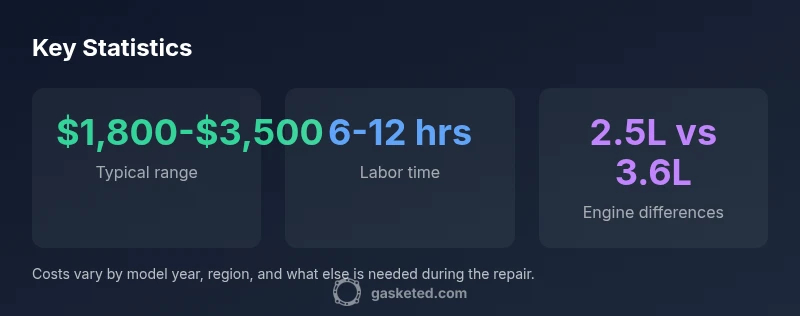
The typical cost to replace a head gasket on a Subaru Outback ranges roughly from $1,800 to $3,500, depending on engine type, labor rates, and whether additional repairs are required. This figure reflects common shop estimates and may vary by region.
What drives the cost of head gasket replacement on a Subaru Outback
Replacing a head gasket is a complex operation that hinges on several controllable and uncontrollable factors. The Subaru Outback offers multiple engine configurations across model years, primarily the 2.5L four-cylinder and the larger 3.6L six-cylinder variants in older generations. Labor hours are a major determinant—shops commonly bill for a full teardown, head resurfacing if needed, gasket kit, timing components, and coolant. Geographic location matters too: urban dealerships often charge higher hourly rates than independent shops or rural equivalents. Finally, the condition of ancillary systems influences the price: a seized water pump, warped heads, or a cracked cylinder head can drive up the bill quickly. When you hear terms like “machine shop work” or “head resurfacing,” remember these are typical inclusions that add to the cost, but can also prevent future problems.
Engine variants and how they affect price
Two main families appear across the Outback timeline. The 2.5L H4 is the most common, especially in mid-2000s to early-2010s models, while certain generations used the larger 3.6L H6. The 2.5L setup often costs less to service because it’s more standardized and has broader aftermarket support, but it still requires careful head resurfacing and proper torqueing. The 3.6L variant tends to push labor costs higher due to more extensive machining and the potential need for additional timing components. In turbo or high-performance trims, the service complexity increases again, impacting both parts and labor. Understanding your exact engine family helps anchor estimates and reduces surprises when quotes arrive.
What’s included in the price
A typical gasket-replacement job includes the new head gasket set, head bolts, coolant, and sealants. You’ll also pay for teardown, inspection of the heads for warping or cracks, head resurfacing if needed, and reassembly with proper torque sequences. Many shops quote labor separately from parts, and additional components such as water pumps, timing belts, tensioners, and thermostat housings may be bundled if due for replacement. If the repair shelves a warped or cracked head, the total can rise significantly. Finally, don’t overlook machine shop fees for resurfacing the heads, which are essential to a reliable seal.
Step-by-step: estimating costs for your model year
Start with your exact model year and engine type. Request three written quotes from independent shops and a dealership, asking for a detailed line-item breakdown. Compare labor hours, parts, and any machine work. Confirm whether coolant, oil, and a new timing belt (if applicable) are included. Ask about warranties on the parts and labor, and whether any core charges apply. If possible, obtain quotes that include head resurfacing and a final leak test. Keep notes on the shop’s recommendations for ancillary work and the anticipated timeline.
Cost-saving strategies and trade-offs
Cost can be shaved by shopping around, especially for labor; some shops offer fixed-price bundles for head gasket jobs, while others bill hourly. If your vehicle is nearing major maintenance milestones, combine the gasket job with timing belt, water pump, or radiator service to minimize repeat labor in the future. Evaluate aftermarket gasket kits versus OEM to balance cost and reliability. Be mindful of the risk of using very cheap parts—this can negate any savings. Consider whether a reputable, smaller shop might provide better value than a high-volume dealer for this specialized repair.
DIY vs professional replacement: risks and considerations
DIY gasket replacement is generally not recommended for Outbacks, given the precision required in head resurfacing, torqueing sequences, and coolant system seals. A failed gasket or improper timing can cause severe engine damage. If you have substantial mechanical experience and the right tools, you might save some labor costs, but expect a longer timeline and a higher risk of errors. For most DIYers, professional service remains the prudent choice, especially when considering long-term reliability and warranty coverage.
Red flags during quotes and how to compare quotes
Beware quotes that only show a single line item or those that omit head resurfacing. Ask for a breakdown: parts (gasket kit, bolts), machine work, timing components, coolant, and shop supplies. Ensure warranty terms are explicit and that the quote includes a leak test and pressure test after assembly. Compare the quality of parts (OEM vs. aftermarket) and whether the shop will re-use or replace critical components like valve cover gaskets. Finally, verify the shop’s credentials and read customer reviews to gauge post-repair reliability.
Long-term value and maintenance after gasket replacement
A proper gasket replacement improves reliability and prevents coolant/oil cross-contamination. After the repair, monitor for leaks, check the cooling system, and replace coolant per the manufacturer’s schedule. The car’s resale value can benefit from a documented, quality repair with a reliable warranty. If you have a multi-year ownership plan, investing in a reputable shop and high-quality gasket kit often pays off through reduced risk of repeat failure and fewer drive-ability issues.
Cost comparison by engine type
| Engine Type | Avg Cost Range (Parts + Labor) | Notes |
|---|---|---|
| 2.5L H4 | 1,800-3,500 | Most common Outback engine; cost varies by region |
| 3.6L H6 | 2,500-4,500 | Less common; higher labor due to size |
| Turbo models | 3,000-5,000 | Higher complexity and parts |
Common Questions
What factors influence the cost of head gasket replacement for a Subaru Outback?
Key factors include engine type (2.5L vs 3.6L), labor rates in your region, the need for head resurfacing, and whether additional work (water pump, timing belt) is required. The condition of the heads and any incidental damage can also raise prices.
Factors like engine type and local labor rates drive the price, and extra repairs can add to the total.
Can I save money by doing the gasket replacement myself?
DIY replacement is risky on modern Subarus due to the precision required in head work and timing. Without the right tools and expertise, you could cause serious engine damage, which would cost more in the long run.
DIY is usually not worth the risk for this repair.
What are common signs of a blown head gasket in a Subaru Outback?
Common signs include overheating, milky oil, exhaust smoke, coolant loss without visible leaks, and occasional rough running. If you notice these, stop driving and have an inspection.
Look for overheating, milky oil, and unexplained coolant loss.
How long does a head gasket replacement typically take?
Most shops estimate 6–12 hours of labor, plus time for inspecting the heads and testing the cooling system. Timeline can vary with engine type and additional required work.
Expect about half a day to a full day depending on the engine and checks.
Is there a warranty on head gasket repairs?
Yes, most reputable shops offer a parts and labor warranty, typically ranging from 12 to 24 months, depending on the shop and the parts used.
Warranties vary—ask for details on parts and labor coverage.
Should I replace the timing belt or water pump during a gasket job?
If due for replacement, doing it during the gasket job can save future labor. If not due, discuss timing with the shop to avoid unnecessary work.
If they’re close to replacement intervals, do it now to save future labor.
“Replacing a head gasket is a major engine repair that benefits from careful planning and a trusted shop. Ensure a proper head resurfacing and coolant system check.”
Key Takeaways
- Prioritize a detailed, written quote with line-by-line costs
- Labor dominates gasket replacement costs; expect higher totals in regions with steep labor rates
- Engine type and additional repairs drive large price variation
- Consider bundling maintenance (timing belt, water pump) for potential savings
- Choose a shop with clear warranty and reputable machining practices