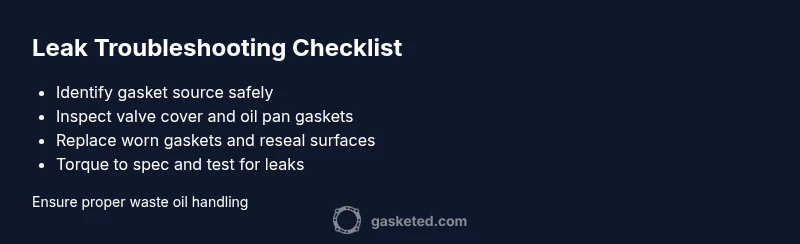
Oil Leak from Gasket: Urgent Troubleshooting Guide
Urgent guide to diagnose, fix, and prevent oil leaks from gaskets. Learn safe DIY steps, common sources, and when to call a professional. By Gasketed, 2026.


Most oil leaks from gaskets come from aging seals or loosened connections. The quick fix is to identify the exact gasket type (oil pan, valve cover, or front cover) and reseal or replace it, then recheck for leaks after a brief engine run. Start with a clean surface, inspect bolt torque, and replace worn gaskets if needed.
What an oil leak from gasket means
An oil leak from a gasket indicates a seal between two engine components is failing, allowing oil to escape onto the engine or ground. Gaskets are designed to withstand high temperatures and pressure, but over time they can harden, crack, or become displaced. When this happens, you may notice fresh oil on the gasket surface, pooled oil under the vehicle, or oil odour during operation. According to Gasketed, gasket-related leaks are among the most common DIY repair tasks for homeowners, especially in engines with high mileage or frequent heat cycles. The key is not guessing; you must confirm which gasket is leaking before attempting a fix. In many cases the source is the valve cover gasket or oil pan gasket, but front or rear main seals can also be culprits. A systematic approach helps you avoid unnecessary parts replacement and ensures you use the correct materials for a lasting seal.
Safety first: what to do now
Oil leaks create slip hazards and potential fire risks. Start by parking on a level surface and turning off the engine. Let the engine cool completely, then place a drip pan under the suspected area. Wear eye protection and gloves, as hot oil can cause burns. Avoid running the engine while inspecting a suspected leak. If you must move the vehicle, use extreme caution and keep a safe distance from hot components. When in doubt, postpone driving until you’ve identified the source. Gasketed emphasizes that safety is non-negotiable when dealing with oil and mechanical components.
Common gasket leak sources in vehicles
Oil leaks from gaskets most often originate in the valve cover gasket, oil pan gasket, or front crankshaft seal. Valve cover gasket leaks usually show up as long, slow drips along the valve cover rail, sometimes with a burning smell when oil hits hot exhaust components. The oil pan gasket leak typically presents as oil on the underside of the engine and may widen after driving. Front and rear main seals cause leaks that can be more challenging to locate because they run along the bellhousing or crankshaft area. Inspect each gasket area with a bright light and a clean rag to identify fresh oil and the exact point of seepage. Gasket materials vary, and choosing the right type is critical for a durable seal.
Quick checks you can do safely
- Check for fresh oil around valve covers, oil pan, timing cover, and the crankshaft seal.
- Wipe the suspected area clean, then run the engine briefly and look for new oil droplets.
- Inspect bolt patterns and torque specs for gasket-tightening areas; overtightening can crush gaskets, while undertightening allows leaks.
- Look for oil staining or residue near gasket seams and compare to the opposite side for symmetry.
- If you notice a strong oil smell or smoke, stop and reassess before further operation.
How to confirm the source
To confirm the source, isolate the most likely gasket by cleaning the area, then re-run the engine while observing with a flashlight. A borescope or UV dye can help in pinpointing leaks; applying a non-setting dye to the suspected gasket will reveal the leak path under UV light. Ensure you maintain a clean work area and document signs of seepage from the gasket seam. If the leak persists after resealing, the gasket may be warped or the sealing surface damaged, requiring replacement.
When to call a pro
If you identify a leak from a hard-to-reach gasket, such as the rear main seal or a cracked timing cover, professional service is recommended. A pro can verify the source, confirm gasket integrity, and ensure correct torque and surface preparation. Complex leaks can involve engine timing components, cam seals, or crank seals, which require specialized tools and torque specs. Do not neglect leaks that contaminate belts or electrical components; seeking a professional diagnosis can prevent further damage.
How to prevent future leaks
Proactive maintenance reduces gasket leaks. Regularly check oil level and replace gaskets at recommended service intervals, use gasket sealants only when approved by manufacturer, and avoid rapid temperature cycles that stress seals. Maintain proper oil type and viscosity for your engine, keep the oil cap tight, and ensure the drive belts and timing components are in good condition. A clean engine bay makes leak detection easier and reduces the chance of missed signs.
Steps
Estimated time: 1.5-2 hours
- 1
Prepare and safety check
Park on a level surface, turn off the engine, and let it cool. Gather tools and a drip pan. Wear gloves and eye protection. This prevents burns and protects the work area from oil spills.
Tip: Have rags ready for wipes and a torque wrench for precise reassembly. - 2
Identify leak source
Clean the suspected gasket area with a degreaser and inspect for fresh oil. Use a flashlight to follow wet trails to the exact seam. Mark the gasket area for reference.
Tip: Take reference photos from multiple angles before disassembly. - 3
Disassemble the affected area
Carefully remove components obstructing access to the gasket. Keep bolts organized and note their original positions. Do not mix bolts of different threads.
Tip: Label bolts and gaskets to ensure correct reassembly. - 4
Inspect and replace gasket
Check gasket surface for warping, cracks, or scratches. If damaged, replace with a new gasket of the same type and ensure mating surfaces are clean and flat.
Tip: Only use a gasket compatible with your engine model. - 5
Reassemble and torque
Reinstall components in reverse order, tightening bolts in a crisscross pattern to the specified torque. Clean any residual oil and verify there are no tools left inside the engine bay.
Tip: Do not overtighten; follow manufacturer torque specs precisely. - 6
Test for leaks
Refill oil if needed and run the engine for several minutes. Inspect the gasket seam for fresh leaks and re-check torque after cooling.
Tip: Watch for drips during the first drive; re-tighten if necessary per guidelines. - 7
Finalize and monitor
Dispose of any waste oil properly and monitor the area for the next 24-48 hours. Keep an eye on oil level and check for recurring signs.
Tip: Keep a leak diary with photos to track improvement.
Diagnosis: Oil leak from gasket
Possible Causes
- highAging or degraded gasket material
- mediumLoosened or over-tightened bolts at gasket joints
- lowWarped mating surfaces or damaged engine component
Fixes
- mediumReplace the affected gasket with a correctly sized gasket and re-torque to spec
- easyInspect and tighten bolts to manufacturer's torque specifications or reseal with appropriate sealant if approved
- hardResurface mating surfaces or replace the damaged component if warping/cracking is present
Common Questions
What are the most common signs that an oil leak is coming from a gasket?
Common signs include fresh oil at gasket seams, oil spots under the vehicle, and burning oil smells when it contacts hot exhaust parts. A careful inspection helps confirm the source.
Watch for fresh oil around gasket seams and under the car; it usually means the gasket is leaking and needs replacement.
Can you fix a gasket leak without replacing the gasket?
Minor leaks can sometimes be slowed with sealants or re-torquing, but most gasket leaks require replacement for a reliable seal. Do not rely on sealants as a permanent fix.
Sometimes a sealant or re-torque helps briefly, but most leaks need a gasket replacement for a lasting fix.
How long does a gasket replacement take for a DIYer?
Time varies by gasket type and access. Many DIY fixes take a few hours, while more involved replacements can take longer. Plan for several hours and have a plan for tool access.
Replacement can take a few hours depending on the gasket and access; be prepared for a longer job if it's on a busy engine area.
Is it safe to drive with an oil gasket leak?
No. Driving with an oil leak can cause engine damage, fire risk, and environmental harm. Stop driving and fix the leak before continuing.
No—driving with a leak is risky and can damage the engine; get it fixed first.
What gasket materials work best for automotive engines?
Materials vary by gasket location and engine design. Use the material recommended by the manufacturer to ensure proper sealing and heat resistance.
Use manufacturer-recommended gasket material for the best seal and durability.
Should I replace other gaskets when I fix one?
If one gasket is leaking and other seals show wear or heat exposure, consider inspecting and replacing them to reduce future leaks. It’s not always necessary, but it can prevent repeat work.
If other gaskets look worn, consider replacing them to prevent future leaks.
Watch Video
Key Takeaways
- Identify the exact gasket responsible before replacing.
- Follow torque specs to avoid crushing or loosening seals.
- Test after replacement to confirm a lasting seal.
- Prevent future leaks with regular maintenance and clean engine bays.