Oil Pan Gasket Chevy 350: Step-by-Step Replacement Guide
A comprehensive DIY guide to replace the oil pan gasket on a Chevy 350. Learn tools, safety, step-by-step procedure, leak testing, and maintenance to prevent leaks and protect your engine.


This guide helps you successfully replace the oil pan gasket on a Chevy 350. It covers prep work, necessary tools, a safe step-by-step process, leak testing, and post-repair maintenance to prevent future failures. By following the recommended torque approach and verifying no leaks, you extend engine life and avoid costly oil loss.
Why the Chevy 350 oil pan gasket matters
The oil pan gasket seals the bottom of the engine so oil stays inside where it lubricates moving parts. When this gasket fails, small leaks can grow over time, leading to reduced oil level, potential misreads on oil pressure, and, in worst cases, damage to bearings or other components. According to Gasketed, addressing gasket issues early saves time and money and lowers the risk of a roadside oil loss. In the Chevy 350, the oil pan sits beneath the crank, which means any unevenness on the mating surfaces can translate into leaks if the gasket compresses unevenly. A properly installed gasket maintains a durable seal when the pan bolts are tightened in a deliberate, crisscross pattern. Before you begin, inspect the pan surface for warping or corrosion and ensure the new gasket kit is compatible with your model year and pan design. This preparation helps you achieve a reliable seal that lasts for miles and seasons.
Signs you may need an oil pan gasket replacement
Leaking oil is the most obvious symptom, but a faulty oil pan gasket can show several telltale signs. Puddles of oil beneath the vehicle after parking, especially near the front of the engine, indicate a probable gasket leak. A rising or fluctuating oil level without obvious external sources can also point to a gasket issue, as can a faint burning oil odor when the engine is hot. In some cases, you may notice a slick or shiny area along the bottom of the engine or gasket surface after a routine oil change. If you see any of these indicators, it’s wise to inspect the gasket and surrounding surfaces before the problem worsens. Early diagnosis saves you from larger leaks, engine oil loss, and potential debris finding its way into the splash pan or serpentine system.
Gasket types and selecting the right one
Gasket options range from pre-formed paper or cork to rubber and composite materials. Some kits come with a complete, form-fit gasket for the oil pan plus a bead of gasket sealant for edges where required. In many applications, you may use a gasket alone, while others recommend a sealant in addition to the gasket. The Chevy 350 often benefits from a gasket that matches the oil pan’s edge profile and bolt hole pattern, along with a compatible sealant if your gasket type calls for it. Always verify compatibility with your engine year and pan design, and follow the gasket kit instructions. If in doubt, choose a kit that provides the gasket itself plus any recommended sealants or adhesives, since mismatched materials can compromise sealing performance and longevity.
Planning the replacement: preparation and safety
A proper plan makes the job smoother and safer. Start by parking on a level surface, chocking wheels, and gathering your tools and replacement gasket kit. Allow the engine to cool before touching hot components, and use a stable jack and stands to support the vehicle. Create a clean, organized work area to prevent losing small bolts or misplacing parts. Disconnect the negative battery terminal to avoid any accidental short circuits. As you lay out parts, photograph each step for reference during reassembly. Finally, review the vehicle’s service manual or gasket kit instructions to confirm any brand-specific procedures. Thorough planning reduces surprises during disassembly and helps protect the engine and surrounding components.
Step-by-step overview of the replacement process
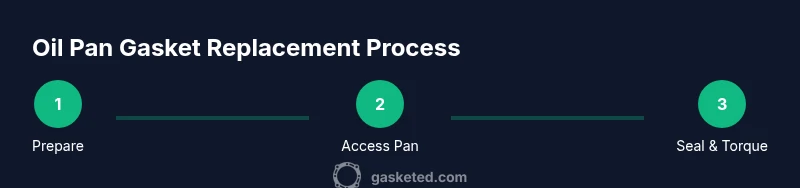
The oil pan gasket replacement involves removing the old gasket, cleaning the mating surfaces, and installing a new gasket with the correct torque and sealing approach. While the specific steps are detailed in the STEP-BY-STEP section, an overview includes safely lifting the vehicle, draining used oil, removing the oil pan bolts, detaching the pan, cleaning and inspecting the surfaces, placing the new gasket with any required sealant, reattaching the pan with the correct pattern, and finally refilling engine oil and testing for leaks. Approaching the job methodically helps ensure a clean seal and a leak-free installation that lasts years, not months.
Post-replacement testing and maintenance
After reinstalling the pan and adding fresh oil, start the engine and let it run for several minutes at idle while you inspect for leaks. Check for any seepage around bolt corners, gasket edges, and mating surfaces. Recheck the oil level after the engine has cooled for a few minutes, ensuring it’s within the recommended range. For best results, take a short drive and re-inspect once back in the driveway. Regular maintenance—such as using the correct oil type and changing the oil at recommended intervals—helps preserve gasket integrity and engine health over time.
Tools & Materials
- Drain pan(Capable of holding used engine oil; size to catch all drained oil)
- Jack stands or a hydraulic jack(Securely support the vehicle; never rely on a jack alone)
- Socket set (metric and SAE)(For removing oil pan bolts and brackets)
- Torque wrench(To tighten pan bolts to the manufacturer spec (check manual))
- Gasket scraper or plastic putty knife(Carefully remove old gasket without scratching surfaces)
- New oil pan gasket kit(Choose gasket type compatible with your Chevy 350 and oil pan)
- Gasket sealant or RTV silicone (if kit requires it)(Only use if specified by your gasket kit instructions)
- Brake cleaner or degreaser(Clean gasket surfaces thoroughly; avoid residue)
- Clean rags(Wipe surfaces and catch drips immediately)
Steps
Estimated time: 2-4 hours
- 1
Raise and secure the vehicle
Position the vehicle on a level surface and secure it with jack stands. Use wheel chocks and ensure the parking brake is engaged. This setup prevents movement while you work under the car.
Tip: Always use stands; never rely on a jack for support. - 2
Drain the engine oil
Place the drain pan under the oil pan drain plug, remove the plug, and allow all oil to drain. Wipe the drain plug and magnet, if equipped, and reinstall with a new crush washer if specified.
Tip: Note the oil volume; you may need to replace similar quantities to avoid overfilling. - 3
Access and remove the oil pan
Remove any brackets or components obstructing the pan bolts, then loosen and remove the bolts in a crisscross pattern. Gently lower the pan to access the gasket.
Tip: Be prepared for residual oil; have rags ready to catch drips. - 4
Clean and inspect mating surfaces
Scrape away the old gasket without gouging the metal surfaces. Clean the pan and engine block surfaces with brake cleaner until they are dry and free of oil residue. Inspect for warping or damage.
Tip: A straight edge can help detect warpage; replace the pan if distortion is excessive. - 5
Install the new gasket
Place the new gasket on the pan or block according to kit instructions, aligning bolt holes. If required, apply gasket sealant near the edges as directed. Ensure the gasket sits flat with no folds or gaps.
Tip: Avoid over-tightening; snug and then follow final torque guidance from the manual. - 6
Reinstall the oil pan and bolts
Bolt the pan back on in a crisscross sequence to seat the gasket evenly. Use a torque wrench to tighten bolts to the prescribed torque in stages, avoiding sudden over-tightening.
Tip: Hand-tighten first, then switch to the torque wrench for the final pass. - 7
Refill oil and check for leaks
Reinstall the drain plug if removed and refill with the proper oil quantity. Start the engine and let it reach normal operating temperature while watching for leaks around the gasket. If leaks appear, address immediately before driving further.
Tip: Run the engine for several minutes and recheck the oil level after cooling. - 8
Final inspection and cleanup
Turn off the engine, clean up spilled oil, and dispose of used oil properly. Check again after a short drive and recheck the oil level. File away any photos from disassembly for future reference.
Tip: Proper disposal of used oil is essential for environmental responsibility.
Common Questions
What are the signs that my oil pan gasket is leaking?
Leaking oil under the vehicle, low oil levels with no obvious external source, and a burnt oil odor when the engine is hot are common signs. Inspect the pan edge and gasket area for seepage and slowly confirm by cleaning the area and monitoring over 24 hours.
Common signs include oil puddles under the car and a burning oil smell when the engine is hot.
Can I reuse the old oil pan gasket?
In most cases, you should replace the gasket rather than reuse the old one. A new gasket ensures a uniform seal and reduces the chance of renewed leaks. Inspect the pan surface for damage if you choose to reuse anything.
Usually not recommended to reuse the old gasket; replace it for a reliable seal.
Do I need to remove the exhaust or engine components to replace the gasket?
Often you can replace the gasket with the exhaust components in place. In some setups, you may need to loosen or move parts to access the pan bolts, but full removal is rarely required. Check your vehicle’s service manual for specifics.
Usually you don’t need to remove the exhaust; just access the pan bolts.
What sealant should I use with the oil pan gasket?
Use the sealant only if your gasket kit recommends it. Some kits are designed to seal on their own, while others require a compatible high-temperature sealant at the edges or corners. Always follow the kit instructions.
Follow the kit instructions; some setups require sealant, others don’t.
How long does it take to replace an oil pan gasket on a Chevy 350?
For a DIY enthusiast with a standard setup, expect several hours from prep through test. A well-lit, organized space and a clear step-by-step plan help you finish efficiently. Allow extra time if you encounter corrosion or difficult bolts.
It usually takes a few hours depending on access and tools.
Is engine removal ever necessary for this job?
Engine removal is rarely necessary for replacing an oil pan gasket on a Chevy 350. Most work can be done with the engine in place, using proper technique and alignment. If you encounter severe warping or clearance issues, consult a professional.
Generally not needed; you can do it with the engine in place.
What maintenance should follow after replacement?
After replacement, recheck the oil level and monitor for leaks over the next few drive cycles. Change the oil filter as needed per your schedule, and keep an eye on oil pressure indicators. Regular maintenance helps extend gasket life.
Check for leaks after a drive; update oil changes as scheduled.
Watch Video
Key Takeaways
- Prepare the workspace and tools before starting.
- Drain and inspect before removing the pan.
- Install the gasket per kit instructions and torque bolts correctly.
- Test for leaks and recheck oil level after operation.