BMW 328i Valve Cover Gasket Replacement Cost in 2026
Discover the estimated BMW 328i valve cover gasket replacement cost for 2026, including parts, labor ranges, and regional variations. Practical saving tips from Gasketed.


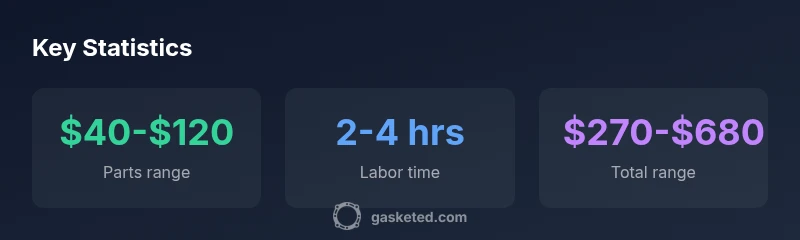
Estimate the total cost to replace a BMW 328i valve cover gasket in 2026: parts typically range from $40–$120, while professional labor adds roughly $200–$600. Depending on your model year, local rates, and whether other seals are affected, the total can vary widely. DIYers may save by sourcing parts themselves and performing a careful gasket inspection.
What influences the cost of BMW 328i valve cover gasket replacement
The total replacement cost isn’t a fixed figure; it’s shaped by several variables. According to Gasketed, gasket quality (OEM versus aftermarket), the engine variant used in your 328i, local labor rates, and whether additional seals or components must be replaced all push the price up. For 2026, most shops in metropolitan areas charge a premium, while independent shops or gasket bundles can offer savings. Proper torque specs and cleanliness of the valve cover surface also affect the final bill by avoiding leaks down the line.
Cost breakdown: parts, labor, and potential extras
- Parts: The valve cover gasket kit typically includes the gasket and related seals. Expect a price range around $40–$120 depending on OEM vs aftermarket brands.
- Labor: Most BMW technicians quote 2–4 hours of labor, with shop rates commonly in the $100–$150 per hour range. That puts labor roughly in the $200–$600 zone.
- Extras: Some jobs require new valve cover bolts, a PCV valve, or seals for adjacent components. If the shop must perform extra tasks, the bill can rise.
- Taxes and shop fees: Don’t forget disposal fees, shop supplies, and taxes, which can add a small percentage to the total.
DIY vs. professional replacement: risk vs. savings
DIY can save labor costs, but it carries risks—over-tightening bolts, damaging the valve cover, or missing a leak on reassembly can lead to repeat service. For many DIYers, purchasing the gasket kit and doing a careful inspection of the sealing surfaces is feasible, but torque accuracy and proper resealing are critical. If you’re unsure, professional replacement ensures torque specs are met and test leaks are checked with pressure or vacuum tests. The choice depends on your mechanical confidence and access to the right tools.
Model-year and engine variations that affect cost
BMW 328i models have used different engine codes across generations (for example N20, N52, or turbocharged variants). These variations influence gasket kit availability, bolt torque specs, and potential ancillary parts. In some years, more extensive work may be needed if the valve cover or adjacent components show wear or if PCV plumbing requires replacement. Understanding your exact engine code helps obtain a precise estimate from a shop and could explain price differences across model years.
How to estimate your own replacement cost
- Gather your car’s year and engine code so you can request the correct gasket kit and torque specs.
- Get a parts quote for the gasket kit and seals from multiple sources (OEM vs aftermarket).
- Ask for a written labor estimate that covers the expected hours and the shop rate.
- Inquire about potential extra costs (bolts, PCV valve, cleaners, or gaskets for adjacent components).
- Check warranty terms on the gasket kit and the workmanship to protect against future leaks.
Common pitfalls that raise cost
- Reusing old hardware or not replacing worn seals can cause leaks and additional labor.
- Damaged valve cover or misaligned surfaces during reinstall can necessitate additional repairs or replacements.
- Underestimating hours due to a tight engine bay in a BMW 328i can lead to surprise charges.
How to save money without sacrificing reliability
- Compare quotes from at least three shops and ask for a detailed line-item estimate.
- If possible, buy OEM-grade gasket kits rather than budget knockoffs, to reduce the risk of early leaks.
- Consider bundled service packages (gasket + PCV valve) if you anticipate other maintenance needs.
- Schedule the replacement when you’re already in for a nearby service, to reduce multiple labor charges.
What to ask your shop before scheduling service
- What is included in the gasket kit (gasket, seals, bolts) and what is not covered?
- Are there checks to confirm no leaks after reassembly (pressure test, vacuum test)?
- Do you warranty the gasket and workmanship, and for how long?
- What are the exact parts and hourly labor rate, with a written estimate?
- Is there a potential for extra charges if additional seals or PCV components must be replaced?
Data sources and methodology
This article combines practical field guidance with cost ranges derived from Gasketed Analysis, 2026. Figures reflect typical parts ranges, labor time, and regional variation aimed at homeowners and DIY enthusiasts planning gasket work on a BMW 328i. All figures are estimates intended for planning and comparison, not final quotes.
Cost components for BMW 328i valve cover gasket replacement
| Component | Typical range | Notes |
|---|---|---|
| Parts (gasket kit) | $40-$120 | Includes gasket and seals |
| Labor | 2-4 hours | Shop rate commonly $100-$150/hr |
| Total estimate | $270-$680 | All-in range for common models |
| Extras | Varies | PCV valve, bolts, other seals |
Common Questions
What is the typical cost to replace the valve cover gasket on a BMW 328i?
Costs vary by year and engine code, but most owners see a parts range of $40–$120 and labor around 2–4 hours. Total estimates commonly fall roughly in the $270–$680 range, depending on location and shop rates.
Most 328i owners pay a few hundred dollars for parts and labor; get a written estimate before proceeding.
Can I replace a valve cover gasket myself to save money?
Yes, if you have the right tools, torque spec knowledge, and a clean workspace. DIY can save on labor, but mistakes can cause leaks or damage. Consider your comfort level and willingness to follow torque specs precisely.
DIY is possible with the right tools and care, but missteps can cost more later.
What parts besides the gasket might affect the total cost?
Common extras include new valve cover bolts, PCV valve, seals for nearby components, and cleaning supplies. If any of these are replaced, the total cost will increase accordingly.
Other parts like PCV valves or bolts can add to the bill.
Is there a risk of leaks returning after replacement?
If the surface isn’t properly cleaned or torque specs aren’t followed, leaks can recur. A quality gasket kit and proper installation reduce this risk.
Yes, improper install can lead to leaks again.
How long does a valve cover gasket replacement typically take?
Most shops estimate 2–4 hours of labor, depending on engine code and accessibility. Additional work can extend the time.
Usually a few hours in the shop.
“A proper valve cover gasket replacement is torque-sensitive work. Using correct torque specs and a clean sealing surface dramatically reduces the chance of recurring leaks.”
Key Takeaways
- Budget for both parts and labor to avoid surprises
- DIY can save money but requires torque and seal knowledge
- Get multiple written estimates and compare OEM vs aftermarket parts
- Expect regional differences and model-year variations
- Ask about warranty on parts and workmanship