Valve Cover Gasket Leak Quick Fix: Easy Home Repair
DIY guide to fix a valve cover gasket leak at home: diagnose, replace the gasket, reseal surfaces, and prevent future leaks with common tools.


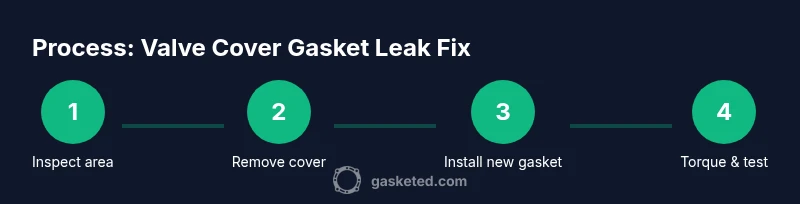
This quick answer shows how to stop a valve cover gasket leak with a simple, DIY fix. You’ll inspect the leak area, clean the mounting surface, install a new valve cover gasket, and re-torque bolts to spec. Gather a basic tool set and a replacement gasket, plus sealant if the manufacturer recommends it. Expect a straightforward repair in under an hour.
Why valve cover gasket leaks happen
According to Gasketed, valve cover gasket leaks are common on aging engines. The gasket seals the valve cover to the cylinder head and resists oil, heat, and vibration. Over time, heat cycles, oil contamination, and chemical breakdown soften or corrode the gasket. In high-mileage engines, the bolts can settle or warp, causing gaps. If you notice oil on the valve cover or nearby components, this likely indicates a gasket issue. Leaks begin as small seepages that worsen with driving; a persistent leak can contaminate ignition components or sensor leads. Other culprits include warped covers, over-tightened bolts, or a failed gasket sealant. Symptoms include burning oil smell, visible oil pooling, or smoke under the hood on startup. Quick fixes focus on restoring a clean mating surface, replacing the gasket, and ensuring correct bolt torque. This approach minimizes the chance of containment failure and protects engine timing and efficiency.
Diagnosing a valve cover gasket leak
Leaking oil around the valve cover is often easy to spot, but other components can mimic the symptom. Start by cleaning the area with degreaser, then run the engine and watch for fresh oil seepage at the gasket edge. Check if oil appears around spark plug wells or PCV valve connections, which can indicate a PCV-related issue rather than the gasket itself. Use a white paper or cardboard to trace damp lines for better visibility. A dry engine bay at start and oil accumulation after a drive strongly suggests a gasket leak. Inspect the valve cover mating surface for warping or damage, and verify that all bolts are at the correct torque in a crisscross pattern. If you notice oil in the brake booster line area or near ignition components, stop and reassess; those symptoms often mean a larger oil intrusion or seal failure.
Tools and materials you'll need (overview)
Having the right tools makes the job straightforward and reduces the risk of surface damage. A basic socket set, torque wrench, screwdrivers, gasket scraper, cleaning solvent, a new valve cover gasket, and a small amount of gasket sealant (if recommended) will cover most applications. Prepare shop towels, gloves, safety glasses, and a tray to catch any oil. If your engine uses spark plug wires or coil packs, keep them organized and labeled; damaged boots or wires can complicate removal. Always verify compatibility with your specific engine model and gasket size before starting; a wrong gasket can worsen leaks or cause misalignment.
Safety and preparation tips
Safety comes first when working in the engine bay. Allow the engine to cool before starting to avoid burns, and disconnect the negative battery terminal to prevent shorts. Work in a well-ventilated area and keep a fire extinguisher nearby as a precaution. Use a magnetic tray for bolts and avoid dropping hardware into the engine bay. If you’re unsure about your skill level, consider postponing the job until you have a friend to assist or a professional to supervise; this reduces the risk of accidental damage.
When quick fixes aren’t enough
A small leak can often be cured with a gasket replacement and proper torque, but if the valve cover or head surface is warped, or if the leak persists after replacement, a more thorough repair may be required. In cases of severe oil intrusion or signs of head gasket failure, consult a professional. Quick fixes save time and money when the engine is otherwise healthy, but they must be properly executed to avoid future leaks.
Maintenance and prevention tips
To minimize future leaks, clean the mating surfaces regularly and inspect bolts for tightness during routine maintenance. Use OEM or quality aftermarket gaskets that match your engine model, and adhere to torque specs. Keep the PCV system clean and functioning, as crankcase pressure can hasten seal degradation. Periodically inspect valve cover gaskets for signs of cracking, hardening, or oil staining. Schedule a gasket check as part of your annual service to catch problems early and extend the life of the gasket and associated components.
Final thoughts
A properly performed valve cover gasket leak quick fix restores oil containment and engine cleanliness. With the right tools, careful surface preparation, and attention to torque, you can prevent future leaks and keep your engine running smoothly. If you encounter mounting surface damage or persistent leaks, don’t hesitate to seek professional help.
Tools & Materials
- Socket set(Metric and SAE sizes; shallow and deep sockets)
- Torque wrench(To manufacturer torque specs)
- Gasket scraper(Plastic or metal with care)
- New valve cover gasket(Match engine model and gasket type)
- Gasket sealant(Only if recommended by gasket manufacturer)
- Degreaser/solvent(Oil-cutting cleaner)
- Shop towels(Lint-free for surfaces)
- Safety gear(Gloves, safety glasses)
- Oil catch pan(To collect old gasket oil)
- Rubber mallet(For gentle taps if needed)
Steps
Estimated time: 90-120 minutes
- 1
Disconnect battery and prep workspace
Begin by disconnecting the negative battery cable to prevent shorts. Allow the engine to cool, raise the hood, and gather tools in a dedicated workspace. This prevents accidental electrical shocks and keeps small parts organized for the job.
Tip: Always disconnect the battery first; it reduces the risk of shorting sensitive electronics. - 2
Access the valve cover
Identify and remove any ignition coils or spark plug wires obstructing the valve cover. Label or photograph connections before removal to ensure correct reassembly.
Tip: Use the right socket or pry tool to avoid damaging coil packs or wires. - 3
Remove valve cover bolts and lift cover
Loosen bolts in a crisscross pattern and lift the valve cover carefully to reveal the gasket. Avoid dropping bolts into the engine bay; keep them organized in a tray.
Tip: If the cover sticks, gently wiggle while supporting the edge to prevent bending. - 4
Clean gasket mating surface
Remove old gasket material and any residue from the valve cover and head surface with a plastic scraper and degreaser. Ensure the surface is dry and free of debris before installing the new gasket.
Tip: Do not gouge the metal; a smooth, clean surface ensures a proper seal. - 5
Install new gasket and sealant (if required)
Place the new gasket into the valve cover groove, ensuring alignment with bolt holes. Apply sealant only where specified by the gasket manufacturer, typically at corners or specific points, not across the entire surface.
Tip: Follow the gasket’s orientation marks; misalignment creates leaks. - 6
Reinstall valve cover and torque bolts
Set the valve cover back in place and reinstall bolts. Tighten in a crisscross pattern to the manufacturer torque spec, pausing to check for smooth engagement.
Tip: Torque gradually in steps to avoid bending the cover. - 7
Reconnect components and check for leaks
Reconnect ignition components and the battery, then start the engine. Inspect the gasket edges after a short idle and again after a brief drive to catch any leaks early.
Tip: Look for fresh oil at the edges; wipe and recheck if needed. - 8
Final cleanup and monitoring
Wipe any spilled oil and dispose of waste properly. Monitor the area for 24–48 hours and recheck after a longer drive to confirm the fix.
Tip: Take photos during the process for future reference.
Common Questions
Can I reuse an old valve cover gasket?
In most cases, you should replace a valve cover gasket rather than reuse an old one. A worn or compressed gasket is unlikely to seal properly, which increases the chance of renewed leaks. If you must reuse, inspect thoroughly for cracks or deformations.
Usually you should replace it. Check for cracks or deformation if you insist on reusing, but replacement is safer.
Do I need to remove the engine components before access?
Access typically requires removing ignition coils or spark plug wires. Label the connections and keep track of bolts to avoid misassembly.
Often you’ll need to remove ignition coils or wires. Label everything to stay organized.
Should I use sealant with a new gasket?
Some gaskets require sealant at specific points; always follow the gasket manufacturer's instructions. Using sealant where not recommended can contaminate the gasket and oil system.
Only apply sealant where the manufacturer says to; otherwise it can cause problems.
How long does the fix typically take?
A straightforward gasket replacement can take about 60-120 minutes depending on engine access and whether additional components must be removed.
Most fixes take about one to two hours, depending on access.
Will this fix cause engine damage if done incorrectly?
Improper torque or debris in the seal can cause leaks or damage. Following torque specs and clean surfaces reduces risk. If unsure, consult a professional.
If done wrong, it can cause leaks or damage. Follow steps carefully.
Watch Video
Key Takeaways
- Inspect the gasket area before replacing.
- Torque bolts in a cross pattern to spec.
- Test after repair for leaks and smoke-free operation.
- Use quality gaskets to prevent repeat leaks.
- Monitor engine bay for 24-48 hours after repair.