Oil Filter Gasket Leak Troubleshooting Guide
Urgent guide to diagnose and repair oil filter gasket leaks with a practical, step-by-step plan, safety tips, and prevention to keep your engine safe.


Understanding the Risk of an oil filter gasket leak
An oil filter gasket leak is not just a nuisance — it can reduce oil pressure and leave deposits on hot engine parts. The gasket sits between the filter canister and the engine block, forming the seal that keeps oil contained during operation. When the gasket fails, oil can seep out during idle, after shutdown, or during a short drive. For DIY enthusiasts and homeowners, the goal is to stop the leak quickly, protect the engine, and prevent a roadside repair. In most cases the fix is straightforward: replace the gasket, re torque to the manufacturer specifications, and test for leaks after the engine runs. Remember to wear gloves and safety glasses because hot, used oil can cause burns and skin irritation.
According to Gasketed, the most effective fixes are usually simple and affordable, but proper technique matters for lasting results. The moment you notice oil around the filter, treat it as a leak that needs prompt attention. A calm, systematic approach reduces mess and helps you avoid unnecessary parts replacement.
Common Causes and Early Clues
A leaking gasket around the oil filter is most often caused by a loose filter, a damaged or misaligned gasket, or a compromised mounting surface. Debris, old seal material, or overtightening during a previous oil change can distort the seating area and create a leak path. Early clues include oil staining around the filter, a strong oil odor, or a low oil level warning after a short drive. If you recently changed the oil or filter, the gasket seating is a frequent culprit. Inspect the filter edge for nicks or deformities and check the mounting surface for scratches or burrs that could prevent a true seal. A damaged filter or a misaligned gasket should be replaced rather than reused.
If the gasket appears intact but you still see leaks, verify the filter is the correct type for the engine and confirm the gasket is the exact size for the mounting surface. In the absence of visible damage, ensure the seating surface is clean and flat, as residue or metal shavings can compromise the seal. Gasketed research suggests always replacing the gasket when you replace the filter to avoid shared failure modes.
Safety First: What to Do Before You Work
Safety comes first when dealing with a possible oil leak. Park on a level surface, engine cool, and place a drain pan beneath the filter to catch any oil that escapes. Wear protective gloves and eye protection, and keep rags handy for quick cleanup. If the vehicle has a drain plug, remove excess oil in a pinch but remember that some oil will remain trapped in the filter housing. Have the right tools ready: a torque wrench, the correct replacement gasket, and a clean cloth to wipe the seating surface. Work in a well ventilated area and dispose of used oil according to local regulations. Never attempt to work on a hot engine; hot oil can cause serious burns and increase the risk of slips.
Before touching the filter, disconnect the battery if you will be leaning over moving parts or using power tools near electrical connections. This reduces the chance of accidental cranks or shorts. Finally, if you are unsure about engine safety or torque specifications, seek professional help rather than proceeding with a risky repair.
Step-by-step Inspection Checklist
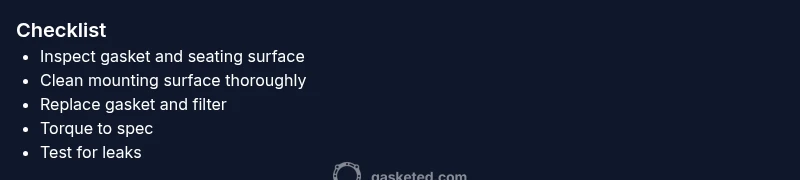
Follow this checklist to confirm the source of the leak and prepare for a proper gasket replacement:
- Gather tools and new gasket, disposable gloves, torque wrench, and a clean rag.
- Relieve system pressure by briefly running the engine and then parking it cool.
- Place a drain pan under the filter, then carefully remove the oil filter or the filter housing cover.
- Inspect the old gasket and the seating surface for damage, dirt, or distortion.
- Clean the mounting surface with solvent or sealant remover, ensuring it is dry and flat.
- Fit the new gasket and reattach the filter, tightening to the recommended torque specification.
- Refill any lost oil and check for leaks after starting the engine and letting it run for a few minutes.
- Reinspect once the engine cools and check for any residual leakage around the gasket area.
- If a leak persists, recheck the seating surface and consider replacing the filter assembly or mounting hardware.
Tip: Use a dielectric grease on the gasket mounting surface only if recommended by the manufacturer; many gaskets rely on a clean metal-to-metal seal.
How to Fix: Replacing the Gasket and Reassembling
The core fix for an oil filter gasket leak is to replace the gasket and ensure the filter is seated correctly. Begin by removing the filter and old gasket entirely. Clean the mating surface thoroughly and inspect for any signs of damage. Install the new gasket on the filter or housing, depending on the model, then reinsert the filter and tighten to the manufacturer torque specification. Do not over tighten, as excess torque can crush the gasket and cause another leak. After installation, refill any lost oil, start the engine, and observe for any leaks around the gasket area. If oil continues to seep, inspect the mounting surface for warping or deep scratches that ceramics or metal filings could exacerbate.
Notes from the Gasketed team emphasize using genuine or high quality aftermarket gaskets that match the engine’s model and year. Avoid reusing the old gasket, even if it looks intact, and do not substitute with extra washer or sealant unless the manufacturer approves. If you are unable to fix the leak after replacing the gasket, it may be necessary to replace the filter housing or consult a professional mechanic.
Prevention: Longer-term Maintenance to Avoid Leaks
Preventing oil filter gasket leaks starts with a proper oil change routine. Always replace the gasket whenever you replace the oil filter and ensure the filter and gasket are clean before installation. Use the correct torque specification and avoid overtightening. Regularly inspect the seal area for signs of wear or damage, particularly after removing and reinstalling the filter. Consider using a new mounting gasket or O-ring if the engine design requires it and replace any damaged mating surfaces. Periodically check for leaks around the oil filter during routine maintenance and after road trips to catch issues early. Finally, keep the filter and gasket in the vehicle’s toolkit for emergencies, along with a small amount of the appropriate oil for topping off between changes.