Top Gasket Oil Leak: Quick Troubleshooting Guide
An urgent, practical troubleshooting guide to diagnose and fix top gasket oil leak issues in cars and home equipment. Step-by-step checks, safety tips, and prevention.


The most common gasket oil leak is a deteriorated valve cover gasket or oil pan gasket, usually from age, heat, and vibration. For a quick fix, clean the area, tighten accessible bolts to manufacturer specs, and reseal with a high-quality gasket maker if the surface is flat. If seepage returns, plan a full gasket replacement.
What is a gasket oil leak and why it happens
A gasket oil leak is when oil escapes from the joints around gaskets in an engine or appliance. For the reader, the term 'top gasket oil leak' often refers to seals at the top of the engine like the valve cover gasket, or at the oil pan near the engine top, that allow oil to seep or spray under pressure. According to Gasketed, these leaks most often originate from aging rubber, heat cycles, and vibration that degrade gasket seals over time. Elevated engine temperatures can bake seals and widen gaps, creating a path for oil to escape and stain the surrounding components. While leaks can appear quickly after a repair, more often they develop gradually as the gasket material hardens and the bolts settle. The effect is not only messy but can lead to decreased oil pressure, dirt intrusion, and in extreme cases engine damage if left unaddressed. This guide focuses on the most common sources of top gasket oil leak and practical steps to diagnose and fix them safely.
Common culprits behind top gasket oil leaks
In most engines and mechanical systems, the top gasket oil leak points are predictable. The valve cover gasket is the frequent culprit because it seals the cylinder head cover to the head and endures repeated heat cycles and vibration. The oil pan gasket, though positioned lower, can leak upward signs if the pan rail surface is imperfect or if the gasket has aged. Other frequent sources include the rear main seal (near the crankshaft) and the timing cover gasket in certain engines, which tolerate long service intervals but will leak once their seals fail. The underlying pattern is simple: material deterioration from heat and chemical exposure leads to small gaps that oil can exploit under pressure. Gasketed analysis notes that improper torque or surface irregularities can accelerate leaks, so accurate fastening and clean mounting surfaces are essential before any replacement.
Quick checks you can do before pulling parts
Before you disassemble, perform fast checks that won’t require removing major assemblies. Begin by inspecting obvious oil residues around the valve cover and oil pan; note any color or thickness of the residue to help identify fresh leaks. Wipe clean the gasket mating surfaces with a lint-free rag to reveal fresh seepage, then run the engine at idle and a short drive to reproduce leak patterns. Check the oil level and condition; if the dipstick shows low oil or the oil looks milky, address that first. Inspect nearby components like the camshaft seals, PCV valve hoses, and oil filter housing for seepage, since oil can migrate along hoses making the leak source harder to pinpoint. If you can reach the valve cover bolts safely, lightly tighten them to the manufacturer’s specification—do not overtighten, as that can crush the gasket and worsen leaks. Remember: never bypass proper safety steps when the engine is hot or the area is oily.
Visual signs and how to confirm leak source
Leak source confirmation relies on pattern recognition and process of elimination. Fresh oil droplets near a gasket seam, a wet streak running along the gasket edge, or oil pooling on brackets and engine mounts are telltale signs. A common trick is to wipe the suspected area clean, run the engine for several minutes, then recheck for fresh seepage. A pressure test can help; a simple shop-grade leak-down test around the gasket area will show if the seal holds under pressure. If oil beads appear at the valve cover, oil pan seam, or rear main area after a quick test, you’ve pinpointed likely culprits. Remember that oil can travel along engine surfaces, so verify by tracing paths from the source backward to the highest point of seepage.
Tools, materials, and safe prep
Prepare basic tools for a gasket-focused inspection: torque wrench, screwdriver or socket set, scrapers, a clean rag, degreaser, gasket scrapers, and a new gasket kit (valve cover and/or oil pan) with the correct part numbers. Safety is non-negotiable: wear gloves, eye protection, and work in a well-ventilated area. If you’re working on a car, ensure the engine is cool and the vehicle is securely supported. For appliances, disconnect power and depressurize systems per manufacturer instructions. Have a shop manual handy for torque specs and surface finish requirements, and use gasket sealer only as a temporary step or per gasket manufacturer guidelines—many gaskets are designed to seal dry without sealant. Finally, dispose of used oil and paper towels responsibly at an approved facility.
Safe, step-by-step approach to inspection and temporary fixes
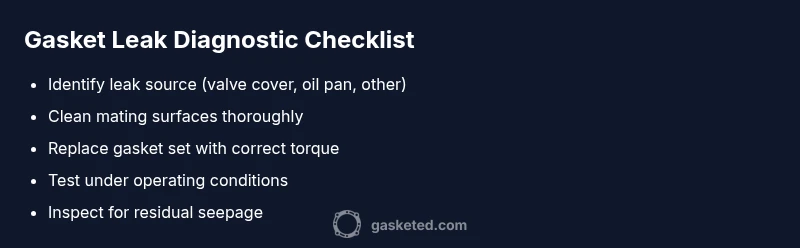
Step-by-step approach blends quick checks with careful inspection. Step 1: clean the suspected seams and inspect visually for obvious gaps. Step 2: verify mating surfaces are flat and free of old sealant or corrosion. Step 3: apply temporary sealant in cases where the gasket surface is damaged but repair is still feasible (follow manufacturer guidelines). Step 4: reinstall the gasket with new hardware and torques, ensuring even pressure. Step 5: run the engine and recheck for leaks. Step 6: if seepage persists, remove the component for a full gasket replacement and reseal with a high-quality gasket kit. Tip: always replace gaskets in matching pairs if other gaskets show wear.
Steps
Estimated time: 60-120 minutes
- 1
Identify the leak source safely
Cool engine, disconnect power, and locate all wet areas. Note the climb path of oil—where it starts versus where it ends. This helps you target the gasket area rather than replacing multiple parts.
Tip: Take photos of the suspected seams from multiple angles before disassembly. - 2
Prepare the surfaces
Clean the gasket surfaces with degreaser. Remove old sealant and debris, and ensure the surface is flat and dry. Any residue can undermine the seal.
Tip: Do not scratch the mating surface; use a plastic scraper to avoid gouges. - 3
Install a new gasket kit
Position the new valve cover and/or oil pan gaskets exactly as per the manual. Lightly oil bolts if recommended and hand-tighten before final torque.
Tip: Always replace associated seals (O-rings, drain plugs) if included in the kit. - 4
Torque to spec and reseal
Torque bolts in the correct sequence to the manufacturer specification. Avoid over-torquing, which can crush gaskets and cause leaks.
Tip: Use a torque wrench with a proper setting to avoid guesswork. - 5
Rebuild and test the system
Reconnect components, run the engine, and monitor for leaks. Check after a short drive and then again after a longer one to ensure stability.
Tip: Look for fresh oil trails within the first 15 minutes of operation. - 6
Plan next steps if leaks persist
If seepage remains, consider replacing additional gaskets (e.g., rear main or timing cover) and inspect related seals for wear.
Tip: Document all parts replaced for future maintenance records.
Diagnosis: Visible oil leak around the engine gasket area
Possible Causes
- highAged valve cover gasket
- mediumAged oil pan gasket
- mediumImproper torque or warped surface
- lowRear main seal or timing cover gasket wear
Fixes
- easyClean and reseal the suspected gasket area using manufacturer-approved sealant or gasket maker where appropriate
- mediumReplace the gasket set (valve cover and/or oil pan) and re-torque to spec
- hardMachine or replace warped mating surfaces if necessary
Common Questions
What are the most common sources of top gasket oil leaks?
Valve cover gaskets and oil pan gaskets are the most frequent culprits. Worn seals from heat and vibration lead to seepage under pressure. Other common sources include rear main seals and timing cover gaskets depending on the engine design.
Valve cover and oil pan gaskets are usually the main culprits; seals wear with heat and vibration.
Can I fix a gasket oil leak without professional tools?
Many gasket leaks can be addressed with common tools and a replacement gasket kit. However, some jobs require specialty equipment or engine handling, so assess your skill level and safety risks before proceeding.
You can often DIY with basic tools, but some jobs need special gear.
How do I know if the leak is serious?
A leak that steadily pools oil, causes significant oil loss, or threatens engine components should be treated seriously. If the oil level drops quickly or you notice smoke, seek professional help.
Significant oil loss or smoke means see a mechanic.
What maintenance can prevent gasket leaks?
Regularly inspect gaskets during maintenance, ensure torques are correct, replace aging seals proactively, and keep the engine clean to spot leaks early.
Keep up with maintenance and torque specs to prevent leaks.
How long does a gasket replacement usually take?
A straightforward valve cover gasket replacement can be completed in under a couple of hours, while oil pan or rear main seal jobs may take longer and require engine access.
Most valve cover tasks are a few hours; deeper leaks take longer.
Watch Video
Key Takeaways
- Identify the exact gasket source before replacing parts
- Replace gaskets in pairs if visible wear exists
- Torque specs and clean surfaces prevent future leaks
- Use temporary sealants only as recommended
- Create a maintenance log for gasket replacements