Pressure Washer Pump Gasket Replacement Guide
Learn how to identify, replace, and maintain a pressure washer pump gasket with a clear, step-by-step DIY guide for homeowners.


By following these steps you will replace a pressure washer pump gasket, prevent leaks, and restore flow. You’ll learn to depressurize the system, remove the pump, install a new gasket, reassemble, and test for leaks without damaging seals. This quick path emphasizes safety, correct seating, and choosing the right gasket material for your model.
Why the pressure washer pump gasket matters
A pressure washer depends on a tight seal to contain high-pressure water. The pump gasket sits between moving parts to prevent leaks and maintain the correct pressure, so a degraded or poorly seated gasket quickly leads to loss of performance and safety concerns. According to Gasketed, gasket failures are often caused by improper seating, age, or exposure to harsh cleaners. In many DIY scenarios, leaks appear after winter storage or after disassembly for minor repairs. The Gasketed team emphasizes that correct gasket material selection, compatible with your pump design, and clean mating surfaces are essential for a reliable seal. When a gasket deteriorates, you may notice dampness around the pump, reduced spray force, or air bubbles in the discharge stream. Understanding how the gasket works helps you decide whether replacement or servicing is needed and sets the foundation for a successful repair.
This section also serves as a reminder that not all leaks require a full pump replacement; some issues stem from simply seating a fresh gasket in the correct orientation. Keep in mind that the goal is a snug, even seal that resists high-pressure cycles without extruding or pinching. If you detect a leak that seems to originate at the gasket interface, it’s time to inspect the gasket’s thickness, seating surface, and the presence of any micro-cracks. With careful preparation, you can save time and avoid unnecessary part replacements.
The key takeaway here is to approach gasket work with methodical checks rather than guessing. The Gasketed guidance stresses that clean surfaces, correct gasket size, and adhering to torque recommendations are the three pillars of a long-lasting seal.
Types of pump gasket materials and common designs
Pump gaskets come in several material families, each with advantages and cautions. Nitrile (Buna-N) is common for general-purpose use, offering good resistance to many coolants and cleaners but limited heat tolerance. Viton (FKM) provides higher chemical resistance and heat tolerance, making it a preferred option for harsher environments. Silicone gaskets offer excellent temperature stability but may not always be compatible with every pump design. In many consumer units, you’ll encounter flat gaskets, O-rings, or a combination depending on the pump model. The material choice affects sealing performance under high pressure, resistance to chemical exposure, and lifespan.
Beyond material, the geometry matters. A flat gasket must seat evenly against a machined face, while an O-ring requires a groove and a proper groove depth to avoid extrusion. For DIYers, the safest path is to identify the gasket type specified by your pump’s manufacturer and source an exact match, rather than trying to improvise with a different size. Proper lubrication of o-rings with a compatible silicone-based lubricant can help with installation and seating, though some manufacturers discourage lubricants on certain seals. Always verify compatibility with the pump model before applying any sealant.
This section highlights why you should not mix gasket materials across the gasket surface. Using the wrong material or an incorrect thickness can cause misfit, leaks, or accelerated wear. If you’re unsure, consult your pump’s service manual or reach out to a reputable source like Gasketed for guidance on material compatibility and replacement frequencies.
Diagnosing leaks and deciding between repair vs replacement
Leakage around the pump gasket can appear as a damp seam, a spreading trail of moisture, or a spray pattern that escapes at the interface. In many cases, leaks stem from a gasket that has shifted during reassembly or from a worn seating surface. A practical assessment begins with a visual inspection of the gasket edge for cracks, pinholes, or tears. Check the mating surfaces for scoring, burrs, or debris that could prevent a good seal. If you can reproduce the leak while the unit is stationary, you can gently depressurize, inspect, and reseat the gasket with a fresh one. Gasketed analysis shows that improper seating and aging are common culprits behind persistent leaks. When seals are deeply damaged or surfaces are uneven, replacement is the safer and more durable option.
Deciding between repair and replacement hinges on the gasket’s condition and the pump’s overall integrity. If the gasket is intact but has shifted, reseating may suffice. If the gasket shows cracks, flattening, or softening, replacement is recommended. If the pump housing or seating grooves are damaged, a professional assessment may be warranted to prevent a future failure. In DIY projects, always replace with a gasket of the exact size and profile. This minimizes risk and delivers the best long-term seal.
Safety, prep, and workspace setup
Preparation is the foundation of a successful gasket replacement. Work in a clean, well-lit area with a stable work surface. Gather all required tools and spare parts before you begin to avoid mid-task interruptions. Disconnect the unit from power and ensure the system is fully depressurized before touching any hoses or pump components. Wear safety glasses and gloves to protect against hydraulic spray and sharp metal edges. Place rags or a small tray to catch any residual water. Blue-lock or thread sealant is rarely needed for pump gaskets; many designs rely on a precise compression fit. If your manual calls for adhesive or sealant, apply only the specified product in the exact location and amount.
This stage is about safety and precision. A sloppy start often leads to cross-threading, damaged threads, or misalignment, all of which complicate reassembly. By the time you reach the replacement, you’ll have the pump face clean, the old gasket removed, and all fasteners ready to secure a new seal.
Step-by-step replacement overview
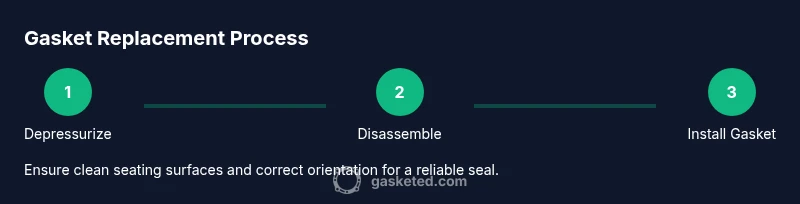
Replacing a pump gasket is a structured process that combines disassembly, inspection, replacement, and reassembly. The goal is to minimize downtime while ensuring a robust seal. With the correct gasket and a clean seating surface, you re-torque fasteners to manufacturer specifications and reassemble in the reverse order of disassembly. After installation, you’ll reattach hoses, re-pressurize the system, and observe for leaks under low pressure before returning to full operation. This section provides a high-level overview you can follow in parallel with the detailed STEP-BY-STEP guide. Keep your work area organized and label components to simplify reassembly. Remember to test the unit with clean water first to prevent contaminating the system.
If you notice any misalignment or gasket extrusion during reassembly, stop and review the seating surface, gasket orientation, and fastener torque. Rushing this step often leads to recurring leaks and shorter gasket life.
A careful approach reduces the risk of leaks and extends the gasket’s service life. The goal is a uniform compression across the gasket surface, with no gaps or protrusions where water can bypass the seal.
Post-repair testing and maintenance tips
Once the gasket is installed and the system is reassembled, slowly re-pressurize the compressor and check for leaks at all gasket joints. Run the unit at low pressure with water only, then gradually increase to full operating pressure while inspecting the entire seal line. If you locate a leak, depressurize, reseat, and verify the gasket orientation and seating surface. Regular maintenance includes inspecting the gasket interface, cleaning mating surfaces, and replacing the gasket at recommended intervals based on usage and chemical exposure. Store the pressure washer properly when not in use to reduce corrosion or surface damage that can affect gasket seating. Following these steps will help you avoid repeated gasket failures and keep your unit performing reliably.
Tools & Materials
- Pressure washer manual (model-specific)(Reference for gasket size and torque specs)
- Protective eyewear(Safety glasses)
- Gloves(Chemical-resistant if needed)
- Socket wrench set(For pump bolts)
- Screwdrivers (flat & Phillips)(For screws on pump head)
- Torque wrench (optional)(Helps ensure proper torque)
- New gasket kit for your model(Exact size/profile as per manual)
- Gasket sealant (if specified)(Only if manual calls for it)
- Cleaning cloths/rags(Clean mating surfaces)
- Isopropyl alcohol or spray cleaner(De-grease surfaces)
- Container or tray(Catch any residual water)
- Lubricant for O-rings (if applicable)( silicon-based lubricant (per manual))
Steps
Estimated time: 60-90 minutes
- 1
Depressurize and disconnect
Power off the unit, unplug it, and place it on a stable work surface. Relieve all pressure by running the unit with a blast shield or by releasing the discharge hose into a safe drain until no more spray is emitted.
Tip: Always confirm zero pressure before touching hoses. - 2
Remove exterior panels and access pump
Unfasten screws securing the pump housing and detach the housing cover to access the pump body. Keep track of fasteners and note any alignment marks.
Tip: Label fasteners by location to simplify reassembly. - 3
Disconnect hoses and detach the pump from frame
Carefully detach inlet/outlet hoses, noting their orientation. Remove bolts that secure the pump to the frame, lifting the pump away on a clean workspace.
Tip: Support the pump to prevent damage to seals during removal. - 4
Disassemble pump head and access gasket
Unscrew the pump head to reveal the gasket surface. Inspect for wear, grooves, or debris that could impair sealing.
Tip: Take photos during disassembly to aid reassembly. - 5
Inspect old gasket and mating surfaces
Evaluate gasket thickness and any signs of cracking or extrusion. Clean both mating surfaces with isopropyl alcohol and a lint-free cloth to ensure a pristine seat.
Tip: Do not use metal tools that could scratch seals. - 6
Install new gasket and reassemble head
Place the new gasket in the correct orientation, then reassemble the pump head. Ensure a uniform seating surface and avoid twisting the gasket during installation.
Tip: Gently seat before final tightening to prevent misalignment. - 7
Reattach pump to frame and reconnect lines
Bolt the pump back into position, reattach hoses, and ensure all connections are clean and tight. Do not overtighten to avoid distorting the gasket seating area.
Tip: Apply torque in a cross pattern if applicable. - 8
Test fill and initial leak check
Reconnect power and progressively re-pressurize with clean water. Observe joint seams for leaks during low-pressure run, then perform a full-pressure test.
Tip: If a leak appears, depressurize and reseat the gasket area carefully.
Common Questions
What is a pressure washer pump gasket?
The pump gasket is a seal between pump components that prevents leaks under high pressure. It seals the path between the pump head and housing. If damaged, it can reduce efficiency and spray strength.
It's the seal that keeps water from leaking between the pump parts, which is critical for proper pressure.
How can I tell if the gasket is leaking?
Look for wetness around the pump seam, a drop in spray force, or air bubbles in the discharged stream. Leaks may worsen after use or after reassembly.
Check around the gasket area for moisture, listen for hissing sounds, and test the machine under pressure.
Can I reuse the old gasket?
Reusing an old gasket is not recommended if it shows signs of wear, cracks, or compression set. Always replace with a gasket that matches the original profile.
Usually you should replace it with a new one to ensure a good seal.
Are there different gasket materials for pump gaskets?
Yes. Materials like nitrile, Viton, and silicone offer different resistance to chemicals and heat. Choose a material compatible with your cleaning agents and the pump design.
There are several materials; pick the one your pump requires and that matches your cleaners.
How long does replacement take on an average unit?
Most DIY replacements take about 1 hour to 1.5 hours depending on access to the pump and experience. Allow extra time for check leaks and reassembly.
Usually under two hours, depending on access and familiarity.
What if leaks persist after replacement?
If leaks persist, recheck gasket orientation, ensure surfaces are clean and undamaged, and verify there is no misalignment. If issues continue, consult a professional.
If it still leaks, double-check alignment and consider professional help.
Watch Video
Key Takeaways
- Depressurize before disassembly and wear safety gear.
- Match gasket material and size to your pump model.
- Seal cleaning and proper seating are critical to a lasting repair.
- Test at low pressure before full operation to confirm a leak-free seal.