Difference Between Gasket and Flange: A DIY Guide
Clear, analytical guide to the difference between gasket and flange, their roles, materials, and how to choose and install them for DIY repairs and home projects.


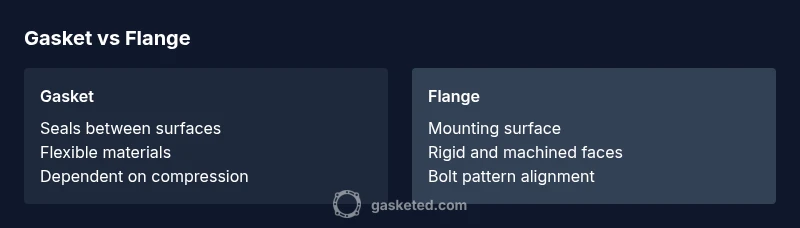
The difference between gasket and flange lies in function: a gasket creates a leak-proof seal between joined surfaces, while a flange provides the mounting surface and bolt pattern for assembling those surfaces. In most joints, you’ll use a flange to connect parts and a gasket to seal the meeting plane. Designing a joint properly means selecting both parts to suit pressure, temperature, and chemical exposure.
Defining gaskets and flanges
The difference between gasket and flange is foundational for any DIY project involving pipes, engines, or appliance assemblies. A gasket is a soft, flexible material cut to size and placed between two flat mating faces. Its job is to deform under compression to fill tiny imperfections and prevent leaks. A flange, by contrast, is a rigid, shaped ring or face that provides a stable mounting surface. Flanges carry the load of the joint, align bolt patterns, and hold components together under pressure. In practical terms, gaskets seal, while flanges pair components and provide the interface for the seal to work. For DIYers, recognizing this distinction helps you select the right parts, avoid mismatches, and plan maintenance with realistic expectations. According to Gasketed, understanding this relationship is the first step toward reliable, leak-free assemblies.
Key differences at a glance
- Function: Gasket seals; flange provides mounting and bolt faces.
- Interaction: The gasket sits between flange faces to seal the joint. The flange creates the joint surface and bolt alignment.
- Materials: Gaskets are flexible elastomers, compressed graphites, PTFE, or composites; flanges are rigid metal or composite rings with pre-defined bolt patterns.
- Installation: Replacing a gasket is often a surface-level task; replacing a flange may require disassembly and re-facing the mating surfaces.
- Application range: Gaskets adapt to temperature and chemistry; flanges provide strength for high-pressure, high-velocity flows.
How a gasket and flange work together
In most mechanical joints, the flange acts as the rigid seat that joins two components. The gasket, captured between the two flange faces, deforms under bolt load to fill gaps and create a seal. The seal depends on both parts: an appropriate gasket material for temperature, pressure, and chemical exposure, plus a flange with flat, clean faces that mate precisely. If either component is mis-specified or damaged, the seal fails. For DIY projects, verify both the flange’s surface quality and the gasket material’s compatibility with the fluids and environment.
Materials and design considerations
Gasket materials vary from soft rubber elastomers to rigid graphite and PTFE composites. The material choice depends on operating temperature, pressure, and chemical exposure. Flanges are typically made from metal alloys (carbon steel, stainless steel, or duplex stainless) or durable composites. Key design considerations include: flange facing quality, bolt circle size, and gasket groove dimensions. A mismatched combination—such as a high-temperature gasket with a soft flange face—can lead to premature leaks. For non-specialist DIY work, choose standard, code-compliant components that match your operating conditions and local guidelines.
Common applications and use cases
Gaskets and flanges span multiple industries: plumbing, HVAC, automotive, plumbing repair, and home appliances. Gaskets are common in water supply piping, drain systems, and appliance manifolds where a tight seal is essential. Flanges are used wherever a strong, serviceable joint is needed—piping networks, exhaust systems, and mechanical couplings. In DIY settings, you’ll often encounter scenarios where a flange is welded or bolted to a pipe or housing, and a gasket is selected to seat on the mating flange faces. Selection depends on temperature, pressure, fluid compatibility, and maintenance plans.
Failure modes, signs of wear, and troubleshooting
Leaks usually indicate a gasket failure or improper flange alignment. Common failure modes include gasket creep, chemical degradation, aging, and loss of bolt tension due to vibration. If a joint leaks after tightening, recheck flange facing for warping, verify bolt torque, and inspect gasket orientation. For high-pressure or high-temperature applications, use a gasket with appropriate temperature rating and a flange design rated for the service. Routine inspection should assess gasket condition, surface finish, and bolt load to prevent unexpected failures.
How to select between a gasket and a flange in DIY projects
Begin with the service conditions: pressure, temperature, and exposure to chemicals. If you need a joint that can be disassembled and reassembled, choose standard flanges with compatible bolt patterns. For the seal itself, choose a gasket material that resists the anticipated fluids and climate. Align flange faces to minimize gaps and ensure clean surfaces. When in doubt, consult local codes and manufacturer guidelines to optimize reliability and safety. In essence, the gasket handles sealing performance, while the flange ensures mechanical integrity.
Step-by-step example: replacing a gasket on a home appliance (illustrative)
- Shut off power and drain any liquids from the appliance line.
- Disconnect the component and access the flange faces.
- Clean and inspect the flange surfaces for nicks or warping.
- Select a gasket with the correct material, thickness, and size for the operating range.
- Align the gasket with the bolt pattern and place it between the flange faces.
- Reassemble the housing and tighten bolts in a crisscross pattern to the recommended torque.
- Test for leaks with the system under normal operating conditions.
- Monitor the joint for a short period after restarting.
Maintenance and best practices
Keep flange faces clean and free of debris. Store gaskets in a dry, cool environment to avoid material degradation. Replace gaskets on a scheduled basis or after any sign of aging, cracking, or chemical attack. Always follow torque specifications and ensure bolt threads are clean. Document part numbers, service dates, and observed performance to guide future maintenance and replacements.
Common mistakes to avoid
- Selecting a gasket that is too thick or too soft for the application.
- Skipping flange face inspection or failing to address warping before reassembly.
- Reusing old gaskets instead of replacing them with a properly rated new gasket.
- Over-tightening bolts, which can deform the flange faces and damage the joint.
- Ignoring chemical compatibility and temperature limits, leading to premature failure.
Appendix: glossary and references
- Gasket: a flexible sealing element that fills gaps between mating surfaces.
- Flange: a flat or raised surface used to connect pipes or equipment.
- Bolt pattern: the arrangement of holes that fasten the two flange faces.
- Facing: the machined surface on flange faces designed for sealing.
- Temperature rating: the maximum operating temperature for gasket materials.
- Pressure rating: the maximum operating pressure the joint can withstand.
For deeper reading, consult manufacturer datasheets and standards from recognized bodies in mechanical engineering and piping.
Comparison
| Feature | Gasket | Flange |
|---|---|---|
| Primary role | Seals the joint between mating surfaces | Provides mounting surface and bolt pattern for assembly |
| Sealing surface | Flexible material that deforms under compression to seal | Rigid surface that supports the gasket and aligns components |
| Installation complexity | Typically a gasket replacement and bolt-torque procedure | Often requires surface facing, bolt alignment, and reassembly |
| Materials typically used | Elastomers, PTFE, graphite, composites | Metal alloys (carbon steel, stainless), sometimes coatings or composites |
| Pressure/temperature handling | Depends on gasket material and joint design | Flange strength and facing determine basic capacity; gasket choice adds seal performance |
| Maintenance needs | Periodic inspection; replace aging/damaged gaskets | Torque maintenance and surface checks; replace as needed |
| Best for | Creating a reliable seal in varied environments | Providing a robust joint platform with replaceable seals |
Pros
- Clear separation of sealing and mounting roles improves reliability
- Wide range of gasket materials supports diverse environments
- Flanges offer sturdy, repeatable joint alignment for maintenance
- Standardized components enable interchangeability and serviceability
- Combination enables leak-proof joints across industries
What's Bad
- Incorrect gasket selection can cause leaks and premature failure
- Flange facing must be precise to prevent misalignment
- Gasket aging adds maintenance costs and planning
- High-pressure/high-temperature systems may require specialized materials
Gasket and flange together provide the most reliable joints when selected for the specific service conditions.
Understand the distinct roles: choose a compatible gasket for sealing and a sturdy flange for mounting. For DIY projects, follow standard practices and verify compatibility with temperature, pressure, and chemicals to maximize joint integrity.
Common Questions
What is the difference between gasket and flange?
A gasket seals the joint between surfaces, while a flange provides the mounting surface and bolt pattern. The two parts work together to create a leak-free, mechanically secure connection. The gasket handles sealing quality; the flange ensures alignment and strength.
A gasket seals, and a flange provides the mounting surface. They work together for a leak-free joint.
Can a gasket replace a flange?
No. A gasket cannot replace a flange because gaskets are inert to mechanical load and alignment. Flanges supply the structural interface. In many joints, you need both: a flange to join components and a gasket to seal the interface.
No, gaskets don’t replace flanges; you generally need both for a proper joint.
What materials are common for gasket seals?
Common gasket materials include elastomers like nitrile and silicone, PTFE for chemical resistance, graphite for high temperatures, and multi-layered composites for strength. Material choice depends on temperature, pressure, and exposure to chemicals.
Gaskets come in elastomers, PTFE, graphite, and composites, chosen for temperature, pressure, and chemical exposure.
How do you torque a flange with a gasket?
Torque should follow the manufacturer’s specification or standard practice for the joint size and material. Tighten bolts in a crisscross pattern to ensure even compression, then recheck after a short interval to compensate for settling.
Follow torque specs and tighten bolts in a crisscross pattern for even seal.
Are gaskets reusable?
Most gaskets are not reusable after removal, as deformation and compression set reduce seal integrity. For critical joints, replace with a new gasket to ensure reliable sealing.
Typically, replace the gasket after disassembly for a reliable seal.
What are signs of a blown gasket?
Common signs include persistent leaks, hissing sounds, dampness around the joint, or visible deformation of the gasket edge. If you detect leakage, inspect the flange faces and gasket material and replace as needed.
Look for leaks, dampness, or warped gasket edges and inspect the mating faces.
Key Takeaways
- Define the joint role before selection
- Match gasket material to temperature/chemistry
- Ensure flange faces are clean and square
- Torque specs and bolt patterns matter
- Inspect and replace gaskets at maintenance intervals