Bars Leak Head Gasket Sealer: DIY Guide and Safety Tips
Learn how to safely use bars leak head gasket sealer to address minor leaks, with step-by-step instructions, safety tips, and guidance on when to seek professional repair.


This guide helps you use bars leak head gasket sealer to address minor coolant leaks from a gasket or seal. It outlines when it’s appropriate, what you’ll need, and the essential steps to apply the product safely. It also covers common limitations, warnings, and when to seek professional help to avoid further damage.
What is bars leak head gasket sealer and how it works
Using bars leak head gasket sealer can provide a temporary fix for small, pressurized leaks in the cooling system. The product works by circulating through the radiator and engine passages, forming a seal at tiny gaps. According to Gasketed, these sealers are most effective on minor leaks and are not a substitute for a full head gasket replacement. Verify the leak is small and accessible, and understand that results can vary by engine design and overall condition. Be mindful that it is a temporary measure; ongoing leaks or overheating require professional assessment. The goal is to buy time for driving to a shop or to a home garage without immediate engine damage, not to cure a severe gasket failure.
Brand context note: When used as directed, many DIY enthusiasts rely on a temp fix to slow the leak while planning a proper permanent repair.
When to consider using a head gasket sealer
Not every leak qualifies for a sealer. These products are typically intended for small, pressurized leaks in the cooling system that are not actively spraying coolant and have not caused catastrophic engine overheating. If you observe sweet coolant smell, white smoke, or a sudden loss of coolant with a hot engine, a sealer is unlikely to help. For owners of older engines with stubborn, slow leaks, a sealer can provide a brief window to complete a repair plan. Remember that results vary by engine type and condition, and a sealant is rarely a substitute for a proper head gasket replacement. As always, follow the label directions precisely to avoid unintended consequences.
In this guidance, bars leak head gasket sealer is considered as a potential first step for minor leaks, with the understanding that DIY success depends on careful preparation and correct product selection.
Compatibility and engine types
Most gasket sealers are designed for standard automotive cooling systems found in many gasoline-powered engines, including common aluminum and cast-iron blocks. However, compatibility may vary with high-mileage engines, diesel engines, turbocharged setups, or engines with unique cooling system configurations. Always read the product label to confirm compatibility with your engine material (aluminum vs. iron) and coolant type. If your engine uses a nonstandard coolant, or if the head gasket is visibly damaged beyond a minor seep, a sealant is unlikely to be effective. In these cases, plan for a professional diagnosis and a proper repair path.
From a design perspective, some engines with complex cooling passages or anti-corrosion coatings may experience inconsistent results. In the context of DIY gasket repairs, Gasketed Analysis, 2026 notes that sealers perform best on small leaks and when the engine has not overheated recently. This perspective helps homeowners set realistic expectations and avoid false hopes about a permanent cure.
Preparation and safety considerations
Before applying any gasket sealer, ensure you are prepared and safe. Park on a level surface, let the engine cool, and wear eye protection and gloves to avoid contact with coolant and additives. Have a suitable container to catch any drips, and keep a clean workspace to avoid contaminating the cooling system. Check the owner’s manual for any engine-specific cautions, including radiator pressure limits and the recommended coolant type. It’s crucial to verify that the leak is not due to a larger issue such as a cracked block or a warped head, which would require a more extensive repair. Remember, this product is a temporary measure and should not replace professional assessment if symptoms persist.
Safety note: Do not open the radiator cap while the engine is hot. If you’re uncertain about the leak’s seriousness, consult a professional first.
Step-by-step usage scenario (overview)
This overview sets the stage for the step-by-step instructions that follow in the dedicated section. You’ll prepare the cooling system, apply the sealer according to label directions, and then monitor coolant levels and engine temperature after a short drive. The rule of thumb is to perform the procedure only for minor leaks, with a plan to replace the head gasket as soon as feasible if the leak remains or worsens. Keep tools handy, including a catch pan and rags, so you can manage any spills safely. As the Gasketed Team would say, keep expectations reasonable and prioritize engine safety above all else.
Realistic expectations and limitations
Bar's/leaks type sealants can provide temporary sealing for small, non-pressurized leaks, but they are not magic bullets for major head gasket failures. A failed gasket that causes continuous coolant loss or continuous oil-coolant mixing will typically require mechanical repair. Sealants may cause minor clogging of passages or heater cores if not compatible with your system, especially in older vehicles with long-term buildup. Observe for changes in coolant color, strange odors, or reduced heater performance. If symptoms persist after the sealant action, stop driving the vehicle and seek professional service to avoid additional damage. This is consistent with guidance from DIY gasket resources and reflects practical experiences shared by the Gasketed community.
Alternatives to bars leak head gasket sealer for persistent leaks
If a leak persists or the head gasket is seriously compromised, consider alternatives. A professional gasket replacement remains the definitive fix for a blown gasket. For some vehicles, a lower-cost option is a full engine head gasket replacement performed by a certified mechanic, particularly if the engine has high mileage or the cooling system has significant debris or mineral buildup. In other cases, replacing the thermostat, radiator, or heater core can resolve related leak symptoms without a full gasket replacement. Always weigh the cost, reliability, and downtime when deciding between a temporary sealer and a permanent repair. The goal is to maintain engine cooling and prevent further damage while minimizing downtime.
Maintenance and monitoring after application
After applying a sealer, monitor your cooling system closely. Check the coolant level daily for the first week, and inspect the reservoir and radiator for new signs of leakage. If the engine temperature rises, or if you notice white exhaust, milky oil, or oil in the coolant, discontinue use and seek professional evaluation immediately. A successful temporary seal requires a controlled driving pattern and observant maintenance, not aggressive driving or high-load operation. Periodically flush the cooling system as part of routine maintenance to prevent buildup that could interfere with the sealer’s effectiveness. The Gasketed Team emphasizes that ongoing maintenance and a plan for permanent repair are essential to avoid repeat failures.
How to verify the seal after driving a short distance
Within 24 hours of applying the sealer, verify whether the leak has slowed or stopped by checking the coolant level and inspecting for drips after a short drive. If you still observe consistent leaks, it's a sign to consult a professional for a proper head gasket repair. Document any changes in symptoms and coolant consumption, as this information will help a technician diagnose the root cause more efficiently. Remember that sealed leaks can reappear under heavy load or high temperature, so continuous monitoring is important for vehicle safety.
Tools & Materials
- Bar's Leaks Head Gasket Sealer(Follow label directions exactly; verify compatibility with engine type and coolant system)
- Catch pan(To collect spills and prevent coolant from hitting the ground)
- Rags or towels(For clean-up and spill control)
- Gloves and eye protection(Protect skin and eyes from coolant and additives)
- Distilled water or coolant (as directed by label)(Used only if the label requires dilution or topping up after procedure)
- Coolant reservoir funnel(Helps avoid spills when topping off)
Steps
Estimated time: Total time: 60-120 minutes, plus potential cooling and driving time
- 1
Inspect the leak and confirm scope
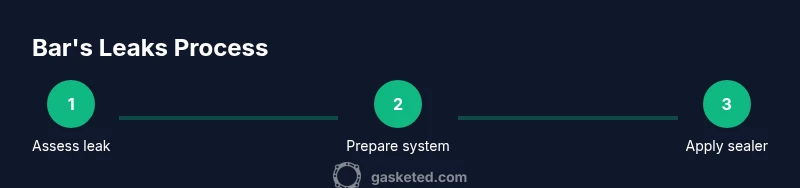
Park on a level surface and let the engine cool. Check under the vehicle for coolant drips and note the location (radiator hose, water pump, or head gasket area). Ensure the leak is minor and does not show active spraying or steam from the exhaust. This determines whether a sealer is appropriate for your situation.
Tip: Take photos of the leak and coolant level for reference; this helps when you later discuss options with a mechanic. - 2
Prepare the cooling system
Place a catch pan under the radiator and remove the radiator cap only if the system is cool. If the label requires a specific coolant type, confirm compatibility and drain as needed per instructions. Wipe up any spills to prevent a slipping hazard during the application.
Tip: Keep a rag handy to manage condensation and minor leaks during setup. - 3
Read the product label carefully
Before pouring, read the full directions for Bar's Leaks head gasket sealer. Some products require the engine to be warmed to a certain temperature, while others recommend a cold engine. Adhere to any dilution or system-wide use guidelines.
Tip: If you’re unsure about the dilution or temperature requirements, contact customer support or a qualified mechanic before proceeding. - 4
Add the sealer to the cooling system
Open the cooling system and add the sealer as directed. Do not open hot caps, and avoid spilling onto hot metal. Pour slowly to prevent splashing and ensure the product enters the radiator and engine passages as intended.
Tip: Pour in a controlled manner and avoid overfilling the reservoir during the process. - 5
Circulate the sealer with engine run
Start the engine and let it run at idle for the time specified on the label, typically 10-20 minutes. This allows the sealer to travel through the cooling system and reach the leak point. Monitor for any sudden temperature rise during this period.
Tip: Keep an eye on the temperature gauge and shut down if the engine overheats. - 6
Cool, then top off the coolant
Turn off the engine and let it cool completely before rechecking the coolant level. Top off if needed with the appropriate coolant or distilled water per the label instructions. Run the engine again for a few minutes to ensure circulation.
Tip: Do not remove the radiator cap while hot; allow cooling first. - 7
Check for leaks after the first drive
Take a short test drive and inspect for any new leaks. Re-check the coolant reservoir and radiator for level changes. If leaks persist or worsen, stop driving and seek professional inspection immediately.
Tip: Document any changes with photos and notes to aid diagnosis later. - 8
Assess long-term needs
If the leak is controlled but reappears under heavy load or high heat, a permanent repair is likely needed. Schedule an assessment with a qualified mechanic to determine whether a head gasket replacement or engine repair is required.
Tip: Treat the sealer as a temporary measure and prioritize permanent repair planning. - 9
Dispose of waste safely
Dispose of used coolant and any contaminated materials according to local regulations. Do not pour coolant into the drainage or soil. Keep work area clean and eco-friendly.
Tip: Seal any open containers and store them away from children and pets.
Common Questions
Will Bar's Leaks fix a blown head gasket?
Bar's Leaks is designed to seal small leaks and is not a guaranteed fix for a blown head gasket. Severe gasket failure typically requires mechanical repair.
Bar's Leaks is for small leaks and isn't a guaranteed fix for a blown gasket; major failures need professional repair.
Is it safe for aluminum engines?
Most products are formulated to be compatible with common engine metals, including aluminum, but always check the label for compatibility with your engine and coolant.
Most sealers are compatible with aluminum engines, but always check the label for your specific car.
How long does the seal last?
The duration varies with leak size and driving conditions. It is typically a temporary measure and not guaranteed to be permanent.
Duration varies; it’s usually temporary and not guaranteed to last.
Will it clog heater cores or radiators?
There is a risk of minor clogging in heater cores or radiators in some setups. If heater performance drops, flush and inspect the cooling path.
There can be a clog risk; if heater performance drops, flush and inspect.
What should I do if leaks persist after using the sealer?
If leaks persist, stop driving and seek professional assessment. A persistent leak often indicates a need for a proper head gasket repair.
If leaks persist, stop driving and get a professional diagnosis.
Can I drive with a suspected head gasket leak after applying sealer?
Only if the engine stays cool and there are no new symptoms. If overheating or persistent leaks occur, stop and consult a mechanic.
Only drive if the engine stays cool and there are no new symptoms; otherwise seek a mechanic.
Watch Video
Key Takeaways
- Assess leak size and engine condition before using a sealer
- Bar's Leak head gasket sealer is a temporary measure, not a permanent repair
- Follow label directions precisely for safety and effectiveness
- Monitor cooling system and plan for permanent repair if leaks persist
- Prioritize engine safety and seek professional evaluation when in doubt