What is a Head Gasket vs Valve Cover Gasket: A Practical Guide
Explore the differences between head gaskets and valve cover gaskets, their functions, symptoms of failure, DIY vs professional replacement paths, and tips to diagnose and plan gasket repairs for your engine in 2026.


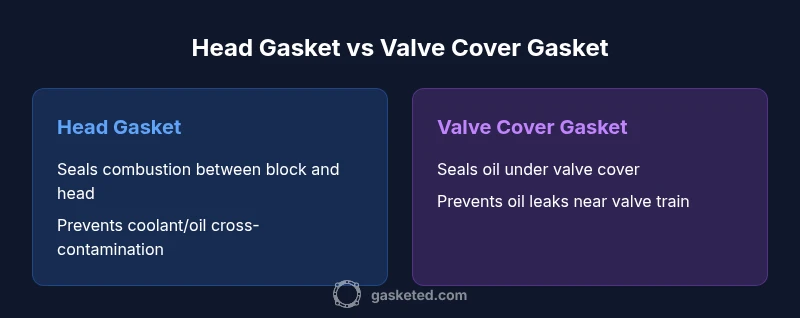
Head gaskets seal combustion and critical cooling/oil passages between the block and head, while valve cover gaskets seal the oil under the valve cover. The two gaskets differ in location, failure signs, and replacement difficulty, so correct diagnosis matters for a cost-effective repair.
What is a Head Gasket vs Valve Cover Gasket: Core Definitions
Understanding the difference between these two engine gaskets is essential for diagnosing leaks and planning repairs. what is a head gasket vs valve cover gasket is a common question for DIYers. A head gasket sits between the engine block and cylinder head, sealing combustion pressure and makeup coolant and oil passages. The valve cover gasket sits at the top of the engine, between the valve cover and the cylinder head, sealing oil under the cover. According to Gasketed, this distinction shapes every subsequent decision about inspection, removal, and replacement. In modern engines, there are often multiple head bolts and potential coolant routes that influence gasket design. The rest of this guide explains how these gaskets differ and why those differences matter for reliability and maintenance in 2026.
How Each Gasket Functions Within an Engine
A head gasket is tasked with containing the high-pressure combustion chamber while also preventing coolant and oil from crossing into the wrong passages. It bonds the block to the head, resisting substantial thermal and mechanical stress. The valve cover gasket, by contrast, seals oil that drains along the camshafts and rocker arms under the valve cover. Its job is simpler in terms of pressure but crucial for maintaining proper lubrication and preventing oil leaks that can contaminate belts or ignite on hot exhaust components. The distinct roles influence where failures occur, how easy repairs are, and what tools are needed for extraction and replacement. Gasketed analysis shows that misdiagnosis often leads to replacing the wrong seal, so accurate identification is essential.
Materials, Design and Typical Failure Modes
Gaskets in engines are made from a mix of materials, including multi-layer steel, graphite, elastomeric sealants, and compressed non-asbestos composites. Head gaskets are engineered to withstand high combustion pressures, while valve cover gaskets prioritize oil sealing at the valve train level. Common failure modes differ: head gaskets typically fail due to overheating, age, or poor torque, causing coolant leaks, white smoke, or mixing of oil and coolant. Valve cover gaskets usually fail from oil leakage at the valve cover interface, which can lead to visible oil spots on the engine or a burnt oil smell. Understanding the material and design helps predict service life and illustrates why replacement procedures differ.
Symptoms of Failure: When to Inspect
Head gasket failure often manifests as overheating, a sudden loss of coolant with no visible leak, milky oil, or white smoke from the exhaust. In some cases, you may notice bubbles in the radiator or coolant reservoir and pressurized cooling system lines. Valve cover gasket failure typically presents as oil seepage around the valve cover, wet spark plug wells, or oil on the timing belt or accessory drive components. Both gaskets can cause misinterpreted diagnostics if the signs are subtle, so a structured inspection approach is essential for accurate repair planning.
Replacement Pathways: DIY vs Professional
DIY gasket work is feasible for some engines but often challenging for modern vehicles. Replacing a head gasket generally requires extensive disassembly, proper torque sequences, and a reliable cooling system re-bleed. Valve cover gasket replacement is usually simpler and more accessible, but access can still be restricted by intake components or exhaust hardware in some engines. Planning should include verifying torque specs, coolant flush procedures, and checking for other gasket or cooling-system wear during the job. The Gasketed team emphasizes staged, safe work and proper diagnostics to prevent repeating labor due to misidentification.
Tools and Preparations for Gasket Work
A well-prepared shop setup minimizes downtime. Essential tools include a torque wrench with the correct spec, a gasket scraper, thread sealant if recommended, new gaskets, gasket sealer if specified, and a manual or OEM service document for torque patterns. Cleanliness is critical: remove old gasket material completely without damaging mating surfaces. For head gasket work, you’ll also need a coolant system bleed procedure and a proper head gasket replacement kit if required. Pre-checks should include checking coolant condition, inspecting for warpage, and confirming thermostat operation to avoid future gasket stress.
Common Pitfalls and Early Warnings
Rushing a gasket replacement can mask root causes, so slow, methodical work is essential. Common pitfalls include reusing damaged old bolts, not following torque sequences, and failing to properly bleed air from the cooling system after reassembly. Early warnings include persistent overheating post-repair, unexplained oil consumption, and pressure in the cooling system after startup. For DIYers, a careful measurement of surface flatness and a sanity check of injector or fuel system faults helps prevent misdiagnosis. The goal is a reliable seal and consistent engine operation.
Comparative Cost and Time Considerations
Labor cost is a major factor in the total repair, especially for head gasket work. A head gasket replacement usually involves significant labor and potential ancillary repairs if the overheating or warping has occurred. Valve cover gasket replacement is generally quicker and has lower labor costs, but this can vary with engine design and accessibility. Price ranges vary by region and vehicle model, and timing can range from a few hours to several days if additional issues arise. Planning with a professional estimate helps avoid surprises and aligns expectations with the project scope.
Choosing Between the Gaskets for Your Engine Type
Engine type and design strongly influence gasket choice. Older engines may have simpler head gaskets, while modern, turbocharged, or high-performance engines introduce more complex sealing schemes. If the plan is to extend engine life and prevent cross-contamination of oil and coolant, prioritizing a proper head gasket diagnosis is essential. For routine oil sealing tasks and valve train maintenance, a valve cover gasket may be the proper focus. The best approach is a careful assessment of symptoms, a check of service manuals, and a staged repair plan that minimizes downtime.
Maintenance and Prevention Tips to Extend Gasket Life
Proactive maintenance reduces gasket failure risk. Regular coolant changes, proper oil changes with the correct viscosity, and monitoring for overheating are fundamental steps. Ensure the cooling system is bled properly after any maintenance and inspect hoses for cracks or swelling that can lead to coolant leaks. Use the correct torque specs and re-torque when necessary to prevent gasket loosening. Keeping the engine bay clean and avoiding aggressive heat cycles can also help extend gasket life.
Debunking Myths About Gasket Repairs
Some myths suggest head gaskets fail only due to catastrophic engine failure, or that valve cover gaskets never fail in modern engines. In reality, both gaskets can fail for reasons including improper torque, overheating, and age. Another myth is that replacing one gasket will automatically fix all leaks; the root cause may be broader cooling or oil-system issues. A methodical diagnostic approach reduces unnecessary work and aligns repair scope with actual engine condition.
Warranty, Parts and Aftercare
When performing gasket work, consider warranty coverage on parts and the scope of post-repair checks. OEM or OEM-equivalent gaskets often come with warranty terms that require proper installation and reassembly procedures. Aftercare includes test-start checks, leak checks, and a staged coolant refill to prevent air pockets. A documented post-repair inspection helps verify the system is sealed and functioning correctly.
Practical Quick Reference: Quick Diagnostic Checklist
- Check for oily residue around the valve cover and gasket lines. - Look for coolant puddles or white-blue exhaust smoke. - Monitor oil color; milky oil indicates coolant intrusion. - Assess cooling system pressure and performance during a test drive. - Verify torque specs and ensure a complete reassembly with proper gaskets and bolts. - Document symptoms and align them with the most likely gasket involved.
Comparison
| Feature | Head gasket | Valve cover gasket |
|---|---|---|
| Function | Seals combustion and coolant/oil passages between block and head | Seals oil under the valve cover, on the head side |
| Location | Between engine block and cylinder head | Between valve cover and cylinder head |
| Typical failure signs | Overheating, coolant/oil cross-contamination, white smoke | Oil leaks at valve cover, burnt oil smells |
| Replacement difficulty | High; involves engine disassembly and precise torque sequences | Low to medium; accessible with basic hand tools in many engines |
| Cost context | Generally higher due to complexity and potential collateral repairs | Generally lower; primarily gasket and sealant replacement |
| Best for | Maintaining block-to-head integrity and overall engine sealing | Top-end oil sealing and valve-train cleanliness |
Pros
- Clear, actionable diagnosis reduces wasted labor
- Helps prioritize repairs and plan maintenance
- Improves engine reliability when correctly identified
- Supports safer, staged repair planning
What's Bad
- Diagnosis can be complex for modern engines
- Misidentification may lead to unnecessary work
- Head gasket work carries higher risk and repair duration
Head gasket and valve cover gasket serve distinct roles; diagnosis should guide the repair path
Choose the gasket based on the symptom and location. If uncertain, start with a careful inspection and seek a precise diagnosis to avoid overspending.
Common Questions
What is the primary difference between a head gasket and a valve cover gasket?
The head gasket seals combustion and critical passages between the engine block and cylinder head, while the valve cover gasket seals oil under the valve cover. Their locations and failure modes differ, which affects diagnosis and repair steps.
The head gasket seals the engine block and head with combustion and coolant passages, while the valve cover gasket seals oil under the valve cover. The two have different failure modes and repair steps.
Can a blown head gasket be mistaken for a valve cover gasket failure?
Yes. Oil and coolant leaks may resemble each other, especially if symptoms are subtle. A systematic diagnosis, including compression tests and leak-down checks, helps distinguish between gasket types.
Yes, misdiagnosis is possible. Do a thorough diagnostic test to tell head gasket issues from valve cover leaks.
Are head gaskets harder to replace than valve cover gaskets?
Generally, head gasket replacement is more involved and time-consuming than valve cover gasket replacement because it requires engine disassembly, proper head resurfacing checks, and careful reassembly.
Head gasket work is usually more involved and time-consuming than replacing a valve cover gasket.
What are common signs of a head gasket leak?
Common signs include overheating, white smoke, milky oil, coolant loss without a visible leak, and pressure in the cooling system. These indicators warrant a thorough inspection.
Overheating and milky oil point to a head gasket issue; white smoke is also a clue.
Is DIY replacement feasible for a home mechanic?
DIY replacement is possible on certain engines with the right tools and manuals, but many head gasket jobs require advanced skills and shop equipment. Valve cover gasket work is more approachable for beginners.
DIY head gasket work is challenging; valve cover gasket work is more approachable for most hobbyists.
How do I know which gasket I need for my engine?
Consult the vehicle’s service manual or OEM gasket kit for your exact engine model. Correct identification hinges on engine type, year, and body configuration, especially for modern engines.
Check the service manual and use OEM kits matched to your engine; wrong parts will cause more problems.
Key Takeaways
- Identify location and symptoms before tearing into work
- Head gasket work is more complex and costly than valve cover gasket work
- Follow torque specs and cooling-system procedures precisely
- Use staged repairs to minimize downtime
- Regular maintenance reduces gasket failure risk