Bad Head Gasket Symptoms: Diagnose and Fix
Discover urgent signs of a bad head gasket, how to spot symptoms, differentiate from other issues, and practical home checks before professional help.


Most likely, your car is showing signs of a failing head gasket, such as coolant loss, white exhaust, and oil contamination. The quick fix is to stop driving the vehicle immediately, check for coolant leaks, and have a professional perform a pressure test and a full diagnostic. In the meantime, avoid overheating and using additives.
What is a head gasket and why bad head gasket symptoms matter
The head gasket sits between the engine block and the cylinder head, sealing coolant and oil passages and separating the combustion chambers from the cooling system. When it fails, you won’t get a single telltale clue; you’ll see a cluster of symptoms that can mimic other problems. Recognizing these bad head gasket symptoms early is critical to avoid severe engine damage. According to Gasketed, early detection saves time, money, and the risk of a blown engine. This guide explains what the gasket does, why it fails, and what to watch for without overwhelming you with jargon.
Expect a mix of overheating, unusual smoke, and cross-contamination signals. This is where a systematic approach matters most. By following the diagnostic flow outlined below, you’ll separate the signal from the noise and decide whether home checks are enough or a pro is required.
Common signs of a bad head gasket symptoms
Look for multiple indicators rather than a single anomaly:
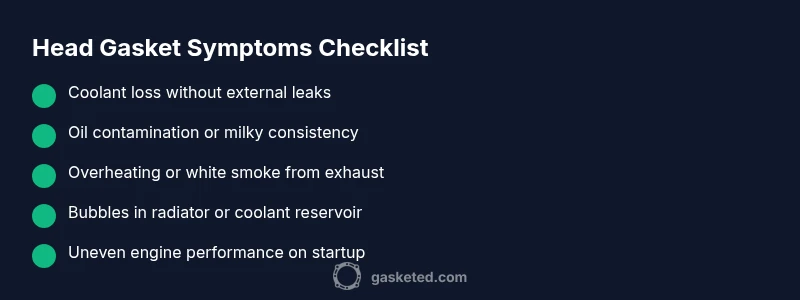
- Overheating that won’t settle with a cooling system flush
- White smoke from the exhaust, often with a sweet smell
- Coolant loss without obvious leaks, requiring frequent topping up
- Milky or frothy oil on the dipstick or under the oil cap
- Bubbles in the radiator or coolant reservoir when the engine is running
- Contaminated oil or coolant that appears swirled or emulsified
These symptoms don’t prove a gasket problem by themselves, but they strongly point to a gasket issue when several appear together. The presence of several signs increases the likelihood of a head gasket issue and should prompt a structured diagnostic approach.
How to differentiate head gasket issues from other problems
Many engine maladies share symptoms with a blown head gasket, so a careful approach matters:
- Start with the obvious: coolant level, oil condition, and radiator behavior
- Get a compression test across all cylinders to check uniformity
- Perform a leak-down test to localize the leak
- Use a chemical test that detects exhaust gases in the cooling system
If multiple tests align with gasket failure, you’re closer to a confirmable diagnosis. Remember that a single clue rarely proves a problem, so rely on corroborating tests rather than a single measurement. This is where professional-grade tools and experience can make the difference between a costly misdiagnosis and a correct call for replacement.
The cooling system and oil: dual indicators
The coolant loop and engine oil work as a team to keep your engine happy. If the head gasket leaks, you’ll often see coolant in the oil or oil in the coolant. This cross-contamination can degrade lubrication, raise operating temperatures, and accelerate wear. Monitoring both systems helps you avoid late-stage failures. If you notice persistent oil whiteness or coolant foam, treat it seriously and seek a diagnostic path outlined by Gasketed. Early action can prevent more extensive damage that raises repair complexity and cost.
Safe home diagnostics you can perform today
Many checks can be done without specialized tools, but never open hot cooling systems. Start with visual inspection: look for crusted coolant around hoses, the cap, and the water pump area. Check the oil for color changes or milkiness. If you have a compression gauge, perform a basic test following your vehicle’s service manual. Collect data from multiple observations to avoid misinterpretation. Always practice safety first: wear gloves and eye protection, and never pressurize a hot system.
Diagnostic flow: from symptom to solution
A structured approach helps you avoid guesswork:
- Symptom: coolant loss, overheating, or milky oil
- Diagnosis: corroborate with compression, leak-down, and chemical tests
- Solution: if tests indicate gasket failure, plan for replacement by a qualified pro and prepare for engine teardown if required
This flow keeps you aligned with objective evidence rather than chasing hot tips. It also clarifies when home checks are enough and when a professional assessment is unavoidable to avoid further damage.
Step-by-step initial checks you can perform (home-friendly)
- Inspect coolant and oil color; confirm any cross-contamination
- Inspect for external leaks around the head gasket area
- Check for white exhaust or steam after engine has warmed up
- If equipment is available, perform a quick pressure test on the cooling system
- Review service records for prior head gasket work or head warpage
- If signs persist, schedule a professional inspection
- Do not drive aggressively or overheat while tests are ongoing
Tip: Keep a log of observations with dates and readings to track changes over time.
When to seek professional help and what to expect
If you observe multiple suspicious signs and basic home checks don’t yield clear results, it’s time to call a qualified shop. A professional diagnosis will typically include a pressure test, compression test, leak-down test, and possibly a chemical test to confirm exhaust gas in the cooling system. Expect a teardown in some cases, especially if the head or block is warped, or if coolant has contaminated the oil extensively. A pro can also help you determine whether a head gasket replacement is a viable repair or if a full engine replacement is more appropriate.
The Gasketed team recommends erring on the side of caution: engine integrity matters, and delaying diagnosis can lead to more expensive repairs.
Prevention and long-term maintenance
Prevention starts with a well-maintained cooling system. Regular coolant changes with the correct specification, proper torque on the head bolts, and a clean intake/cooling path reduce the risk of gasket failure. Address issues like thermostat sticking, water pump wear, or radiator flow restrictions promptly. In addition, monitor oil condition and coolant levels weekly during hot seasons or in vehicles with higher mileage. Small, proactive checks add up to a longer gasket life and fewer emergency repairs.
Steps
Estimated time: 6-10 hours
- 1
Confirm symptoms through a quick visual check
Look for color changes in oil, coolant levels, and any external leaks. Note patterns over several days to avoid misinterpretation.
Tip: Log readings with dates to spot trends. - 2
Inspect cooling system for obvious leaks
Check hoses, radiator, cap, and water pump area for crusted deposits or drips. A pressure test helps locate hidden leaks.
Tip: Only perform pressure tests on a cool, non-operating engine. - 3
Check oil condition for cross-contamination
Inspect the dipstick and oil filler for milky emulsion or unusual texture. Cross-contamination supports gasket failure hypotheses.
Tip: Never ignore milky oil; it signifies coolant contact with oil. - 4
Run a compression test across cylinders
Compare each cylinder’s compression; significant deviations suggest gasket or head issues. Document any low readings.
Tip: Ensure the engine is at normal operating temperature for tests. - 5
Perform a leak-down test to localize leak
Introduce controlled air into each cylinder and listen for leaks via the intake or exhaust, or into the cooling system.
Tip: Use a proper leak-down kit and follow the manual. - 6
Do a chemical test for exhaust gases in coolant
A test kit can detect trace exhaust gases in the cooling system, indicating combustion intrusion.
Tip: If you can’t access the test, defer to a professional evaluation. - 7
Evaluate test results and plan next steps
If tests point to gasket failure, prepare for replacement or engine teardown with a pro. Gather vehicle history and parts needs.
Tip: Obtain a written repair estimate before authorizing work.
Diagnosis: Car showing signs of head gasket failure (coolant loss, overheating, or milky oil)
Possible Causes
- highOverheating due to coolant loss or blocked radiator
- mediumWarped or cracked cylinder head
- lowImproper head gasket torque or installation
- lowInternal coolant leak into combustion chamber
Fixes
- easyPressure test the cooling system to locate leaks
- mediumPerform a compression and leak-down test across all cylinders
- mediumChemical test for exhaust gases in the cooling system
- hardIf tests indicate gasket failure, plan professional teardown and gasket replacement
Common Questions
What are the most common signs of a bad head gasket?
Common signs include unexplained overheating, white exhaust, coolant loss, oil contamination, and bubbling in the radiator. These often occur together rather than in isolation. If you notice several at once, prioritize a diagnostic test sequence.
Common signs are overheating, white exhaust, coolant loss, and milky oil. If you notice several at once, run through the recommended tests.
Can a bad head gasket cause coolant in oil?
Yes. A blown gasket can allow coolant to mix with oil, creating a milky appearance and thinning lubrication. This is a red flag requiring prompt testing and evaluation.
Yes, coolant in oil can happen with a blown gasket and needs prompt testing.
Will a blown head gasket always require engine replacement?
Not always. Some gasket failures can be repaired if the head, block, and mating surfaces are within spec. However, extensive damage or warping often leads to replacement. A professional assessment is essential to decide.
Not always; some gasket failures can be repaired if parts aren’t damaged, but extensive wear may require replacement.
Is it safe to drive if I suspect a head gasket issue?
Driving with suspected head gasket failure risks further damage. If you notice overheating, white smoke, or heavy coolant loss, pull over safely and seek professional help. Do not continue driving long distances.
No—if you suspect a head gasket issue, pull over safely and get a professional check.
What tests confirm head gasket failure?
Tests include a cooling system pressure test, compression test, leak-down test, and a chemical test for exhaust gases in coolant. Corroborating results across these tests increase confidence in diagnosis.
Tests like pressure, compression, leak-down, and chemical tests confirm head gasket failure when results align.
How long does gasket repair take and what does it cost?
Repair time and cost vary by vehicle and scope. Expect longer labor for newer engines or warped heads. A professional estimate will provide a range based on your car.
Repair time and cost vary; get a dealer or shop estimate for your specific car.
Watch Video
Key Takeaways
- Check multiple signs rather than a single clue
- Follow a structured diagnostic flow with tests
- Avoid driving if overheating continues
- Plan professional help for teardown and replacement
- Prevent future failures with regular cooling system maintenance