Broken Head Gasket Signs: Diagnose Fast and Fix
Spot broken head gasket signs fast, diagnose safely, and learn practical fixes for DIY homeowners. Clear steps, tests, and prevention tips.


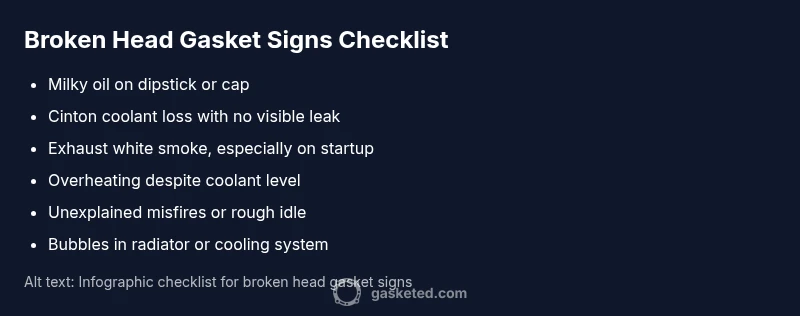
Broken head gasket signs include coolant loss, milky oil, overheating, white exhaust smoke, and occasional misfires. If you observe multiple indicators, stop driving and begin a systematic diagnostic flow to confirm a gasket failure before pursuing repairs. Early testing helps prevent severe engine damage and costly bills.
What broken head gasket signs look like in practice
When a head gasket fails, the signs spill over into multiple vehicle systems. In practice, the most alarming clue for DIYers is coolant visibly disappearing or leaking at the radiator or engine bay, often with a sweet or grassy smell. Another hallmark is milky oil on the dipstick or under the oil cap, a sign that coolant has contaminated the oil. You may also notice white smoke from the exhaust and persistent engine overheating, even after topping off coolant. Head gasket failure can also cause unexplained misfires, rough idle, or poor engine performance. In some cases, you’ll find bubbles in the radiator or cooling system, indicating combustion gases entering the cooling circuit. It’s important to remember that these signs don’t prove a blown head gasket on their own; they indicate a problem somewhere in the engine that warrants testing. If you observe multiple signs together, treat it as a high-priority issue and proceed with diagnosis rather than driving the vehicle to a shop for a proper evaluation.
How the signs manifest across systems
Across cooling, lubrication, and exhaust subsystems, the telltale indicators cluster. The cooling side often shows rapid temperature rise and coolant loss without a visible external leak. The oil side may reveal a creamy, milky layer on the dipstick or oil cap, signaling coolant intrusion. On the exhaust, white or bluish smoke can appear, especially on startup or under load. The engine itself may exhibit rough running, misfires, or a stumble as combustion pressure leaks past the gasket. Importantly, single symptoms can arise from other issues, such as a faulty radiator cap, a warped cylinder head, or a cracked engine block. Therefore, the presence of several signs together strengthens the likelihood of a broken head gasket, but confirmation requires tests.
Distinguishing signs from similar problems
To avoid chasing false positives, look for a constellation of symptoms rather than a single clue. Milky oil plus coolant loss plus white exhaust smoke is highly suggestive of a gasket issue. In contrast, overheating with a coolant leak but clean oil might point to a cooling system failure rather than gasket damage. A consistent rough idle alone may be caused by ignition problems or vacuum leaks. By comparing symptoms across fluid levels, exhaust, and engine performance, you’ll gain a clearer picture of whether the gasket is compromised and what tests to run next.
Steps
Estimated time: 60-90 minutes
- 1
Park safely and let the engine cool
Turn off the engine, wait at least 30 minutes, and disconnect the battery if you’re going to work near electrical systems. This minimizes burn risk and avoids pressure buildup when opening the cooling system. Gather basic tools and a flashlight for inspection.
Tip: Never crack a hot radiator cap; hot coolant can spray and cause burns. - 2
Check coolant level and condition
Inspect the coolant reservoir and radiator for level and color. Look for oil sheen on the coolant surface, which can indicate cross-contamination. If you have to add coolant, use the manufacturer-recommended type and mix, if required.
Tip: Record the level changes with photos to track progression. - 3
Inspect engine oil and dipstick
Remove the oil filler cap and dipstick to check for a milky, frothy layer. Milky oil suggests coolant intrusion, a red flag for a gasket issue. If present, avoid running the engine further and plan a diagnostic route.
Tip: Wipe the dipstick clean and recheck after a few minutes for accuracy. - 4
Look for exhaust and smoke indicators
Observe exhaust for persistent white smoke on startup or under load. White smoke with sweet coolant odors strongly points to coolant burning, which can be linked to a gasket problem. If you smell burning coolant, stop driving and evaluate further.
Tip: Note the color and timing of smoke to differentiate from normal condensation. - 5
Perform a elementary pressure test (safety first)
With the engine cool, attach a cooling system pressure tester to the reservoir or radiator cap neck to see if the system holds pressure. A rapid drop indicates a leak; cross-check with a dye test if available.
Tip: Follow the tester’s instructions and wear eye protection. - 6
Compression and leak-down testing
If pressure tests are inconclusive, perform a compression test on each cylinder and compare results. A significant variance between cylinders is a strong sign of gasket-related sealing loss. On a stringent path, conduct a leak-down test to confirm combustion gas ingress.
Tip: Take multiple readings to confirm consistency before deciding on repairs. - 7
Decide on repair path and safe operating limits
If tests indicate a blown head gasket, plan professional service. DIY gasket repair is technically demanding and typically requires removing the cylinder head. In the meantime, avoid driving to minimize damage.
Tip: If you’re not confident, seek a tow to a trusted shop.
Diagnosis: Overheating with coolant loss and milky oil
Possible Causes
- highBlown head gasket allowing coolant and combustion gases to mix with oil
- mediumCooling system failure (thermostat, water pump, radiator)
- lowWarped head or cracked cylinder head
Fixes
- easyPerform a cooling system pressure test to identify leaks
- mediumConduct a wet/dry compression test across all cylinders to assess sealing
- hardLeak-down test and, if needed, remove cylinder head for inspection/repair
Common Questions
What are the most common signs of a blown head gasket?
Common signs include milky oil, coolant loss, overheating, white exhaust smoke, and occasional misfires. A combination of these signs warrants testing before any repair planning.
Common signs are milky oil and coolant loss, overheating, white exhaust, and misfires. If you see several, test to confirm gasket failure.
Can a car run with a blown head gasket?
A car can run briefly with a blown head gasket, but continuing to drive risks severe engine damage. Stop driving and diagnose promptly.
It might run briefly, but continuing to drive can cause major damage. Stop and test as soon as safe.
What tests confirm a blown head gasket?
Tests include a cooling system pressure test, compression and leak-down tests, and a combustion gas test in the coolant. A professional evaluation is often required to confirm and plan repairs.
Use a pressure test, compression test, and possibly a gas test in the coolant to confirm.
Is DIY head gasket repair feasible for homeowners?
DIY head gasket repair is complex and risky for most homeowners. It typically involves removing the cylinder head and precise reassembly. Consider professional help.
It's not a simple job; most DIY attempts end in more damage. Professional help is advised.
What should I do first if I suspect a failure?
Stop driving, allow the engine to cool, and check coolant and oil. Then perform a basic set of tests or seek a tow to a shop for a precise diagnosis.
First, stop driving and let the engine cool, then assess fluids and seek a test or tow.
How can I prevent head gasket failures in the future?
Maintain proper cooling system function, use the correct coolant, monitor for overheating, and address leaks early. Regular maintenance reduces gasket stress.
Keep cooling systems healthy, avoid overheating, and fix leaks early.
Watch Video
Key Takeaways
- Identify multiple signs before proceeding to tests
- Use a structured diagnostic flow to confirm a gasket issue
- Perform compression and leak-down tests if available
- Stop driving if signs worsen and seek professional help
- Prevent future failures with routine cooling system maintenance