Signs and Symptoms of a Cracked Head Gasket: A DIY Guide
A DIY-friendly guide to recognizing the symptoms of a cracked head gasket, testing safely at home, and deciding when to call a professional. From Gasketed, for DIY enthusiasts and homeowners.


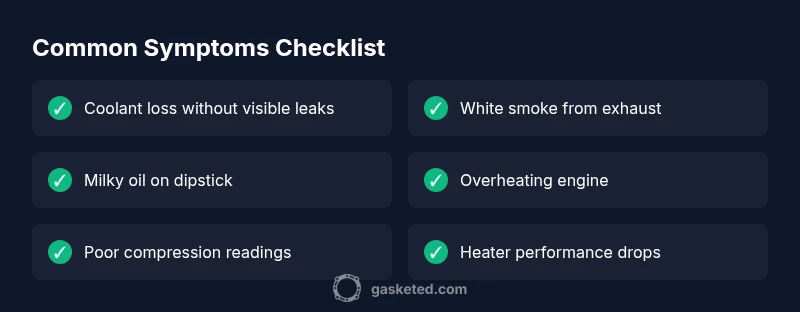
The most likely symptoms of a cracked head gasket include sudden coolant loss, white exhaust smoke, milky oil, persistent overheating, and compression loss. You may also see bubbles in the radiator or heater performance that suddenly drops. If you notice several, stop driving and test the cooling system and cylinders.
What are the Symptoms of a Cracked Head Gasket?
According to Gasketed, understanding what are the symptoms of a cracked head gasket can help you act quickly to prevent engine damage. A cracked head gasket can let coolant and exhaust gases mix with engine oil, or allow combustion pressure to leak into the cooling system. Recognizing these signs early gives you a window to limit damage and avoid a full engine rebuild. Commonly, car owners notice coolant loss without a visible leak, unusual exhaust, or oil that looks milky on the dipstick. Overheating under light driving can also be a red flag. As you inspect, keep safety in mind: never open a hot system and always wear eye protection.
missed word
block
Steps
Estimated time: 2-4 hours
- 1
Power down and secure
Turn off the engine, remove key, and allow the engine to cool completely. Disconnect the battery to prevent accidental cranking during inspection. This minimizes the risk of shock or shorts while you work.
Tip: Never open the radiator cap when the system is hot; wait until it’s cool to relieve pressure. - 2
Check coolant level and look for signs
Visually inspect the coolant level in the reservoir and radiator. Look for milky residue around the neck or cap, which can indicate coolant oil mixing. Note color, smell, and any unexplained loss.
Tip: Document any coolant color changes with photos for reference. - 3
Perform a quick exhaust-in-coolant test
If you have access to a block-test kit, perform the chemical test to see if exhaust gases are present in the cooling system. A positive result strongly suggests gasket-related combustion gas intrusion.
Tip: Follow the kit instructions precisely to avoid false positives. - 4
Check oil condition
Wipe the dipstick and inspect for milky emulsion or a creamy sheen, which can indicate coolant mixing with oil. This is a serious sign and warrants further testing.
Tip: Oil on the dipstick should be clean; if you see changes, plan for professional evaluation. - 5
Test compression across cylinders
A simple compression or leak-down test can reveal a compromised seal. Consistently lower readings in adjacent cylinders suggest head gasket issues.
Tip: If readings are borderline, repeat tests on a cold engine after a cool-down period. - 6
Inspect for external leaks and residue
Check around the head gasket area for fresh coolant stains, white residue, or steam. External leaks are possible but not always present in initial gasket failures.
Tip: Use a flashlight and mirror for tight corners to avoid missing signs. - 7
Review vehicle history and overheating episodes
Correlate symptom onset with past overheating incidents, prior head gasket work, or cooling system maintenance. A pattern of overheating raises the suspicion of gasket failure.
Tip: Keep a maintenance log to track recurring issues. - 8
Decide on next steps
If tests point to a gasket failure, plan for professional repair, which typically includes head gasket replacement and possible machining. Do not drive long distances with suspected gasket damage.
Tip: Get a written repair estimate that includes machining and gasket costs.
Diagnosis: Engine overheating with coolant loss or smoke; milky oil; or poor compression
Possible Causes
- highOverheated engine warps the cylinder head or deforms the head gasket
- highCoolant loss due to small leaks from gasket seal
- mediumExhaust gases leaking into the cooling system
- lowCracked engine block or gasket failure unrelated to head gasket
Fixes
- easyPerform a cooling system pressure test to identify leaks
- easyRun a chemical test for exhaust gases in the cooling system (block test)
- mediumPerform a compression test across all cylinders to assess seal integrity
- hardIf tests indicate a head gasket failure, plan for head gasket replacement and associated machining
Common Questions
What are the most common symptoms of a cracked head gasket?
Common signs include unexplained coolant loss, white smoke from the exhaust, milky oil on the dipstick, and engine overheating. You may also notice poor engine performance or misfires. If several symptoms occur together, pursue a diagnostic flow.
Common signs are coolant loss, white smoke, milky oil, and overheating. If several appear, run tests to confirm.
Can a blown head gasket cause engine misfires?
Yes. A damaged head gasket can allow combustion pressure to escape into the cooling system or oil channels, leading to misfires and rough running. It’s one of several symptoms that warrants testing.
Yes—misfires can occur if the head gasket is failing.
Is it possible to fix a cracked head gasket at home?
Repairing a cracked head gasket typically requires specialized tools and machine work. Most homeowners should pursue professional replacement due to engine risk if done improperly.
Usually best left to pros; head gasket work is complex and risky.
What tests confirm a head gasket failure without removing the head?
Non-invasive tests include a cooling system pressure test and a chemical exhaust test in the coolant. If these indicate a leak or gas intrusion, a more definitive test may be required.
Pressure and chemical tests can point you toward gasket trouble without dismantling the engine.
What does milky oil indicate?
Milky oil usually signals coolant mixing with lubricating oil, a sign of gasket leakage or head damage. It should be checked promptly as continued use can damage bearings.
Milky oil often means coolant is mixing with oil—get it checked fast.
How long does head gasket replacement take and what’s the cost range?
Replacement is a major job that typically requires engine disassembly, machining, and new gaskets. Time and cost vary with vehicle, but expect several hours and a repair bill from a shop. Always request a written estimate.
It’s a big repair; timing and cost depend on the car and shop, so get a written estimate.
Watch Video
Key Takeaways
- Identify clusters of symptoms; one sign alone is not conclusive.
- Coolant loss without visible leaks is a major red flag.
- Milky oil and white smoke strongly indicate gasket issues.
- DIY tests can guide decisions, but professional replacement is common.
- Prevent overheating to reduce gasket failure risk with regular maintenance.