Clogged Radiator or Blown Head Gasket: Practical Troubleshooting Guide
Urgent guide to diagnose whether overheating is caused by a clogged radiator or a blown head gasket, with safe fixes, diagnostic steps, and when to call a pro.


The most likely culprit behind engine overheating is a blocked radiator or a blown head gasket. Start with a cold engine, check coolant levels, and perform a quick cooling-system test. If you notice milky oil, white exhaust, or persistent pressure, expect the head gasket as the likely issue. A professional pressure test confirms the root cause and guides safe repair.
Problem Overview: Clogged Radiator vs Blown Head Gasket
Overheating engines can stem from two very different problems in the cooling system: a clogged radiator restricting coolant flow, or a blown head gasket allowing combustion heat or gases into the cooling loop. Distinguishing between these two is critical because the repair paths diverge significantly. According to Gasketed, misdiagnosis is common and leads to wasted time and money. This guide helps DIYers safely identify which issue is the primary culprit and what to do next. In many cases, a symptom checklist is enough to point you toward the right fix, but a pressure test and chemical tests confirm the root cause. By understanding these two failures, you can prioritize the correct replacement or repair and avoid unnecessary parts changes.
How the Cooling System Works (in 4 quick steps)
- The radiator transfers heat from the coolant to the air, aided by airflow through the grille and fan.
- Coolant circulates via the water pump, driven by the serpentine belt, pushing hot fluid through the engine and into the radiator.
- The thermostat controls flow based on temperature, preventing cold coolant from circulating too soon.
- A sealed system relies on proper pressure; leaks or blockages disrupt pressure, causing overheating and potential gasket failure. Understanding these parts helps you diagnose whether a radiator blockage or a head-gasket issue is at play.
Gasketed Team notes that a small head-gasket leak can masquerade as a radiator problem, so use the right tests to confirm.
Common Signs of a Problem You Can Check Safely
- Overheating gauge or warning light appears during driving
- Coolant loss with visible leaks under the car or around the cap
- Milky or chocolate-coloured oil on the dipstick or under the oil cap
- White exhaust smoke or sweet smell from the tailpipe
- Bubbles in the coolant reservoir or rapid drop in coolant level when the engine cools
These indicators can hint at either radiator blockage or head-gasket failure; treat any combination as a red flag and proceed with safer diagnostic steps.
Diagnostic Flow Overview
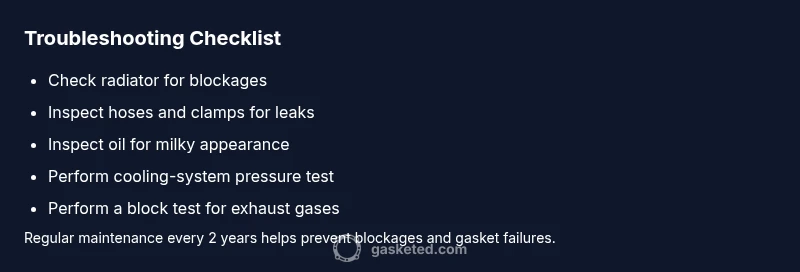
When symptoms surface, start with the simplest checks and escalate. If coolant is clean and the radiator cap holds pressure, the problem may be a clogged radiator or a blocked passage. If you observe milky oil, white exhaust, or continuous bubbling in the reservoir, a head-gasket issue is more likely. Gasketed Analysis, 2026, emphasizes using a structured flow: coolant condition, oil condition, exhaust signs, then a pressure test or chemical test (block test) to confirm. If tests point to a gasket leak, plan a full gasket repair; if they point to blockage, a radiator flush or replacement buys time while avoiding engine damage.
Maintenance Checks You Can Do Now
- Inspect the exterior radiator fins for debris and clear any obstructions; ensure the cooling fan operates correctly.
- Check all hoses for cracks, bulges, or soft spots; replace damaged hoses and clamps.
- Verify coolant level and condition; replace old coolant with the correct ratio of water-to-antifreeze recommended by the vehicle manufacturer.
- Use a hose-down to inspect for leaks around the water pump, radiator cap, and thermostat housing. A loose cap or faulty thermostat can mimic more serious issues. Performing these checks safely can prevent misdiagnosis and further damage.
Safety Considerations and When to Call a Pro
Never work on a hot cooling system. Hot coolant can cause severe burns; always allow the engine to cool completely, wear eye protection, and use insulated gloves. If you see strong coolant smells, steam, or signs of compression in the cooling system under the hood, avoid driving the vehicle and seek professional help. A licensed mechanic can perform a cooling-system pressure test, a chemical block test, and a cylinder compression test to confirm whether the head gasket is compromised and plan a proper repair plan.
Prevention Tips to Avoid Future Issues
- Schedule regular coolant flushes and replace coolant at the intervals recommended by the manufacturer.
- Keep the cooling system clean: remove debris from the radiator and ensure the cooling fans are free to operate.
- Inspect hoses, clamps, and gaskets during routine maintenance and replace aging parts before they fail.
- Address small leaks promptly; even a minor coolant leak can indicate a developing blockage or gasket problems.
Following these practices reduces recurrence and extends the life of the cooling system.
Steps
Estimated time: 1-3 hours
- 1
Safety prep and initial observation
Let the engine cool completely, then inspect the radiator and hoses for obvious signs of damage or leaks. Check coolant level visually and note any oil in the coolant or white smoke from the exhaust.
Tip: Wear eye protection and never open the radiator cap when hot. - 2
Check coolant level and condition
Top off with the correct coolant mixture if low; observe whether coolant color is abnormal or if there's persistent foaming which can indicate a leak or gasket issue.
Tip: Document exact coolant volumes for reference. - 3
Inspect radiator and hoses
Look for damaged fins, crushed hoses, or loose clamps. Any bulging hose or crusty leak points to a fix you can perform without specialized tools.
Tip: Tighten clamps to factory spec and replace damaged hoses. - 4
Pressure test cooling system
A shop-grade pressure tester can reveal leaks not visible. Maintain safe pressures and watch for rapid pressure loss.
Tip: If you don’t have a tester, seek a professional to perform this step. - 5
Block test or gas test
A chemical block test detects exhaust gases in the coolant. A positive result strongly suggests a head gasket leak.
Tip: Only perform if you have the proper kit and follow the manufacturer instructions. - 6
Decide on repair plan
If tests point to a clogged radiator, a flush or replacement is appropriate. If a gasket leak is confirmed, gasket replacement is necessary.
Tip: Plan head work carefully; it’s a major repair and sometimes includes machining the block.
Diagnosis: Overheating with coolant loss or unusual oil/exhaust signs
Possible Causes
- highClogged radiator or restricted coolant flow
- mediumBlown head gasket causing pressure or coolant mixing
- lowCoolant leaks from hoses, pump, or cap
Fixes
- easyFlush radiator and replace coolant; inspect for debris blocking passages
- hardPerform cooling-system pressure test and head gasket leak test; confirm with a combustion gas test
- easyRepair leaks in hoses, water pump, or radiator cap and replace faulty components
Common Questions
What are common signs of a blown head gasket?
Common signs include milky oil, white exhaust, overheating, and coolant in the oil or combustion gases in the cooling system. A pressure and block test will confirm the diagnosis.
Watch for milky oil and white exhaust; sales tests confirm the gasket issue.
Can a clogged radiator cause engine damage?
Yes. A clogged radiator can cause overheating, warping cylinders and head gasket failure if not addressed promptly. Regular flushing and cleaning can prevent major damage.
Yes. A clogged radiator risks overheating and gasket failure; flush to prevent damage.
Should I drive my car if it overheats?
No. Driving an overheating engine can cause severe damage. Pull over safely, allow cooling, check fluids, and seek professional diagnosis.
Stop driving if it overheats and have it inspected.
What’s the typical cost range for head gasket repair?
Costs vary widely by vehicle and extent of damage, typically requiring diagnostic tests and a major repair. A professional estimate is essential.
Costs vary; get a professional estimate before authorizing work.
Can I fix a head gasket myself at home?
Head gasket replacement is a complex, high-risk job requiring special tools and knowledge. It’s generally recommended to hire a professional.
It’s a major repair best left to pros.
How can I prevent radiator blockages in the future?
Regular coolant flushes, keeping the system clean, and checking hoses and clamps can prevent blockages and leaks that lead to overheating.
Maintain coolant and inspect hoses to prevent future blockages.
Watch Video
Key Takeaways
- Diagnose before replacing parts to save time and money
- Use a structured test sequence to distinguish radiator vs gasket problems
- Address leaks promptly to prevent engine damage
- Regular maintenance reduces recurrence and extends cooling-system life