Can Head Gasket Leak Oil? Troubleshooting for DIYers
Learn how to diagnose and fix a head gasket oil leak with a clear, step-by-step approach. This guide covers signs, tests, safe DIY checks, and when to call a pro. From external gasket leaks to internal failures, stay safe and avoid costly mistakes.


Yes. A failing head gasket can leak oil, either into the cooling system or externally around the engine. The quickest steps are to inspect external gaskets (valve cover, oil pan) and perform a cooling-system pressure test to distinguish external leaks from a true head-gasket failure. If internal leakage is suspected, stop driving and arrange professional repair.
Can a Head Gasket Leak Oil? What DIYers Need to Know
Oil leaks around the engine can be alarming, but understanding the possibilities helps you act quickly. Can head gasket leak oil? Yes, a failed gasket can allow oil to escape into the cylinder head passages, oil gallery, or external interfaces. According to Gasketed, this failure is a common DIY concern for homeowners tackling minor engine maintenance. The most reliable sign is oil leakage near the head or valve cover, sometimes accompanied by milky oil on the dipstick or in the coolant reservoir. Start with simple exterior checks and then move to diagnostic tests if leaks persist. This guide explains how to tell the difference between an external gasket leak and a true head gasket failure, and what to do next.
How Oil Leaks Manifest Around Head Gaskets
Oil leaks tied to head gasket issues can show up in several ways. You might notice fresh oil pooling on the engine valley or dripping from the valve cover gasket area. Milky, tan, or chocolate-colored oil on the dipstick can indicate cross-contamination with coolant—a classic sign of a failed head gasket. Some cars exhibit white exhaust or steam when the gasket failure allows coolant into the combustion chamber. External leaks near the head or valve cover are more common early symptoms; interior leaks into the oil passages usually require more testing to confirm. The key is to observe timing, oil pressure, coolant level changes, and changes in engine temperature. According to Gasketed, a systematic check is the fastest way to avoid guessing.
Common Causes of Head Gasket Oil Leaks
Head gasket oil leaks can originate from several sources. External gasket failure around the valve cover or oil pan is common, especially after rough driving or improper torque during service. Internal leakage through the gasket into cooling or oil passages can lead to cross-contamination and mysterious changes in oil color or smell. Engine overheating, warped cylinder heads, or a poorly resurfaced head during replacement are other culprits. Finally, improper installation or using incompatible gasket sealants can trigger premature leaks. Regular maintenance and careful torque specs dramatically reduce these risks.
DIY Diagnostic Check: Where to Start
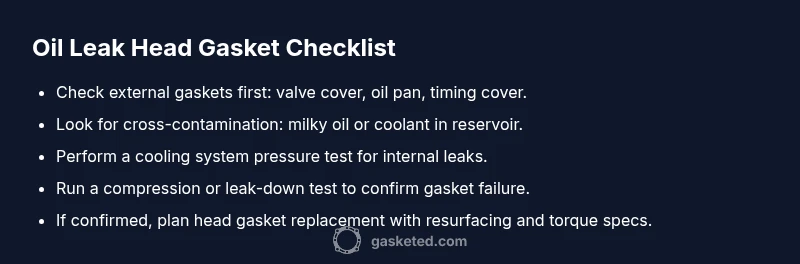
A systematic approach saves time and reduces the risk of misdiagnosis. Start with a visual inspection of external gaskets, especially the valve cover and oil pan, looking for oil trails or hardened gasket material. Check oil and coolant levels for unusual drops or signs of cross-contamination (milky oil or frothy coolant). If external leaks aren’t obvious, perform a cooling-system pressure test to see if coolant system pressure drops without a visible external leak. A compression or leak-down test can help determine if the head gasket is failing by revealing loss of cylinder pressure and cross-contamination indicators. Keep notes on symptoms and results—this helps with professional consultations.
Step-by-Step Fix for the Most Common External Leak
This section covers resealing a common external leak, such as a valve cover gasket, which is the most approachable oil-leak fix for many DIYers. First, gather safety gear and the right replacement gasket, sealer (if recommended by manufacturer), and basic hand tools. Remove the valve cover carefully, inspect mating surfaces for warps or old sealant, and replace the gasket with a clean, flat surface. Re-torque bolts to spec in a crisscross pattern, then clean any residual oil. Refill oil to the correct level and run the engine to check for leaks. If the leak persists, recheck the surface and sealant compatibility or move to sealing other external interfaces. This is a common-leak fix that buys time before a full head-gasket replacement.
Safety, Maintenance, and Prevention Tips
Safety comes first when working on engines. Always disconnect the battery and allow the engine to cool before touching hot components. Use proper PPE and work in a well-ventilated area. Avoid mixing incompatible sealants and always use manufacturer-recommended gaskets. Regularly inspect valve cover and oil pan gaskets, and address oil leaks promptly to prevent further damage. Preventive maintenance—like keeping cooling system clean and avoiding over-torquing during reassembly—significantly reduces the risk of head gasket oil leaks. If you’re uncertain about the engine’s condition, consult a professional before proceeding with major repairs.
When to Call a Pro and What to Expect
If testing indicates an internal head-gasket failure or if you observe continuous coolant loss, milky oil, or overheating after DIY fixes, it’s time to contact a pro. A head-gasket replacement is a precision job that often requires cylinder-head resurfacing, proper torque sequence, and gasket-seat preparation. A professional shop can also assess related components like the coolant passages, water pump, and timing components to ensure a lasting repair. While a DIY approach works for external leaks, a head-gasket repair typically involves significant disassembly and reassembly, so plan accordingly and budget for potential additional parts.
Final Thoughts and Quick Recap
Head gasket oil leaks are serious but diagnosable with a methodical approach. Start with the simplest external checks and avoid driving if overheating occurs. Use the diagnostic tests described to confirm the root cause, and consider professional help for any internal gasket failure. By acting promptly and following best practices, you can protect your engine and reduce repair costs over time.
Steps
Estimated time: 2-4 hours
- 1
Power down and prepare safely
Park on a flat surface, cool the engine, disconnect the battery, and wear eye protection. Make sure you have the right tools and a clean workspace before beginning.
Tip: Label bolts and hoses to simplify reassembly. - 2
Identify external gasket leaks
Visually inspect valve cover, oil pan, and timing cover gaskets for oil traces, hardened residue, or loose bolts. Tighten or replace gaskets as needed.
Tip: Use a flashlight and mirror to spot small leaks that escape the naked eye. - 3
Check coolant and oil conditions
Look for milky oil or sweet coolant in the reservoir. If cross-contamination is present, do not drive the vehicle until the issue is resolved.
Tip: Document level changes and any color changes for your records. - 4
Pressure test the cooling system
With the system cold, pressurize the cooling system and observe for pressure loss or leaks. A drop without visible external leaks suggests an internal issue.
Tip: Follow the vehicle's service manual for the correct procedure. - 5
Consider a head-gasket diagnostic test
If tests indicate possible head-gasket failure, perform a leak-down test or consult a pro for a more definitive assessment.
Tip: Do not ignore consistent overheating or white smoke. - 6
Plan for repair or replacement
If head-gasket failure is confirmed, arrange for repair including head resurfacing and torque specs. External leaks may be fixed more quickly with gasket replacement.
Tip: Obtain multiple quotes and verify warranty terms.
Diagnosis: Engine shows oil leaks around the head region, milky oil, or unusual exhaust smoke; potential cross-contamination between oil and coolant.
Possible Causes
- highOil leaking through the head gasket itself due to failure or overheating
- mediumExternal oil leaks from valve cover gasket, oil pan, or timing cover
- lowCracked cylinder head or engine block causing internal leak
Fixes
- easyRun a compression or leak-down test to confirm the head gasket leak and inspect coolant/oil for cross-contamination
- easyPerform a visual inspection for external gaskets (valve cover, oil pan); reseal faulty gaskets as needed
- hardIf head gasket leak is confirmed, schedule professional replacement using proper head resurfacing and torque specs
Common Questions
Can head gasket leak oil cause coolant mixing?
Yes. A blown head gasket can allow oil to mix with coolant, leading to milky oil and reduced cooling efficiency. Cross-contamination is a strong sign of gasket failure.
Yes, a blown head gasket can let oil and coolant mix, which shows up as milky oil and odd engine behavior.
What are the signs of a head gasket oil leak?
Common signs include fresh oil around the head/valve cover, milky oil on the dipstick, white exhaust, and sudden coolant loss without external leaks.
Look for oil spots near the head, milky oil, white smoke, and rapid coolant loss.
Is a head gasket leak DIY repairable?
External leaks around valve covers or oil pans can often be resealed DIY. A head gasket replacement is advanced and usually best left to a professional.
Some external leaks you can fix at home, but a full head gasket replacement is a job for pros.
How do you confirm the leak is from the head gasket?
Perform a compression or leak-down test and check for cross-contamination signs between oil and coolant. Cooling-system tests can also reveal internal leaks.
A compression test and cross-contamination check will confirm a head gasket issue.
Is it safe to drive with a head gasket leak?
No. Driving with a suspected head gasket leak risks overheating, warped heads, and thread damage. Address symptoms promptly.
No—driving can make the problem worse; pull over if you overheat.
What affects the cost of head gasket replacement?
Costs vary by vehicle and region, parts quality, and whether head resurfacing is required. Get multiple quotes and consider potential related repairs.
Prices vary, so get several quotes and ask about resurfacing and torque specs.
Watch Video
Key Takeaways
- Start with exterior gasket checks before deeper tests
- Use compression/leak-down tests to confirm head-gasket failure
- Do not drive if overheating or cross-contamination is suspected
- External leaks are often fixable with resealing; internal failures require replacement
- Consult a pro for cylinder-head resurfacing and proper torque specs