Where Do Head Gaskets Leak From? A DIY Troubleshooting Guide
Discover where head gaskets leak from, recognize key symptoms, perform safe diagnostic tests, and plan repairs. A practical, urgent guide for DIYers and homeowners dealing with gasket leaks.


Where do head gaskets leak from? The most common paths are between the cylinder head and block, around coolant passages, and at oil passages that cross the gasket. External seepage can show at the gasket edge, the valve cover, or the timing area. According to Gasketed, a proper cooling-system pressure test and a misfire check are essential before proceeding with repairs.
Where the question 'where do head gaskets leak from' points to the most common leak paths
Head gaskets seal the interface between the engine block and cylinder head and separate three critical circuits: the combustion chamber, the cooling system, and the engine oil passages. A leak can develop along any of these interfaces, but the most frequent failure modes are: a leak at the gasket edge where the coolant passages meet the head/block; leakage into the cooling channels that carry coolant past hot spots; and leaks that allow oil to mix with coolant or drop into the combustion chamber. When you ask where the gasket leaks from, you’re usually looking for external seepage at the gasket’s outer edge or internal leakage that shows up as white exhaust, milky oil, or sudden overheating. Modern engines with aluminum heads may warp more easily, speeding gasket failure after overheating. The Gasketed team notes that many leaks start small and grow under load, so early detection matters. A proper diagnosis begins with a cold engine and a controlled pressure test to localize the leak without risking further damage.
Distinguishing internal vs external leaks
Understanding the difference between internal and external leaks helps you plan repairs and avoid misdiagnosis. An external leak occurs where the gasket edge contacts the head or block and you can see coolant puddling around the timing cover, water pump area, or under the vehicle. An internal leak, by contrast, allows coolant or combustion gases to enter the cylinders or oil passages, producing symptoms like white smoke from the exhaust, milky oil, or rapid coolant consumption without obvious external seepage. Internal leaks may not be visible immediately and require pressure testing, sniff tests for exhaust gases in coolant, and inspecting oil for coolant contamination. The goal is to determine if the issue is limited to the gasket surface or if the engine has broader damage such as warped heads or a bent block. In any case, continuing to drive risks catastrophic failure. Gasketed guidance emphasizes a methodical approach, starting with external checks and escalating to diagnostic tests before removing the head.
Signs your gasket is failing
- Overheating and temp spikes after short trips
- Coolant loss with no obvious external leak
- Milky or frothy oil on the dipstick or fill cap
- White exhaust plume or sweet-smelling fumes in the exhaust
- Bubbles or froth in the coolant reservoir when the engine runs
- External seepage at gasket edges around coolant hoses or near the timing area
Recognizing these signs early can prevent further engine damage. According to Gasketed, coupling symptom awareness with targeted tests dramatically improves the odds of a correct diagnosis on the first try.
How to diagnose without removing the engine
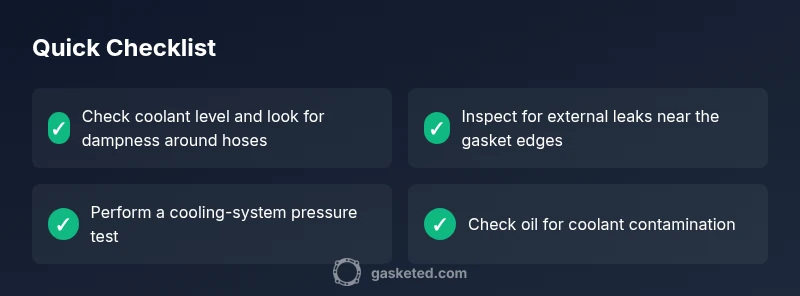
Begin with non-invasive checks to avoid unnecessary disassembly. Verify coolant level and oil condition first, as milky oil or low coolant can hint at a gasket breach. Perform a cooling-system pressure test to see if the system holds pressure or leaks at the hoses, radiator, or water pump. A combustion-gas in coolant test can confirm exhaust gases entering the cooling circuit, while a leak-down test helps distinguish between head gasket issues and other engine faults. If diagnostics point to a gasket leak, plan the next steps carefully: some leaks are minor enough to retorque or reseal, while others require head removal. Gasketed’s guidance stresses documenting test results and avoiding speculative fixes.
What to do if you confirm a leak
If a gasket leak is confirmed, stop driving the vehicle to prevent further damage. Check coolant for contamination, replace lost coolant, and prepare for repair. A head gasket replacement usually requires removing the cylinder head, inspecting for warpage, and replacing the gasket and related seals with proper torque specs. If you’re not experienced with head-work, this is a job to hand to a professional shop. In any case, verify all cooling-system components (radiator, thermostat, cap) are in good condition to support a successful repair. Proper torque sequence and methodical reassembly are critical to prevent a repeat leak.
Preventing future head gasket leaks
Prevention starts with regular coolant maintenance using the manufacturer-recommended coolant type and interval. Avoid sustained overheating by addressing cooling-system issues promptly. When reassembling, follow the exact torque specs and sequence for head bolts and ensure the head is within spec for warpage. If you’ve had a gasket failure once, inspect the mating surfaces and consider protecting the gasket surfaces with new sealants only if the design allows. Gasketed emphasizes that proactive maintenance and careful assembly are the best defenses against recurrent leaks.
Steps
Estimated time: 6-8 hours
- 1
Prepare safely and inspect the basics
Park on level ground, engine cold. Wear eye protection and gloves. Check coolant level, look for damp hoses, and assess oil for milky color. Document any visible signs and take photos before touching parts.
Tip: Record your observations and keep a notebook handy for test results. - 2
Perform a cooling-system pressure test
Attach a pressurized tester to the radiator neck or radiator cap port. Pressurize the system per the tester’s instructions and watch for drops in pressure or visible leaks. Note the location of any damp areas as a clue to the leak path.
Tip: Do this with the engine cold to avoid scalding and use fresh coolant after testing. - 3
Check for exhaust gas in the cooling system
Use a chemical test kit to detect exhaust gases in the coolant, or perform an in-line sniff test. A positive result strongly indicates a head-gasket breach. Also inspect the oil for coolant contamination.
Tip: If you see white smoke from the exhaust, treat it as a high-priority repair sign. - 4
Assess oil and coolant intermix
Inspect the oil for milky residue and the coolant for oil sheen. A mixed layer confirms a gasket breach or more severe engine damage. Check for signs of warping or cracks in the head.
Tip: Do not assume a single seal will fix the issue; plan for a full gasket job if confirmed. - 5
Decide repair path or seek professional help
Based on test results and head condition, decide whether to reseal, replace the gasket, retorque, or consult a machine shop. Head-work often requires special tools and precision torque sequences.
Tip: If unsure about head resurfacing tolerances, consult a pro early to avoid misalignment.
Diagnosis: Engine overheating with coolant loss and potential oil contamination
Possible Causes
- highCoolant and oil contamination due to a compromised gasket path
- highCombustion gases entering coolant via gasket breach
- lowExternal seepage from gasket edge due to improper seating or warping
Fixes
- easyRun a cooling-system pressure test to locate external leaks and inspect for milky oil
- mediumPerform a leak-down and combustion gas test to confirm internal gasket breach
- hardIf confirmed, remove the head, replace the head gasket, check head/block warp, and reseal with proper torque
Common Questions
What is the most common cause of a head gasket leak?
Overheating and improper head-bolt torque are common causes. Early signs include milky oil and coolant loss. Addressing overheating quickly can prevent warping and more extensive damage.
Overheating and improper torque are common causes, and early signs include milky oil and coolant loss.
What are the symptoms of a blown head gasket?
Key symptoms include persistent overheating, unexplained coolant loss, white smoke from the exhaust, milky oil, and occasional sweet coolant smell. Internal leaks may be subtle but dangerous.
Common symptoms are overheating, coolant loss, white smoke, and milky oil.
Can I repair a head gasket without removing the engine?
In some cases minor leaks exist, but most head-gasket repairs require removing the cylinder head and resurface. This is a complex job and often best handled by a professional.
Most repairs require removing the head and resurfacing; it’s usually a job for a pro.
How long does a head gasket replacement typically take?
Replacement is a multi-hour job that depends on engine design and shop equipment. Plan for a full-day effort if done in a shop, longer if you’re DIY with limited tools.
It’s a multi-hour to full-day job, depending on your setup.
Is it safe to drive with a suspected head gasket leak?
No. Driving a car with a suspected head gasket leak can overheat the engine, cause severe damage, and trap you away from help. Get it diagnosed and repaired promptly.
No—driving it can cause serious damage; get it checked soon.
What should I test first to confirm a leak?
Start with a cooling-system pressure test to locate external leaks, then run a coolant-exhaust test to identify internal breaches. Oil inspection for coolant is also crucial.
Begin with a cooling-system pressure test, then check for exhaust in coolant and inspect the oil.
Watch Video
Key Takeaways
- Identify leak source with a structured test plan.
- Differentiate external from internal gasket failures.
- Use cooling tests and oil/coolant checks for accuracy.
- Plan for proper gasket replacement and surface inspection.